Key takeaways
- Tooth Count and Profile: Ripping blades typically run 24 to 30 teeth. Fewer, deeper gullets evacuate long fibers quickly; a triple-chip grind (TCG) or flat-top grind keeps the cut face smooth enough to glue without planing.
- Kerf Width: Thin-kerf blades (around 1/16 inch) remove less material, demand less motor power, and waste less stock — a real advantage when working with premium hardwoods where every board foot counts.
- Arbor Size and Compatibility: Most cabinet and contractor saws use a 5/8-inch arbor, but always verify your saw’s specifications before purchasing. An 8-1/4-inch blade suits smaller benchtop saws and portable jobsite models.
- Carbide Quality and Coating: Larger carbide tips resist dulling longer and can be resharpened. Non-stick coatings reduce pitch buildup, keeping the blade running cooler and quieter through resinous softwoods and dense exotics alike.
- Intended Use and Versatility: A dedicated ripping blade delivers the cleanest long-grain cuts, while multi-pack combo sets offer framing, ripping, and finish teeth in one purchase — practical for shops that handle diverse project types.
What's inside
Choosing the wrong ripping blade turns a calm workshop session into a frustrating afternoon of burned edges, uneven kerfs, and tear-out that ruins otherwise gorgeous hardwood. The vibration, the noise, the smell of scorched timber — it all compounds when the blade sitting in your arbor isn’t up to the task, and the ripple effect shows up in every joint and surface finish downstream.
This 2026 roundup cuts through the noise. We evaluated the most popular ripping and multi-purpose table saw blades currently available to home woodworkers, weighing tooth geometry, kerf profile, material compatibility, and real-world cut quality. Whether you are resawing cherry for a live-edge coffee table or ripping white oak for cabinet frames, the picks below cover a range of budgets and skill levels — each one tested against the criteria that matter most at the cut line.
As an Amazon Associate we earn from qualifying purchases.

How to Choose a Table Saw Rip Blade (2026)
- Tooth Count and Profile: Ripping blades typically run 24 to 30 teeth. Fewer, deeper gullets evacuate long fibers quickly; a triple-chip grind (TCG) or flat-top grind keeps the cut face smooth enough to glue without planing.
- Kerf Width: Thin-kerf blades (around 1/16 inch) remove less material, demand less motor power, and waste less stock — a real advantage when working with premium hardwoods where every board foot counts.
- Arbor Size and Compatibility: Most cabinet and contractor saws use a 5/8-inch arbor, but always verify your saw’s specifications before purchasing. An 8-1/4-inch blade suits smaller benchtop saws and portable jobsite models.
- Carbide Quality and Coating: Larger carbide tips resist dulling longer and can be resharpened. Non-stick coatings reduce pitch buildup, keeping the blade running cooler and quieter through resinous softwoods and dense exotics alike.
- Intended Use and Versatility: A dedicated ripping blade delivers the cleanest long-grain cuts, while multi-pack combo sets offer framing, ripping, and finish teeth in one purchase — practical for shops that handle diverse project types.
The Best Table Saw Rip Blade (2026)s Reviewed
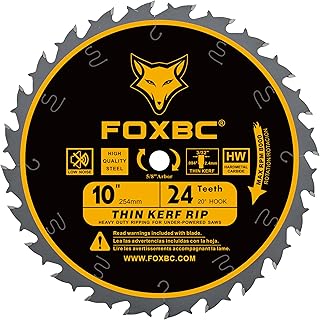
FOXBC 10-Inch 24-Tooth Thin Kerf Ripping Blade
The FOXBC ripping blade is a workhorse for home shops running mid-range saws. Its thin kerf and flat-top tooth geometry produce clean, glue-ready edges in hardwoods up to 2 inches thick while keeping motor strain to a minimum. At its price point, the cut quality punches well above expectations — a smart first upgrade for anyone still running the factory blade.
Amana Tool 10-Inch 30T Glue Line Ripping Blade
Amana’s glue-line ripping blade sits in a different league. The 30-tooth triple-chip grind leaves a surface so smooth you can skip the jointer on face-glued panels, saving significant time on furniture builds. Premium carbide tips hold their edge through board after board of figured maple or walnut, making this the blade professionals reach for when output quality is non-negotiable.
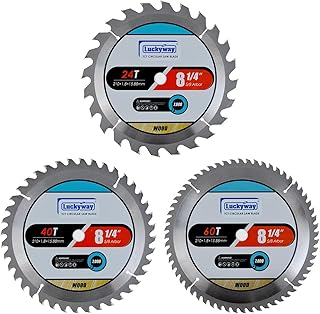
Luckyway 8-1/4 Inch 3-Pack Set
Luckyway bundles a 24T framing, 40T ripping/cross-cutting, and 60T finish blade into one affordable kit that covers the full spectrum of cuts on smaller benchtop saws. For hobbyists who need versatility without buying three separate blades, this pack delivers reliable results across framing lumber, sheet goods, and finish-grade hardwoods.
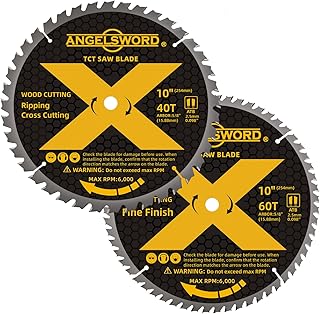
ANGELSWORD 10-Inch 2-Pack (40T/60T)
The ANGELSWORD two-pack pairs a 40-tooth general-purpose blade with a 60-tooth fine-finish blade, both sized for standard 10-inch cabinet and contractor saws. The 40T blade handles ripping duties with respectable speed and clean walls, while the 60T blade shines on crosscuts and veneered plywood where tear-out would otherwise be visible.
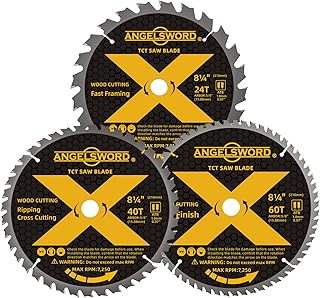
ANGELSWORD 8-1/4 Inch 3-Pack
Designed for compact saws, this ANGELSWORD three-pack mirrors the brand’s larger offering with 24T, 40T, and 60T configurations at the 8-1/4-inch diameter. It is an excellent starter kit for woodworkers running a jobsite saw who want purpose-specific teeth without stepping up to a full 10-inch setup.
Frequently Asked Questions
What tooth count is best for ripping lumber on a table saw?
For most hardwoods and softwoods, a 24-tooth or 30-tooth blade provides the ideal balance between cutting speed and surface quality. Fewer teeth clear waste faster, preventing heat buildup along the cut line during long rips.
Is a thin-kerf blade better than a full-kerf blade?
Thin-kerf blades waste less wood and require less horsepower, which makes them ideal for 1-1/2 to 3 HP saws common in home shops. Full-kerf blades are stiffer and resist deflection better, which can matter on very thick or very hard stock where precision is paramount.
Can I use a ripping blade for crosscuts?
A dedicated ripping blade will produce rough, splintery crosscuts because its wide gullets and grind angle are optimized for long-grain fibers. For clean crosscuts, switch to a 40-tooth or higher general-purpose or finish blade.
How often should I replace or sharpen my ripping blade?
A quality carbide-tipped ripping blade should last through dozens of board feet before needing attention. When you notice increased burning, more tear-out, or the saw working harder to push stock through, it is time to either send the blade out for sharpening or invest in a fresh one.
Final Thoughts
For most home furniture builders, the FOXBC 10-Inch Thin Kerf offers the best blend of performance and value as an everyday ripping blade. If your budget allows and cut quality drives your workflow, the Amana Tool Glue Line Ripping Blade is the clear premium choice. Shoppers with smaller benchtop saws will find the Luckyway 8-1/4 Inch 3-Pack or ANGELSWORD sets cover all their needs in a single purchase — no guesswork, no wasted trips back to the store.