Key takeaways
- Basements: Begin at 45%–50%. Cooler air can make a basement feel damp even when the reading looks moderate, so inspect corners, storage areas, and exterior walls.
- Bedrooms: Choose 45%–50%, then use sleep mode if available. A quiet appliance with a subdued display is less disruptive to rest and keeps the room visually serene.
- Bathrooms: Run the unit after showers with the door ajar, while using the exhaust fan during bathing. A target near 50% is generally sufficient.
- Living rooms: Aim for 45%–55%, depending on comfort and furnishings. Keep the unit away from curtains, sofas, and floor lamps so airflow and ambient lighting are not obstructed.
What's inside
What Is The Best Setting For A Dehumidifier (2026)? The best setting is usually between 45% and 50% relative humidity (RH): dry enough to discourage condensation, musty odors, and mold, but not so dry that wood furniture, skin, and airways become uncomfortable. The right target still depends on the room, season, and appliance.
This guide explains how to choose a practical humidity target, where to place a dehumidifier, and which features matter when shopping. From a lighting-and-ambience perspective, we will also cover sleep mode, sound, indicator lights, and how to keep a room feeling calm rather than clinical.
As an Amazon Associate we earn from qualifying purchases.


What Is The Best Setting For A Dehumidifier (2026)
Start With a 45%–50% Humidity Target
Set the humidistat to 45% or 50% RH as your everyday starting point. This range is comfortable for most homes and helps reduce the conditions that allow mold and mildew to thrive. If windows are sweating, closets smell stale, or a basement feels clammy, try 45%. If the room feels overly dry or the appliance runs almost constantly, 50% may be more suitable.
Use a separate digital hygrometer if possible. Built-in sensors are useful, but they measure air near the appliance rather than conditions across the entire room. Avoid setting the machine to 30% unless you have a specific reason; that level can waste energy and dry out wood, leather, musical instruments, and furnishings.
Match the Setting to the Room
- Basements: Begin at 45%–50%. Cooler air can make a basement feel damp even when the reading looks moderate, so inspect corners, storage areas, and exterior walls.
- Bedrooms: Choose 45%–50%, then use sleep mode if available. A quiet appliance with a subdued display is less disruptive to rest and keeps the room visually serene.
- Bathrooms: Run the unit after showers with the door ajar, while using the exhaust fan during bathing. A target near 50% is generally sufficient.
- Living rooms: Aim for 45%–55%, depending on comfort and furnishings. Keep the unit away from curtains, sofas, and floor lamps so airflow and ambient lighting are not obstructed.
Choose Capacity Before Extra Features
Small thermoelectric units can work for a compact bedroom, wardrobe, or office, but larger or persistently damp spaces usually need a compressor dehumidifier. Capacity claims are estimates, not guarantees: a basement with moisture intrusion may require substantially more performance than a similarly sized dry room.
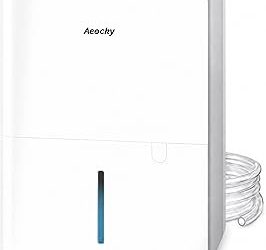
For a modest room, the ToLife Dehumidifier 1000 Sq Ft and the 95OZ Dehumidifier for Home are compact options with seven-color ambient lighting. Their gentle light can serve as a soft night accent, though it should be switchable or dimmed in a sleep-focused room. For larger spaces, consider the Waykar 34 Pints 2000 Sq. Ft. or a larger 80-pint model such as the KNKA Energy Star 4500 Sq.Ft. and the 5500 Sq.Ft. Energy Star Most Efficient 2025 Dehumidifier.
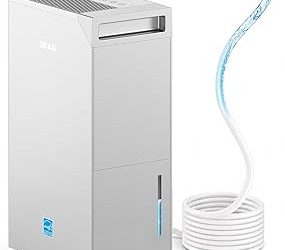
Check whether the listed capacity is based on current testing standards and whether the product includes a drain hose. Automatic drainage is especially valuable in basements, where emptying a tank every day quickly becomes inconvenient.
Think About Sound, Light, and Placement
A dehumidifier changes the atmosphere of a room as much as its moisture level. Put it on a level, solid surface with several inches of clearance around the air intake and outlet. Do not hide it behind a chair or inside a cabinet. In a bedroom, position it away from the head of the bed and select sleep mode; a steady low fan sound is usually less distracting than frequent cycling.
Bright control panels can compete with warm bedside lamps and layered living-room lighting. Look for a dimmable display, timer, or night mode. Colored LEDs can be pleasant in a casual space, but they should complement—not overpower—the room’s main lighting. The 4500 Sq. Ft. Quilt Compressor Dehumidifier is worth considering when intelligent humidity control and hose drainage matter more than decorative lighting.
Use Automatic Controls and Drainage Wisely
Automatic humidity control is preferable to running a unit continuously. Set the target, allow the compressor to cycle, and reassess after 24 hours. Automatic shutoff protects against overflow when the tank fills, while automatic defrost helps larger compressor units operate in cooler basements.
A continuous drain hose should slope gently toward a suitable drain without kinks. If gravity drainage is not possible, choose a model compatible with a condensate pump. Never rely on a hose connection without checking it for leaks during the first few hours.
Tips
- Measure humidity in the middle of the room, away from windows, exterior walls, kitchens, and the dehumidifier itself.
- Clean the filter according to the manufacturer’s schedule; restricted airflow reduces performance and increases noise.
- Close doors and windows while the unit runs, unless you are deliberately ventilating after cooking, bathing, or cleaning.
- Inspect furniture backs, rugs, and storage boxes for hidden moisture rather than relying only on the display reading.
Frequently Asked Questions
Should I set my dehumidifier to 30%?
Usually not. A 30% target can be unnecessarily dry for a home and may increase energy use. Start at 45%–50%, lowering the setting only if condensation or persistent dampness remains.
Is 50% humidity good for a bedroom?
Yes. Around 50% RH is a practical bedroom setting for many homes. Pair it with sleep mode, a dim display, and placement away from the bed to preserve a quiet, restful ambience.
Why does my dehumidifier keep running?
The room may be unusually damp, the target may be set too low, or the appliance may be undersized. Check the filter, confirm the hygrometer reading, and look for leaks, wet foundations, poor ventilation, or moisture entering from outdoors.
Can a dehumidifier damage wood furniture?
It can if the air becomes excessively dry or the appliance blows directly onto the furniture for long periods. Keep humidity moderate, avoid targets below about 40% without professional guidance, and leave clear space around the unit.
Conclusion
For most homes, the best dehumidifier setting in 2026 is 45%–50% RH, adjusted by room conditions rather than by a fixed number alone. Choose capacity for the space, prioritize automatic humidity control and reliable drainage, and treat sound and light as part of the room’s design. A well-placed, appropriately sized unit should quietly support comfort without becoming the visual or acoustic focus of your home.