Key takeaways
- Mesh Density and Transparency: No-see-ums-grade polyester blocks the tiniest biting midges but also dims ambient starlight filtering into your hammock. A finer weave trades breathability for protection, so weigh your regional insect pressure against ventilation needs.
- Coverage Geometry: A flat drape net shields from above but leaves the underside exposed when you shift position. Full 360-degree enclosures with diagonal or dual-sided zippers let you enter and exit without repositioning the entire structure — critical when you’re lit from inside by a headlamp at 2 a.m.
- Zipper Placement and Access: Single-entry zippers force you into awkward crawl-through exits. Dual-sided diagonal zippers mirror natural arm movement and reduce snagging, especially when you’re half-asleep and navigating in low light.
- Integrated vs. Standalone Design: Standalone nets offer flexibility across different hammock brands but add setup time and another ridgeline. Integrated nets — built into the hammock body — streamline deployment and eliminate gaps where insects slip through at the seam junction.
- Weight and Packability: Backpackers carrying ultralight kits will notice the difference between a 12-ounce net and a 2-pound hammock-tent system. Match the product’s packed weight to your trip length; a heavier integrated setup makes sense for car camping, while standalone nylon shells suit thru-hikes.
What's inside
Picture this: dusk settles over a clearing, the fireflies begin their quiet performance, and the golden hour bleeds into deep indigo. You want to soak it in — not swat at it. But without proper mosquito protection, most hammock campers spend their evenings hunched under a flap, squinting through mesh, wondering why they left the couch. The wrong bug net doesn’t just fail functionally; it kills the atmosphere you came to find.
Choosing a hammock bug net in 2026 means navigating a crowded field of ultralight shells, integrated hammock-tent hybrids, and oversized enclosures that each handle ambient light, airflow, and visibility differently. This guide breaks down what actually matters — material transparency, zipper geometry, structural design — so you can pick a net that protects without turning your sleeping setup into a dark cocoon.
As an Amazon Associate we earn from qualifying purchases.


How to Choose a Hammock Bug Net (2026)
- Mesh Density and Transparency: No-see-ums-grade polyester blocks the tiniest biting midges but also dims ambient starlight filtering into your hammock. A finer weave trades breathability for protection, so weigh your regional insect pressure against ventilation needs.
- Coverage Geometry: A flat drape net shields from above but leaves the underside exposed when you shift position. Full 360-degree enclosures with diagonal or dual-sided zippers let you enter and exit without repositioning the entire structure — critical when you’re lit from inside by a headlamp at 2 a.m.
- Zipper Placement and Access: Single-entry zippers force you into awkward crawl-through exits. Dual-sided diagonal zippers mirror natural arm movement and reduce snagging, especially when you’re half-asleep and navigating in low light.
- Integrated vs. Standalone Design: Standalone nets offer flexibility across different hammock brands but add setup time and another ridgeline. Integrated nets — built into the hammock body — streamline deployment and eliminate gaps where insects slip through at the seam junction.
- Weight and Packability: Backpackers carrying ultralight kits will notice the difference between a 12-ounce net and a 2-pound hammock-tent system. Match the product’s packed weight to your trip length; a heavier integrated setup makes sense for car camping, while standalone nylon shells suit thru-hikes.
The Best Hammock Bug Nets (2026) Reviewed
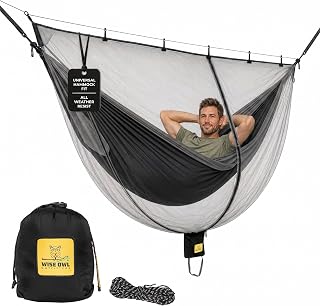
Wise Owl Outfitters Hammock Bug Net
A lightweight standalone net that drapes cleanly over most single and double hammocks without adding bulk to your pack. The mesh density strikes a smart balance — fine enough to block gnats at dusk yet open enough to preserve a sense of the canopy above you, which matters when you’re falling asleep under open sky.
Hammock Bug Mosquito Net XL (11×4.6FT)
This oversized enclosure delivers genuine 360-degree coverage, wrapping beneath the hammock where most nets leave a gap. The dual-sided diagonal zipper is the real design win here: it follows the body’s natural axis, so getting in and out at night doesn’t require wrestling with the fabric or disturbing your campsite layout.
Onewind 11ft Ultralight Hammock with Mosquito Net
For those who care about material engineering, the 40D hexagon ripstop nylon is a standout — it catches starlight differently than standard parachute fabric, creating a softer, more diffused glow when a headlamp is clipped inside. The integrated ridgeline holds the net at consistent height, eliminating the sag that kills airflow on warmer nights.
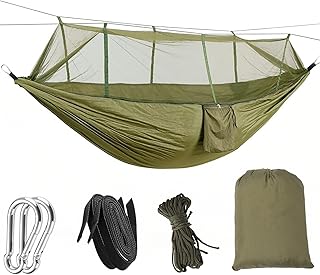
Camping Hammock with Mosquito Net and Rain Fly
A true all-weather system pairing bug protection with a dedicated rain fly, this hammock-tent hybrid handles sudden downpours without separate tarps. The double-wall configuration does compromise visibility somewhat, but the enclosed feel works beautifully for side sleepers who prefer a cocoon-like environment over open-air exposure.
500 lbs Portable Hammock with Mosquito Net (Black & Grey)
Built for durability rather than ultralight purism, this hammock handles heavier loads and rougher terrain without stretching the mesh off its anchor points. The 2-in-1 double/single design lets you configure for solo nights or shared lounging, and the reinforced tree straps distribute weight evenly to protect bark — a small detail that matters if you camp in regulated forests.
Frequently Asked Questions
Do bug nets block airflow in a hammock?
Finer mesh reduces airflow proportionally, but most modern no-see-ums polyester still allows meaningful cross-ventilation when the net is properly tensioned along a ridgeline. Avoid nets that bunch or sag, as compressed mesh creates stagnant pockets that trap humidity against your skin.
Can I use a standalone bug net with any hammock brand?
Most standalone nets are designed with adjustable drawstrings or elastic hems to accommodate hammocks up to a standard double-wide width. Check the product’s stated dimensions against your hammock’s width when fully suspended — a mismatched net will leave gaps at the foot end.
How do I clean a hammock bug net without damaging the mesh?
Hand-wash in cold water with a mild, fragrance-free detergent and hang dry away from direct sunlight. UV exposure degrades fine polyester mesh faster than any other factor, so storing your net in a breathable stuff sack between trips extends its lifespan significantly.
Are integrated mosquito nets harder to set up than standalone ones?
Paradoxically, integrated nets are faster to deploy because there’s one attachment point per end instead of a separate suspension system. The trade-off is less versatility — you’re committed to that specific hammock-and-net pairing rather than mixing and matching components.
Final Thoughts
If your priority is clean design and balanced mesh transparency, the Wise Owl Outfitters net earns a strong recommendation for its simplicity and weight. For complete envelopment with thoughtful zipper geometry, the Hammock Bug Net XL with dual-sided diagonal access stands apart from the field. And campers who value integrated engineering and premium ripstop fabric should look hard at the Onewind 11ft — it’s the most thoughtfully constructed hammock-net system on this list for the price.