Key takeaways
- Miter-bar material: UHMW plastic glides with less friction than bare aluminum and won’t mar the slot, so look for kits that ship UHMW bars paired with aluminum T-track rather than all-metal runners.
- Adjustable fit: Miter bars with shims or a split-shank design let you dial out side play without resorting to tape hacks. A snug, slop-free runner translates directly into square cuts.
- T-track versatility: Aluminum T-track sections let you add hold-downs, stop blocks, or flip-down fences later. Two tracks is the sweet spot — one anchored to the fence face, one on the base for accessories.
- Zero-clearance support: A sled base that fills the blade kerf reduces tearout on the underside of your workpiece. This matters most with plywood and veneered stock where a clean exit cut defines the finished edge.
- Predrilled mounting hardware: Kits with countersunk screw holes and matching knobs save you from drilling into a sled base blind. Clean, pre-planned mounting points keep the fence perpendicular to the blade without repeated calibration.
What's inside
Walk into any working shop and you’ll notice something: the crosscut sled on the table saw is almost always the most battle-scarred jig in the room. Sleds drift out of square, runners develop play, and suddenly every “precision” cut is fighting the wood instead of guiding it. That creeping inaccuracy costs you time, material, and — if you’re honest — a measure of trust in your own setup.
This guide cuts through the noise around table saw sleds and runner kits available now. We looked at construction quality, how well each system maintains zero-clearance support, and whether the components actually stay true after weeks of use. Below you’ll find five picks worth your money and a straightforward breakdown of what to weigh before buying.
As an Amazon Associate we earn from qualifying purchases.


How to Choose Table Saw Sleds (2026)
- Miter-bar material: UHMW plastic glides with less friction than bare aluminum and won’t mar the slot, so look for kits that ship UHMW bars paired with aluminum T-track rather than all-metal runners.
- Adjustable fit: Miter bars with shims or a split-shank design let you dial out side play without resorting to tape hacks. A snug, slop-free runner translates directly into square cuts.
- T-track versatility: Aluminum T-track sections let you add hold-downs, stop blocks, or flip-down fences later. Two tracks is the sweet spot — one anchored to the fence face, one on the base for accessories.
- Zero-clearance support: A sled base that fills the blade kerf reduces tearout on the underside of your workpiece. This matters most with plywood and veneered stock where a clean exit cut defines the finished edge.
- Predrilled mounting hardware: Kits with countersunk screw holes and matching knobs save you from drilling into a sled base blind. Clean, pre-planned mounting points keep the fence perpendicular to the blade without repeated calibration.
The Best Table Saw Sleds (2026) Reviewed
Rockler Small Parts Crosscut Sled
The Rockler sled arrives as a complete, ready-to-square unit rather than a box of parts, which immediately sets it apart. Its integrated zero-clearance base and adjustable fence make it the fastest path to accurate small-part cuts, and the build quality holds up under daily shop use without the fiddling a DIY sled demands.
21P Crosscut Sled Kit
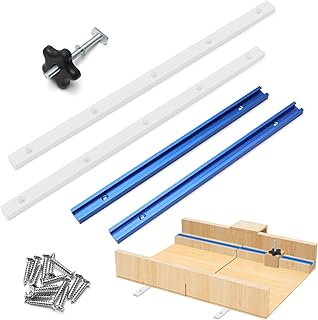
At its price point the 21P kit delivers impressive completeness: two 12-inch aluminum T-tracks, predrilled UHMW miter bars, and all the knobs and screws you need to build a dedicated sled from scratch. The UHMW runners slide with almost no effort, and the predrilled holes line up cleanly — a detail that saves real time during assembly.
Catcan Crosscut Sled Kit (17-inch Bars)
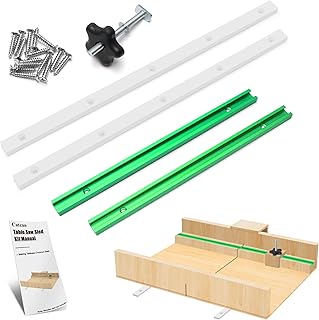
Catcan’s longer-bar variant pairs 17-inch UHMW runners with 12-inch T-tracks, giving a broader base of contact inside the miter slot. That extra length stabilizes the sled during long crosscuts and helps resist the racking force that shorter-bar kits sometimes let creep in as the blade exits the cut.
Catcan Crosscut Sled Kit (Runners)
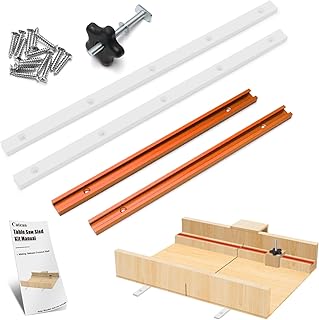
The second Catcan option trades the longer bars for a more compact footprint, making it a natural fit for contractor saws with shallower table depths. Hardware quality matches the pricier variant — same aluminum track, same UHMW bars — so you’re paying less without stepping down in materials.
O’SKOOL Adjustable Miter Bars
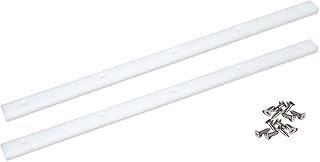
O’SKOOL’s bars are a targeted upgrade rather than a full sled kit, and they fill that niche well. The adjustable shims reduce slot play to near-zero on most standard 3/4-by-3/8-inch miter slots, and the 430mm length suits sleds built for wider panels. If your existing sled runners are sloppy, swapping in a pair of these is a fifteen-minute fix with outsized results.
Frequently Asked Questions
Do I need a complete sled or just replacement runners?
If your current sled base and fence are still straight and square, new miter bars from a kit like the O’SKOOL set can restore accuracy cheaply. A full sled kit makes more sense when you’re starting fresh, building a second dedicated sled, or your existing base has warped beyond adjustment.
Why UHMW over hardwood or metal runners?
UHMW polyethylene self-lubricates, so it slides without wax or oil, and it won’t swell with humidity changes the way wood runners do. Metal bars can bind if the slot has any burrs or irregularities, while UHMW absorbs minor imperfections and still moves freely.
Can these kits work on a router table or bandsaw?
Yes. Any machine with a standard 3/4-by-3/8-inch miter slot will accept the UHMW bars included in these kits. Woodworkers commonly build crosscut sleds for bandsaws and custom jigs for router tables using the same T-track and runner components.
How often should I recalibrate my sled?
Check square with a reliable combination square every few sessions. In a climate-stable shop the adjustment should hold for months; in a garage that swings between seasons, expect to true the fence at the start of each major project.
Final Thoughts
For a hassle-free, buy-it-and-use-it option the Rockler Small Parts Sled remains the benchmark. If you enjoy building your own jig and want the best material quality per dollar, the 21P Crosscut Sled Kit and the longer-bar Catcan kit are the strongest contenders in this roundup. Pair either with O’SKOOL miter bars down the road and you’ve got a system that stays precise long after the initial setup.