Key takeaways
- Remove loose debris: Brush away leaves, grit, and cobwebs. Take cushions and fabric accessories off the frame.
- Test first: Apply diluted cleaner to an inconspicuous area. Check the result after rinsing and drying before treating the entire piece.
- Pre-wet the wood: Lightly wet the surface with clean water. This reduces the chance of concentrated cleaner soaking unevenly into dry grain.
- Apply cleaner in sections: Work on one panel or side at a time. Use a soft nylon brush and follow the grain with moderate pressure.
- Rinse thoroughly: Flush away all residue, including from joints, slats, and the underside of rails. Cleaner left behind can leave a dull or patchy finish.
- Dry naturally: Stand pieces so water can drain and allow them to dry completely in moving air. Avoid placing wet furniture under bright, hot spotlights or intense direct sun, which can encourage uneven drying.
What's inside
Teak is prized for outdoor furniture because its dense, naturally oily grain can handle sun, rain, and changing temperatures. But even durable teak collects airborne grime, pollen, food residue, and mildew, while prolonged exposure to sunlight gradually shifts its warm honey color toward silver-gray. Cleaning it well is less about aggressive scrubbing and more about controlling moisture, pressure, and dwell time—especially when the furniture sits beneath evening lights or beside a carefully styled patio.
This guide explains the best way to clean teak patio furniture in 2026, whether you want to preserve its original golden tone or embrace a weathered finish. You’ll learn how to identify the right cleaner, prepare the surface, wash without damaging the grain, decide whether teak oil is appropriate, and finish with practical care that keeps the furniture looking polished in daylight and atmospheric after dark.
As an Amazon Associate we earn from qualifying purchases.



1. Choose the finish you actually want
Before buying cleaner, decide whether your goal is color preservation or simple hygiene. Unfinished teak naturally develops a silver-gray patina outdoors. That change is cosmetic, not usually a sign that the wood is failing. If you like the gray tone, use a gentle teak cleaner periodically and skip oil. If you prefer golden-brown teak, you’ll need more regular cleaning and a suitable protective treatment.
Keep in mind that teak oil does not make outdoor furniture maintenance-free. It can deepen the color and create a richer appearance, but it may also require frequent reapplication and can attract dirt if applied too heavily. For a low-maintenance patio, a clean, naturally weathered surface is often the more practical choice.
2. Assemble the right cleaning gear
Use a teak-specific cleaner or a mild wood-safe outdoor cleaner, a bucket, soft nylon brush, garden hose, absorbent cloths, and protective gloves. Avoid steel wool, wire brushes, chlorine bleach, and pressure washers. These can scratch the grain, discolor nearby materials, or force water into joints and end grain.
For a coordinated care routine, the Furniture Clinic Teak Care Kit combines cleaner, brightener, and oil. A dedicated cleaner such as Furniture Clinic Teak Cleaner is useful when you mainly need to remove dirt and stains. STAR BRITE Premium Outdoor Teak Cleaner is another purpose-made option for outdoor teak surfaces. Always read the current label instructions, since dilution and contact times vary between formulas.
3. Clean teak patio furniture step by step
- Remove loose debris: Brush away leaves, grit, and cobwebs. Take cushions and fabric accessories off the frame.
- Test first: Apply diluted cleaner to an inconspicuous area. Check the result after rinsing and drying before treating the entire piece.
- Pre-wet the wood: Lightly wet the surface with clean water. This reduces the chance of concentrated cleaner soaking unevenly into dry grain.
- Apply cleaner in sections: Work on one panel or side at a time. Use a soft nylon brush and follow the grain with moderate pressure.
- Rinse thoroughly: Flush away all residue, including from joints, slats, and the underside of rails. Cleaner left behind can leave a dull or patchy finish.
- Dry naturally: Stand pieces so water can drain and allow them to dry completely in moving air. Avoid placing wet furniture under bright, hot spotlights or intense direct sun, which can encourage uneven drying.
For neglected teak, a cleaner-restorer such as Bayes High Performance Teak Cleaner & Restorer may help lift accumulated grime and revive a tired surface. It is still best to use the mildest effective approach and repeat a gentle treatment rather than aggressively abrading the wood.
4. Brighten, oil, or seal with care
After cleaning, teak may look lighter or slightly uneven while it dries. If you want to restore a more uniform warm tone, use a teak brightener according to its instructions, then rinse thoroughly. Brighteners are not a substitute for cleaning; they refine the appearance after dirt has been removed.
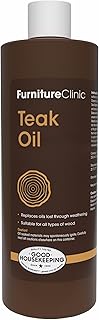
Oil is optional. If you choose it, apply a very thin, even coat to completely dry wood using a lint-free cloth or applicator. The Furniture Clinic Teak Oil offers a natural matte finish and is intended for protecting and refreshing wood, but it should not be treated as a permanent barrier. Wipe away excess oil before it becomes tacky, and allow the furniture to cure according to the label before use.
A sealing system may suit furniture exposed to frequent moisture. The EcoDecors Teak Cleaner & Teak Sealer Kit is designed for teak and other hardwood surfaces, including patio furniture. Confirm that the sealer is compatible with any existing oil or finish; applying incompatible products can produce a cloudy or uneven surface.
5. Protect the furniture between deep cleans
Keep teak raised slightly off persistently wet ground, improve drainage around chair feet, and use breathable covers rather than airtight plastic. Wipe spills promptly, especially wine, grease, sunscreen, and food. A soft brush every week or two prevents grit from becoming embedded in the grain.
Lighting can reveal maintenance issues sooner than daylight. Low, warm illumination grazing across a tabletop makes raised grain, water marks, and oily patches more visible. Position outdoor fixtures so they create comfortable ambience without spotlighting every surface imperfection—or use the sharper light as a useful reminder to inspect furniture before guests arrive.
Tips
- Clean on a mild, overcast day so the solution does not dry too quickly.
- Wash from the top down, but rinse from every angle around joints and hardware.
- Never mix teak cleaners, brighteners, bleach, or household chemicals.
- Remove metal hardware stains with a product specifically approved for the affected material rather than sanding deeply into the teak.
Frequently Asked Questions
How often should teak patio furniture be cleaned?
For most outdoor settings, a thorough clean once or twice a year is sufficient, with occasional spot cleaning between sessions. Furniture beneath trees, near a pool, or exposed to heavy pollen may need more frequent attention.
Can I use a pressure washer on teak?
It is better to avoid pressure washing. High-pressure water can roughen the grain, damage soft areas, and drive moisture into joints. A hose and soft brush provide better control and are safer for regular care.
Should I oil teak after every cleaning?
No. Oil is a finish choice, not a required step. Apply it only if you want a deeper, warmer appearance and are prepared for ongoing maintenance. Naturally weathered teak can remain attractive and durable without oil.
Why does my teak look blotchy after cleaning?
Uneven drying, leftover cleaner, previous oil buildup, or localized staining can all cause patchiness. Rinse again, allow the piece to dry fully, and assess it in even light before applying another product. Avoid adding oil to disguise a problem you have not identified.
Conclusion
The best way to clean teak patio furniture is a controlled, gentle routine: remove debris, use a teak-safe cleaner, brush with the grain, rinse completely, and let the wood dry naturally. Choose brightener, oil, or sealer only to support the finish you want. With sensible products and regular light maintenance, teak can remain comfortable, refined, and beautifully compatible with both bright daytime patios and softly lit outdoor evenings.