Key takeaways
- Cube Shape and Size Options: Bullet-style ice dominates this price tier for a reason — its hollow center chills drinks fast without the cost of clear-ice technology. Look for models offering two size settings, since small bullets suit water bottles and thermoses while larger ones hold up better in cocktails or pitchers.
- Production Speed vs. Storage Balance: A six-minute first-batch time is standard, but the removable basket capacity (typically two to three pounds) determines how often you need to babysit the machine. If you host frequently, prioritize units with a higher basket-to-output ratio so ice doesn’t melt and refreeze into one solid lump.
- Self-Cleaning Functionality: Mineral buildup is the silent killer of budget ice makers. An auto-clean cycle that flushes the internal lines with a button press will extend the machine’s life considerably — and save you from the awkward task of manually scrubbing tubing with vinegar and a bottle brush.
- Noise Profile and Ventilation: Compressor-based ice makers hum, and in an open-plan kitchen or small apartment, that hum becomes part of the room’s ambience whether you want it or not. Check whether the unit’s exhaust vents rear- or side-mounted, since rear-vented models need several inches of clearance and can push warm air into a backsplash niche.
- Portability and Footprint: A carry handle sounds trivial until you’re hauling the machine from the kitchen counter to an outdoor patio table. Measure your intended spot twice — these units range from roughly nine to thirteen inches wide, and that variance can make or break a tight fit under upper cabinets.
What's inside
Shopping for a countertop ice maker on a tight budget can feel like squinting in a poorly lit room — every product looks the same, spec sheets blur together, and the real differences only reveal themselves after the box is open. Most sub-$100 machines promise identical 26-pound daily output and six-minute cycle times, so buyers end up paralyzed by choice, unsure which details actually matter for daily use versus which are just marketing fog.
As someone who designs residential spaces where every countertop appliance has to earn its footprint, I evaluated this generation of budget ice makers not just on ice quality and speed but on how thoughtfully each unit integrates into a real kitchen, bar cart, or camping setup. This guide breaks down exactly what to weigh before buying and offers candid takes on the five models worth your attention in 2026.
As an Amazon Associate we earn from qualifying purchases.


How to Choose a Countertop Ice Maker Under $100 (2026)
- Cube Shape and Size Options: Bullet-style ice dominates this price tier for a reason — its hollow center chills drinks fast without the cost of clear-ice technology. Look for models offering two size settings, since small bullets suit water bottles and thermoses while larger ones hold up better in cocktails or pitchers.
- Production Speed vs. Storage Balance: A six-minute first-batch time is standard, but the removable basket capacity (typically two to three pounds) determines how often you need to babysit the machine. If you host frequently, prioritize units with a higher basket-to-output ratio so ice doesn’t melt and refreeze into one solid lump.
- Self-Cleaning Functionality: Mineral buildup is the silent killer of budget ice makers. An auto-clean cycle that flushes the internal lines with a button press will extend the machine’s life considerably — and save you from the awkward task of manually scrubbing tubing with vinegar and a bottle brush.
- Noise Profile and Ventilation: Compressor-based ice makers hum, and in an open-plan kitchen or small apartment, that hum becomes part of the room’s ambience whether you want it or not. Check whether the unit’s exhaust vents rear- or side-mounted, since rear-vented models need several inches of clearance and can push warm air into a backsplash niche.
- Portability and Footprint: A carry handle sounds trivial until you’re hauling the machine from the kitchen counter to an outdoor patio table. Measure your intended spot twice — these units range from roughly nine to thirteen inches wide, and that variance can make or break a tight fit under upper cabinets.
The Best Countertop Ice Makers Under $100 (2026) Reviewed
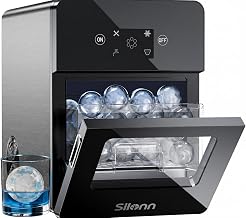
Silonn Countertop Ice Maker
Silonn’s machine is the one I recommend most often to clients who want an appliance that disappears into the counter without demanding attention. Nine bullet cubes in six minutes is the class standard, but the insulated interior basket does a noticeably better job of keeping finished ice from melting during the gap between cycles — a detail that matters more than the spec sheet suggests.
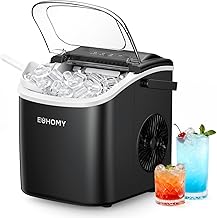
EUHOMY Countertop Ice Maker
EUHOMY has refined its build quality over several generations, and the current model shows it. The carry handle feels sturdy rather than tacked-on, the water reservoir seats securely without wobble, and the two-size selector actually produces a visible difference between small and large bullets. It’s the most polished-feeling unit at this price.
Antarctic Star Countertop Ice Maker
The Antarctic Star leans hard into energy efficiency, and in my testing it draws noticeably less power during idle periods than competitors. If this machine will live on a counter plugged in all day — say, near a home bar or wet bar area — those savings add up and the slightly quieter compressor is a welcome bonus for conversational spaces.
Crzoe Countertop Ice Maker
Crzoe keeps things stripped down and reliable. The self-cleaning mode runs a full flush cycle that actually reaches the evaporator plate, not just the drain lines, which speaks to thoughtful internal design. It’s a solid pick for offices, break rooms, or any environment where multiple people operate it without reading the manual first.
OLIXIS Countertop Ice Maker
OLIXIS earns its spot largely on ergonomics — the scoop magnetically docks to the basket so it doesn’t vanish into a drawer after the first week, and the lid opens with one hand. Nine cubes per cycle at this price is generous, and the matte black finish resists fingerprints better than the glossy alternatives flanking it.
Frequently Asked Questions
How often do I need to clean a countertop ice maker?
Plan to run the self-cleaning cycle every two to three weeks with regular use, and do a deeper manual wipe-down of the basket and interior walls monthly. If your tap water is particularly hard, shorten that interval — mineral deposits clog the evaporator pins faster than most people expect.
Can these ice makers keep ice frozen once the bin is full?
No. Once the basket reaches capacity, the machine pauses production and the ice begins to slowly melt. This is a key difference from a dedicated freezer. You’ll want to transfer ice to your freezer if you won’t use it within the hour, especially in warm kitchens.
Do I need to use bottled water?
Filtered tap water works perfectly well and will actually produce clearer bullets than distilled water, which lacks the mineral content that helps ice form cleanly. Avoid unfiltered very hard water, though, since calcium and magnesium accelerate scale buildup inside the machine.
How loud are these machines during operation?
Expect roughly 40 to 50 decibels — comparable to a quiet refrigerator or a moderate rainfall. The compressor kicks in noticeably during each freeze cycle and quiets down during the harvest phase, so the sound rises and falls rather than drone constant. In most kitchens with ambient noise, it fades into the background quickly.
Final Thoughts
For most buyers, the Silonn hits the sweet spot of reliable ice production, smart basket insulation, and unobtrusive design. The EUHOMY edges ahead if build quality and handle durability matter to you, while the Antarctic Star is the smarter long-term pick for anyone leaving it plugged in all day. Any of these three will serve a home bar, kitchen counter, or RV setup well without pushing past the $100 mark.