Key takeaways
- Motor Power and Blade Speed: For furniture-grade hardwoods like walnut and maple, look for at least 15 amps and 4,500+ RPM. Anything below that bogs down on dense stock and leaves burn marks that no amount of sanding erases cleanly.
- Rip Capacity: A 30-inch-plus rip capacity lets you break down sheet goods and wide boards in a single pass. If you build cabinets or tables with large tops, short rip fences become a daily frustration.
- Bevel Range and Precision: A 0–45° bevel covers angled joinery and edge work. Check that the bevel lock holds its position under vibration — a saw that drifts half a degree mid-cut produces miters that never close flush.
- Table Surface and Fence Quality: The fence is the backbone of repeatable cuts. A flat, extendable table paired with a parallel-locking fence keeps both ripping and crosscutting consistent from the first board to the last.
- Portability vs. Stability: Jobsite-style saws with rolling stands suit small shops and on-site work. Stationary or benchtop models trade mobility for less vibration, which translates directly into cleaner joinery surfaces.
What's inside
Picking a table saw for furniture work means sorting through a flood of specs, motors, and fold-out stands while trying to figure out which ones actually matter for the cuts you’ll make. Rip capacity, blade speed, bevel range, and portability all pull in different directions, and a misstep can leave you with a tool that either underperforms on hardwood or eats up your entire workshop footprint.
This guide breaks down the strongest options across a range of budgets and shop sizes, highlights the trade-offs worth paying attention to, and narrows the field so you can invest in a saw that earns its keep at the workbench.
As an Amazon Associate we earn from qualifying purchases.


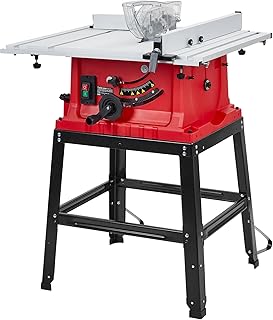

How to Choose a Table Saw For Furniture Making (2026)
- Motor Power and Blade Speed: For furniture-grade hardwoods like walnut and maple, look for at least 15 amps and 4,500+ RPM. Anything below that bogs down on dense stock and leaves burn marks that no amount of sanding erases cleanly.
- Rip Capacity: A 30-inch-plus rip capacity lets you break down sheet goods and wide boards in a single pass. If you build cabinets or tables with large tops, short rip fences become a daily frustration.
- Bevel Range and Precision: A 0–45° bevel covers angled joinery and edge work. Check that the bevel lock holds its position under vibration — a saw that drifts half a degree mid-cut produces miters that never close flush.
- Table Surface and Fence Quality: The fence is the backbone of repeatable cuts. A flat, extendable table paired with a parallel-locking fence keeps both ripping and crosscutting consistent from the first board to the last.
- Portability vs. Stability: Jobsite-style saws with rolling stands suit small shops and on-site work. Stationary or benchtop models trade mobility for less vibration, which translates directly into cleaner joinery surfaces.
The Best Table Saw For Furniture Making (2026)s Reviewed
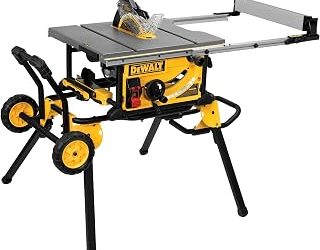
DEWALT 10-Inch Table Saw with Rolling Stand (DWE7491RS)
The DWE7491RS remains the benchmark for jobsite furniture work. Its 32½-inch rip capacity handles most hardwood slabs, and the rolling stand folds down in seconds without sacrificing the rock-solid fence alignment DEWALT is known for. If your shop doubles as a spare bedroom on weekends, this is the saw that adapts without compromise.
DEWALT 8¼-Inch Compact Jobsite Saw (DWE7485)
Where every inch of floor space counts, the DWE7485 delivers surprising precision from a remarkably compact body. It trades raw rip width for a tight footprint, making it ideal for furniture makers working in apartments, garages, or shared spaces. The 15-amp motor handles softwoods and lighter hardwoods without strain.
DOVAMAN 10-Inch Table Saw with Stand (DTS10A)
The DOVAMAN’s copper motor pushes 5,300 RPM — among the fastest in this roundup — and its extendable table gives you extra support on rip cuts without a permanent workshop commitment. The bevel range stays accurate under load, and the included stand keeps vibration dampened during longer furniture-building sessions.
15-Amp Portable 10-Inch Benchtop Saw
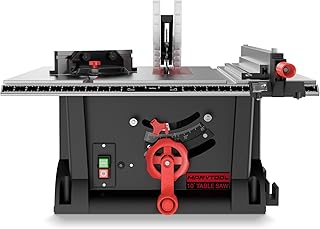
This budget-friendly benchtop model checks the essentials: 4,600 RPM, a 36-tooth blade, and both 90° and 45° cutting capability in a frame light enough to stow between projects. It’s a solid starting point for hobbyist furniture makers who want functional crosscuts and rip cuts without a significant upfront investment.
15-Amp 10-Inch 5000RPM Table Saw with Stand
At 5,000 RPM with a 36 × 25-inch tabletop, this saw balances speed and surface area for mid-range furniture projects. The included protective cover addresses dust management, and the adjustable depth control handles everything from shallow grooves to full-depth rips across wood, plastic, and light metals.
Frequently Asked Questions
Can a portable table saw handle hardwood furniture projects?
Yes, most 15-amp portable saws cut walnut, cherry, and maple without issue, as long as the blade is sharp and the motor speed sits above 4,500 RPM. The limiting factor is typically rip capacity, not power.
How important is the fence system on a table saw?
Extremely. A misaligned or wobbly fence produces inconsistent rip widths that ruin joinery tolerances. Investing in a saw with a reliable locking fence — or upgrading the fence after purchase — pays for itself in saved material and tighter joints.
What blade should I install for furniture making?
A 40-tooth combination blade handles most ripping and crosscutting. For finer finish work on visible surfaces, swap to an 80-tooth blade. Keep a dedicated 24-tooth rip blade on hand for breaking down rough lumber efficiently.
Do I need a table saw stand, or can I use a benchtop saw alone?
A stand raises the saw to a comfortable working height and absorbs vibration that causes blade wander. Folding stands suit small shops, while fixed stands provide the most stability for precision furniture work.
Final Thoughts
For most furniture makers balancing performance with shop space, the DEWALT DWE7491RS offers the best combination of rip capacity, fence reliability, and portability. The DOVAMAN DTS10A punches above its price with impressive motor speed and an extendable table, while the DEWALT DWE7485 remains the pick for anyone building furniture in genuinely tight quarters.