Key takeaways
- Roof Design and Airflow: A double-tiered or sloping metal roof doesn’t just shed rain—it creates convection channels that pull smoke upward and away. Open eave designs let warm evening light escape naturally instead of pooling harshly beneath the canopy.
- Integrated Power Options: Built-in outlets, USB ports, or AC power strips let you run string lights, Bluetooth speakers, or a rotisserie motor without trailing extension cords across the patio, which kills both safety and aesthetics.
- Frame Material and Finish Tone: Cedar reads warm and organic under pendant lighting; aluminum or black steel gives a sharper, modern silhouette. Match the frame tone to your existing furniture hardware so the gazebo feels intentional, not bolted on.
- Dimensions and Double-Grill Clearance: If you run two grills or a grill-plus-smoker setup, look for widths above ten feet and verify that the interior height keeps the cook’s eye line clear of the front beam—a common design flaw in narrower models.
- Shelving and Utility Integration: Side shelves, hooks, and built-in bottle openers keep the work triangle tight, but check their placement relative to the grill lid swing. Poorly positioned shelves cast shadows exactly where you need task light on the cooking surface.
What's inside
Most people buy a grill gazebo thinking about rain coverage, then realize six months later that the structure kills the mood entirely—swallowing ambient light, trapping smoke at face level, or making the whole patio feel like a shipping container with a roof. The wrong pick turns your outdoor kitchen into a dim cave instead of the atmospheric gathering spot it should be.
As someone who designs outdoor lighting layouts for residential spaces, I evaluate grill gazebos by how they shape light, channel air, and define zones in a living area—not just whether they keep the grill dry. This 2026 roundup covers five structures that each handle the ambience question differently, so you can match one to your yard’s character rather than settling for whatever fits the budget.
As an Amazon Associate we earn from qualifying purchases.


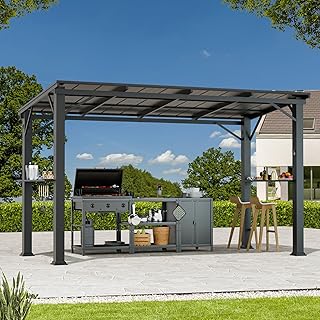

How to Choose a Grill Gazebo (2026)
- Roof Design and Airflow: A double-tiered or sloping metal roof doesn’t just shed rain—it creates convection channels that pull smoke upward and away. Open eave designs let warm evening light escape naturally instead of pooling harshly beneath the canopy.
- Integrated Power Options: Built-in outlets, USB ports, or AC power strips let you run string lights, Bluetooth speakers, or a rotisserie motor without trailing extension cords across the patio, which kills both safety and aesthetics.
- Frame Material and Finish Tone: Cedar reads warm and organic under pendant lighting; aluminum or black steel gives a sharper, modern silhouette. Match the frame tone to your existing furniture hardware so the gazebo feels intentional, not bolted on.
- Dimensions and Double-Grill Clearance: If you run two grills or a grill-plus-smoker setup, look for widths above ten feet and verify that the interior height keeps the cook’s eye line clear of the front beam—a common design flaw in narrower models.
- Shelving and Utility Integration: Side shelves, hooks, and built-in bottle openers keep the work triangle tight, but check their placement relative to the grill lid swing. Poorly positioned shelves cast shadows exactly where you need task light on the cooking surface.
The Best Grill Gazebo (2026)s Reviewed
Modern Shade Aluminum 6×8
The galvanized steel double roof on this compact aluminum frame creates a natural chimney effect that lifts smoke cleanly while the open column profile lets ambient string lighting fill the space without obstruction. The integrated USB charging power strip and side shelves make it a self-contained cooking station, and the extra-wide column design gives the structure a grounded, architectural presence even in smaller patios.
Sunjoy Cedar 8×12
This is the gazebo I’d recommend for homeowners who want the patio to feel like an extension of the living room. The cedar frame absorbs and softens overhead light beautifully, and the built-in electrical outlets plus AC power port let you hardwire a pendant or two for genuine ambient layering. The decorative fence panels add visual warmth without compromising ventilation.
Backyard Discovery Saxony XL 12×6
At twelve feet long, this cedar pavilion gives you room to breathe—and room to light. The PowerPort system supports multiple devices, and the snow-load-rated galvanized roof handles four-season use without sagging. The built-in bar tops double as serving surfaces, and their placement allows you to position uplighting along the base for a dramatic evening silhouette.
MUPATER 6×13 Wooden
The extended thirteen-foot footprint comfortably fits two full-size grills, which is rare. The sloping metal roof angles smoke toward the rear and leaves the front open for natural light penetration, making this a strong pick for covered patios that face west and catch golden-hour light. The heavy-duty hardtop keeps the structure visually substantial without feeling enclosing.
Modern Shade Cedar 6×8
This smaller cedar model includes a paper towel holder and USB power strip as thoughtful finishing touches, but its real value is the galvanized steel roof’s reflective quality—it bounces soft light downward onto the cooking area at dusk instead of absorbing it like matte-finish alternatives. Compact enough for urban patios, it still reads as a design anchor rather than a utility add-on.
Frequently Asked Questions
Do grill gazebos need to be anchored?
Yes. Most hardtop gazebos over six feet tall should be surface-mounted or post-set depending on your patio material. Wind resistance ratings assume proper anchoring, and a gazebo that shifts even slightly will disrupt the clean lines and structural lighting effect you’re building around.
Can I add my own lighting to a grill gazebo?
Absolutely, and I’d encourage it. Models with built-in power ports make this especially straightforward—run LED strip lighting along the interior roof beams or hang a weather-rated pendant from the center ridge. Avoid placing light sources directly above the grill surface, as this creates glare off reflective lids and flattens visibility.
Which frame material holds up best in humid climates?
Aluminum with a powder-coated finish resists moisture better than untreated wood, but quality cedar performs well too thanks to natural oils that repel rot. If you go cedar, plan on resealing every two to three years to maintain both structural integrity and that warm surface tone that photographs so well at dusk.
Are six-foot-wide gazebos big enough for a standard grill?
For a single standard grill with room to work on either side, six feet is adequate. If you want a prep table, side burner, or second cooking appliance inside the gazebo footprint, step up to at least eight feet wide—otherwise you’ll crowd the cook zone and the structure’s visual balance falls apart.
Final Thoughts
For most buyers balancing size, ambience potential, and year-round durability, the Backyard Discovery Saxony XL stands out as the strongest all-around choice. Homeowners prioritizing mood and material warmth should look at the Sunjoy Cedar 8×12 for its natural light-softening qualities and integrated power. If you’re working with a compact urban patio, the Modern Shade Cedar 6×8 delivers the best light-to-footprint ratio in this group.