Key takeaways
- Blade Size & Cutting Depth: A 10-inch blade handles thicker stock—up to roughly 3.35 inches at 90°—while 6.5- and 8-inch saws suit lighter work. Match blade diameter to your typical material thickness; undersizing forces multiple passes and introduces burn marks that even perfect overhead task lighting can’t hide.
- Motor Amperage & Power: 15-amp motors (around 2.5 HP) push through plywood, OSB, and hardwood without bogging down. Lower-wattage motors around 700W work for softwood and thin stock but stall on dense material. Always check whether the motor draws from a standard 120V household outlet.
- Fence System & Rip Capacity: A rack-and-pinion fence delivers repeatable, parallel cuts—critical for furniture joinery. Rip capacity of 24 inches or more opens the door to sheet-good breakdowns. Loose fences create drift, which compounds across every cut and ruins joinery tolerance.
- Bevel Range & Miter Capability: A 0–45° bevel cut covers angled joinery, chamfers, and compound miters. Confirm that the bevel lock is solid and the angle detents are positive; cheap mechanisms slip mid-cut, especially when the saw vibrates at full RPM.
- Dust Collection & Portability: A dust collector port keeps your workspace—and your task lighting fixtures—clean, preserving visibility during long cuts. A folding stand with wheels matters if your saw lives in a shared space or garage where you need to reclaim floor area after each session.
What's inside
Finding the right benchtop table saw can feel like squinting in a poorly lit workshop—every option looks roughly the same until you get it home and realize the cut quality, dust management, or motor power doesn’t match what your projects demand. Buyers often fixate on price alone and overlook blade size, rip capacity, bevel range, and motor amperage—the very specs that determine whether a saw handles hardwood furniture builds or buckles on basic crosscuts.
This guide cuts through the noise. We evaluated the current benchtop table saw landscape for 2026, comparing motor strength, cutting depth, portability, fence accuracy, and build quality across six popular models so you can choose the one that genuinely fits your workshop setup, your lighting conditions, and your craft.
As an Amazon Associate we earn from qualifying purchases.
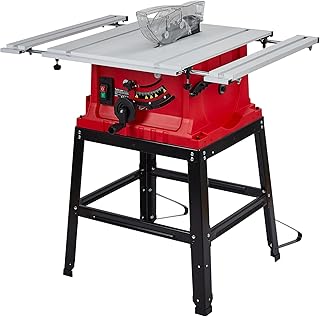


How to Choose a Benchtop Table Saw (2026)
- Blade Size & Cutting Depth: A 10-inch blade handles thicker stock—up to roughly 3.35 inches at 90°—while 6.5- and 8-inch saws suit lighter work. Match blade diameter to your typical material thickness; undersizing forces multiple passes and introduces burn marks that even perfect overhead task lighting can’t hide.
- Motor Amperage & Power: 15-amp motors (around 2.5 HP) push through plywood, OSB, and hardwood without bogging down. Lower-wattage motors around 700W work for softwood and thin stock but stall on dense material. Always check whether the motor draws from a standard 120V household outlet.
- Fence System & Rip Capacity: A rack-and-pinion fence delivers repeatable, parallel cuts—critical for furniture joinery. Rip capacity of 24 inches or more opens the door to sheet-good breakdowns. Loose fences create drift, which compounds across every cut and ruins joinery tolerance.
- Bevel Range & Miter Capability: A 0–45° bevel cut covers angled joinery, chamfers, and compound miters. Confirm that the bevel lock is solid and the angle detents are positive; cheap mechanisms slip mid-cut, especially when the saw vibrates at full RPM.
- Dust Collection & Portability: A dust collector port keeps your workspace—and your task lighting fixtures—clean, preserving visibility during long cuts. A folding stand with wheels matters if your saw lives in a shared space or garage where you need to reclaim floor area after each session.
The Best Benchtop Table Saws (2026) Reviewed
DOVAMAN 10-Inch 15A Table Saw
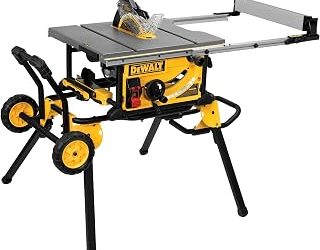
The DOVAMAN DTS10A packs a copper-wound motor hitting 5,300 RPM with genuine authority, driving a 10-inch blade through 3.35 inches of stock at 90° and 2.48 inches at 45°. Its extendable table on one side boosts rip capacity meaningfully, and the included stand positions the cutting surface at a comfortable working height—reducing the shadows your body casts across the blade line when ambient overhead light isn’t ideal.
FINDBUYTOOL 10-Inch Jobsite Table Saw
Where the FINDBUYTOOL distinguishes itself is the rack-and-pinion fence system and a generous 24-inch rip capacity—features typically reserved for pricier contractor saws. The 15-amp, 2.5-HP motor feels planted during continuous cuts through plywood and OSB. If you’re breaking down sheet goods for furniture panels, this fence alone justifies serious consideration; it stays true across repeated setups without the micro-adjust headaches that plague budget competitors.
10-Inch Portable Benchtop Table Saw with Stand
This saw offers a solid balance of 5,000 RPM performance and practical extras—the included stand and push stick show attention to user safety. Adjustable blade height and a 0–45° bevel range cover standard furniture-making operations, and the dust collector port does a respectable job of channeling debris when paired with an appropriate vacuum. For the price tier, the cut quality on crosscuts is surprisingly clean.
Hoteche 8-Inch Portable Table Saw
The Hoteche occupies a different niche entirely. At 720W with a 20-tooth carbide-tipped blade, it’s a compact solution for home workshop DIYers tackling small-box construction, picture frames, and light shelving. The smaller footprint means it fits on a compact bench where every square inch of surface area counts—and where a well-placed clamp light can illuminate the entire work zone without fighting around a massive tool body.
6.5-Inch 5,300RPM Portable Benchtop Table Saw
Compact but spirited, this 6.5-inch saw spins fast enough to deliver smooth finishes on lighter materials including wood, plastic, and thin metal stock. The included protective cover adds a layer of safety that many budget saws skip entirely. It’s best suited for hobbyists who work with sheet goods under half an inch and need a saw that stores easily—ideal for a multipurpose room where the workspace doubles as creative studio or craft area.
Frequently Asked Questions
Can a benchtop table saw cut hardwood like oak or maple?
Yes—models with 15-amp motors and 10-inch blades, such as the DOVAMAN and FINDBUYTOOL, handle hardwoods up to about 3.35 inches thick at 90°. Use a sharp carbide blade and feed at a steady pace; forcing the stock causes burning and motor strain.
How important is a dust collection port on a benchtop saw?
Very. Fine sawdust coats surfaces quickly, scattering light and degrading visibility right where precision matters most. A port connected to even a basic shop vacuum dramatically reduces airborne particulate and keeps your cutting line visible throughout the job.
What’s the difference between a 6.5-inch and a 10-inch benchtop table saw?
Blade diameter directly determines maximum cutting depth and material range. A 10-inch blade cuts through standard 2×4 lumber in a single pass; a 6.5-inch blade requires thinner stock or multiple passes. Larger blades also run cooler at equivalent feed rates, extending blade life.
Do I need a stand, or can I place a benchtop saw on my existing workbench?
A dedicated stand positions the table at an ergonomic height, reduces vibration transfer, and often folds for storage. Placing a saw on a shared workbench can work for light-duty use, but ensure the surface is dead level and the saw is clamped securely—any rocking introduces blade misalignment during cuts.
Final Thoughts
For most home furniture builders, the DOVAMAN 10-Inch 15A stands out as the best overall pick—powerful motor, respectable cutting depth, and a useful extendable table. The FINDBUYTOOL earns our nod for anyone who regularly rips sheet goods, thanks to its rack-and-pinion fence and 24-inch rip capacity. And if you’re working in a tight multipurpose space and don’t need full 10-inch capability, the Hoteche 8-Inch delivers surprising precision in a footprint that won’t dominate your room.