Key takeaways
- Kerf Thickness: Full-kerf blades (1/8 inch) stay truer and dissipate heat more efficiently than thin-kerf alternatives. For dense hardwoods like hard maple or purpleheart, the extra mass reduces vibration and produces a cleaner reflectable surface.
- Tooth Count and Grind: More teeth mean finer cuts. ATB (Alternate Top Bevel) teeth slice end grain cleanly, while FTG (Flat Top Grind) teeth excel at ripping along the grain. Combination blades split the difference for general-purpose work.
- Carbide Quality: Higher-grade carbide stays sharp longer and resists micro-chipping, which is what causes the fuzzy tear-out that ruins a finish under directional lighting. Look for micro-grain or TiCo blends.
- Vibration Dampening: Laser-cut expansion slots and anti-vibration bodies reduce harmonic ringing. The quieter the blade, the smoother the cut—this is not just about comfort, it directly affects surface finish.
- Arbor Size Compatibility: Most 10-inch table saws use a 5/8-inch arbor. Verify yours before ordering; a mismatched arbor means a return, not a cut.
What's inside
There is a specific frustration every woodworker hits eventually: a board that should gleam under gallery lighting instead looks dull, chewed, and unfinished. You have sanded, you have Jointed, you have done everything right at the bench—yet the blade left microscopic tear-out that catches light like a wound. For anyone building furniture meant to live in a real room, under real ambient conditions, that surface quality is not negotiable. Choosing the wrong table saw blade for hardwood means wasted lumber and furniture that never quite looks finished, no matter how carefully you apply oil or lacquer.
This guide breaks down the blade characteristics that actually matter when you are cutting hardwood—kerf width, tooth geometry, carbide grade, and harmonic dampening—and then reviews six options we would trust in our own shop. Whether you are crosscutting walnut for a sideboard top or ripping white oak for a table apron, the picks below are organized so you can match blade type to cut type with confidence.
As an Amazon Associate we earn from qualifying purchases.




How to Choose a Table Saw Blade For Hardwood (2026)
- Kerf Thickness: Full-kerf blades (1/8 inch) stay truer and dissipate heat more efficiently than thin-kerf alternatives. For dense hardwoods like hard maple or purpleheart, the extra mass reduces vibration and produces a cleaner reflectable surface.
- Tooth Count and Grind: More teeth mean finer cuts. ATB (Alternate Top Bevel) teeth slice end grain cleanly, while FTG (Flat Top Grind) teeth excel at ripping along the grain. Combination blades split the difference for general-purpose work.
- Carbide Quality: Higher-grade carbide stays sharp longer and resists micro-chipping, which is what causes the fuzzy tear-out that ruins a finish under directional lighting. Look for micro-grain or TiCo blends.
- Vibration Dampening: Laser-cut expansion slots and anti-vibration bodies reduce harmonic ringing. The quieter the blade, the smoother the cut—this is not just about comfort, it directly affects surface finish.
- Arbor Size Compatibility: Most 10-inch table saws use a 5/8-inch arbor. Verify yours before ordering; a mismatched arbor means a return, not a cut.
The Best Table Saw Blade For Hardwood (2026)s Reviewed
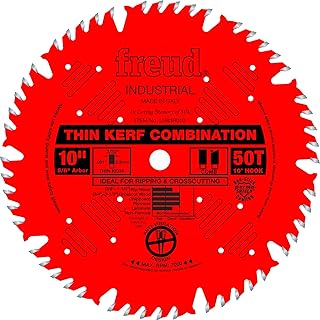
Freud LU83R010 10-Inch 50-Tooth Combination
The Freud LU83R010 blends TiCo hi-density carbide with 50 teeth in a thin-kerf combination grind, making it a strong all-rounder for furniture builders who do not want to swap blades between rip and crosscut tasks. Its laser-cut anti-vibration slots keep the cut quiet and consistent, producing a surface that reads clean even under raking light.
CMT Orange 256.050.10 10-Inch 50-Tooth Combination
CMT’s 50-tooth combination blade uses a 15-degree ATB grind with a flat raker tooth to balance ripping feed rate against crosscut smoothness. The non-stick orange coating reduces resin buildup, which matters when you are running half a dozen boards through in one session and want consistent performance from first cut to last.
Freud LU85R010 10-Inch 70-Tooth Crosscut
When the job calls exclusively for crosscutting—docking table legs, trimming door panels, or sizing mitered frames—the LU85R010’s 70-tooth configuration delivers a glassy end-grain surface that typically needs no further refinement before finishing. It is purpose-built for furniture-scale crosscuts where light falls across the end grain unforgivingly.
WEN BL1080 10-Inch 80-Tooth Ultra-Fine Finish
The WEN BL1080 pushes to 80 teeth at a price point that undercuts most premium competitors. It excels on miter saws and table saws alike, producing an ultra-fine finish on both hardwood and softwood. For hobbyists building furniture on a budget, this blade delivers a level of surface quality that is hard to argue with at the register.
10-Inch 80-Tooth Premium Carbide Blade
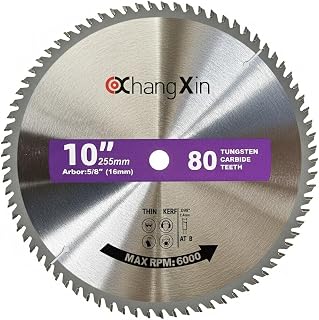
This 80-tooth blade is engineered specifically for smooth crosscutting through hardwood and softwood alike, with a 5/8-inch arbor that fits most standard saws. The high tooth count produces a remarkably refined kerf wall, minimizing the need for post-cut sanding and preserving the crisp edges that define well-crafted furniture.
Frequently Asked Questions
What tooth count should I use for hardwood on a table saw?
For ripping hardwood, 24 to 40 teeth keep feed rate manageable while producing a usable surface. For crosscutting, aim for 60 to 80 teeth to minimize tear-out on end grain. Combination blades in the 40-to-50 range offer a reasonable middle ground if you prefer not to switch blades frequently.
Do thin-kerf blades work well on hardwood?
Thin-kerf blades remove less material, which is gentler on the motor and produces less sawdust. However, they flex more under load, which can introduce drift on dense hardwoods. Full-kerf blades are generally more stable and produce a more consistently flat cut surface.
How often should I replace my table saw blade for hardwood use?
A quality carbide blade should last through dozens of hardwood projects before dulling noticeably. You will know it is time to replace or sharpen when you see burn marks, increased resistance during the feed, or a surface that no longer looks clean under close inspection.
Can I use one blade for both ripping and crosscutting hardwood?
Combination blades like the Freud LU83R010 or the CMT 256.050.10 are designed for exactly that. You will sacrifice some speed on pure rips and some smoothness on pure crosscuts, but for a home furniture shop the convenience of a single blade often outweighs those small compromises.
Final Thoughts
For most home furniture builders, the Freud LU83R010 strikes the best balance between rip and crosscut performance in a single blade. If your work is predominantly crosscutting, the Freud LU85R010 delivers a finish that catches light beautifully with minimal effort at the sanding station. And for those watching the budget without wanting to compromise surface quality, the WEN BL1080 is genuinely hard to beat.