Key takeaways
- Light Blue and Teal Tones: Cool-wavelength colors like peacock blue and light blue hold visual richness under bright sunlight and don’t wash out the way pastels do. From an ambience standpoint, they anchor a space without competing with natural greenery — a subtle but critical detail for cohesive outdoor design.
- UV-Stable Pigments in Cushion Fabrics: The furniture frame may be weather-resistant, but cushion fabric is where color failure starts. Look for solution-dyed polyester or olefin covers, which lock pigment into the fiber rather than coating the surface. The Rattaner and Aoxun sets in our roundup use anti-slip, solution-dyed cushion covers specifically engineered for this.
- Cover Inclusion Extends Color Life: A set that ships with waterproof covers buys you seasons of color preservation. Peacock blue furniture stored under covers between storms will maintain saturation two to three times longer than uncovered equivalents exposed to rain and sun cycling.
- Coordinating Wicker Tone Matters: Black or dark espresso wicker paired with blue cushions creates a sharper contrast that reads more intentional and modern. Lighter wicker with blue can skew coastal-casual — equally valid, but a different design register entirely.
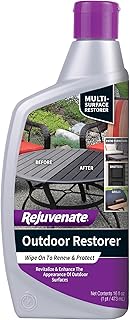
- Restorer Products as Color Insurance: Even the best pigment benefits from periodic maintenance. Products like Rejuvenate Outdoor Restorer can revive faded plastic, vinyl, and metal surfaces on furniture frames, extending the window between replacements.
What's inside
Choosing an outdoor furniture color sounds trivial until you’re standing in your backyard watching afternoon sun bleach last summer’s purchase into a lifeless husk. The real challenge isn’t personal taste — it’s finding a hue that holds its depth under UV exposure, resists rain without fading into chalky monotone, and still makes your outdoor room feel like a designed space rather than a holding zone for mismatched clearance finds. Buyers bounce between dozens of nearly identical product listings without any framework for comparing how specific pigment families perform outdoors over time.
This guide cuts through the noise with a lighting designer’s lens on color endurance and atmosphere. We evaluated how each shade reads under golden hour, overcast skies, and harsh midday light — conditions your furniture lives in daily. Below you’ll find our curated picks, a practical selection framework, and answers to the questions that actually matter when committing to a color outdoors.
As an Amazon Associate we earn from qualifying purchases.


How to Choose a Color for Outdoor Patio Furniture (2026)
- Light Blue and Teal Tones: Cool-wavelength colors like peacock blue and light blue hold visual richness under bright sunlight and don’t wash out the way pastels do. From an ambience standpoint, they anchor a space without competing with natural greenery — a subtle but critical detail for cohesive outdoor design.
- UV-Stable Pigments in Cushion Fabrics: The furniture frame may be weather-resistant, but cushion fabric is where color failure starts. Look for solution-dyed polyester or olefin covers, which lock pigment into the fiber rather than coating the surface. The Rattaner and Aoxun sets in our roundup use anti-slip, solution-dyed cushion covers specifically engineered for this.
- Cover Inclusion Extends Color Life: A set that ships with waterproof covers buys you seasons of color preservation. Peacock blue furniture stored under covers between storms will maintain saturation two to three times longer than uncovered equivalents exposed to rain and sun cycling.
- Coordinating Wicker Tone Matters: Black or dark espresso wicker paired with blue cushions creates a sharper contrast that reads more intentional and modern. Lighter wicker with blue can skew coastal-casual — equally valid, but a different design register entirely.
- Restorer Products as Color Insurance: Even the best pigment benefits from periodic maintenance. Products like Rejuvenate Outdoor Restorer can revive faded plastic, vinyl, and metal surfaces on furniture frames, extending the window between replacements.
The Best Colors for Outdoor Patio Furniture (2026) Reviewed
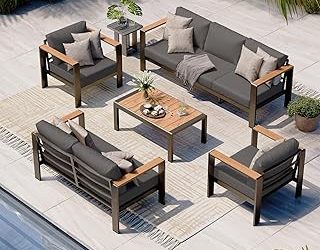
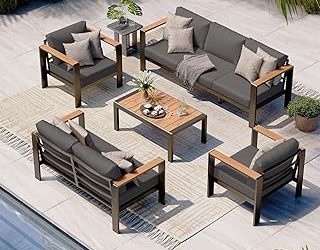
Aoxun 7-Piece Peacock Blue Sectional Set
This sectional reads as a saturated jewel tone under direct light and deepens toward navy in shade — exactly the kind of color behavior a designer looks for because it gives your patio two moods without changing anything. The included waterproof covers protect those cushions between gatherings, and the seven-piece configuration lets you adapt the layout as your outdoor room evolves.
Rattaner 7-Piece Peacock Blue Collection
Rattaner’s seven-piece version delivers the most complete peacock blue package in this roundup, with anti-slip cushion technology that keeps the seating arrangement visually neat — a detail that reads as intentional design rather than tossed-together furniture. The color maintains its depth across a wide range of lighting conditions, from foggy mornings to bright weekend afternoons.
Rattaner 6-Piece Peacock Blue Set
Smaller patios benefit from this six-piece configuration, which distills the same color performance into a tighter footprint. The peacock blue cushions pair with dark wicker framing to create a contrast ratio that feels grounded rather than floaty — important when you’re working with limited square footage where every element is visible.
Rattaner 5-Piece Peacock Blue Conversation Set
For balconies or compact courtyards, this five-piece set proves that restricted space doesn’t require abandoning color ambition. The peacock blue still commands attention without overwhelming a small area, and the anti-slip cushions stay put through actual use rather than staging photos.
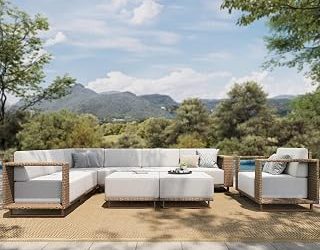
May in Color 7-Piece Light Blue Sectional
This light blue option occupies a different end of the cool-spectrum palette — airier and more relaxed than peacock blue, suited to spaces where you want the furniture to feel present but not assertive. Under overcast skies it reads almost powdery, while direct sun brings out a warmer aqua undertone that gives the patio a resort-like calm.
Frequently Asked Questions
Why does blue work better outdoors than most colors?
Blue pigments, particularly in the teal-to-navy range, tend to resist UV degradation more gracefully than reds and yellows, which shift toward orange or pink as they fade. Blue’s visual coolness also counterbalances the warm light that dominates outdoor spaces, keeping your patio from feeling visually overcooked in summer.
How often should I use outdoor restorer on my furniture?
Most manufacturers recommend applying a restorer product like Rejuvenate Outdoor Restorer once or twice per season, focusing on plastic and vinyl components that chalk or whiten under sun exposure. It won’t replace pigment, but it restores the surface finish that makes color appear intentional rather than neglected.
Do waterproof covers actually preserve cushion color?
Consistently used waterproof covers dramatically slow color fading by blocking the UV-rain cycle that accelerates pigment breakdown. Covers matter most during off-season storage and between use days — leaving cushions uncovered overnight accelerates dew-induced fading that compounds over time.
Is peacock blue too bold for a small patio?
Paradoxically, a bold color in a small space can make it feel more designed and less cluttered because it reads as a deliberate choice rather than a default. Peacock blue in a five-piece set on a modest patio creates a focal point that simplifies the visual field instead of fragmenting it.
Final Thoughts
For most buyers seeking a balance of color durability, design presence, and practical value, the Rattaner 7-Piece Peacock Blue Set stands out as the strongest all-around choice. The Aoxun 7-Piece earns a close second for its superior cover system and sectional flexibility. If your space calls for something softer and less saturated, the May in Color Light Blue sectional delivers a sophisticated alternative that still performs well under the punishing conditions outdoor furniture endures daily.