Key takeaways
- Rip Capacity: Cabinet panels are almost always 24 to 32 inches wide. A saw with less than a 24-inch rip capacity will force you into awkward secondary setups. Prioritize models offering at least 30 inches if you build face frames and large carcases regularly.
- Motor Power and Blade Speed: A 15-amp motor turning 4,000+ RPM handles dense hardwoods like cherry and walnut without bogging down. Under-powered saws leave burn lines that show through your finish coat no matter how good the lighting in your shop is.
- Fence System and Accuracy: The fence is where cabinet-grade work succeeds or fails. Look for a rack-and-pinion or T-glide style fence that locks parallel to the blade within 1/64 inch across the full rip range. A wobbly fence compounds every error downstream.
- Portability vs. Stationary Stability: Garage and basement shops often pull double duty as living space. A saw on a folding rolling stand gives you floor flexibility without sacrificing the rigidity needed for long, straight cuts. Dedicated cabinet saws demand permanent real estate.
- Dust Management and Shop Environment: Fine cabinet work generates airborne particulate that settles on every lit surface in your shop, dulling task lighting and compromising finish quality. Choose a saw with a well-sealed dust port and pair it with overhead ambient lighting panels that won’t trap dust on exposed lens surfaces.
What's inside
Walk into most woodworking forums and you’ll see the same question repeated a hundred different ways: which table saw actually handles cabinet-grade work without blowing the budget or hogging the entire shop? The confusion is understandable. A cabinetmaking table saw needs clean rip cuts through 2- or 3-inch hardwood, a fence that locks dead square under load, and enough rip capacity for full plywood sheets. Meanwhile, many buyers end up overpaying for capacity they’ll never touch or underspending on a unit that churns out burn marks before the first project is done. Getting the match wrong costs not just money but hours of frustration and mediocre joinery.
This guide cuts through the noise. We evaluated portable and benchtop table saws against the specific demands of cabinet work—rip capacity, motor power, fence accuracy, dust collection, and how each machine sits inside a well-lit, organized shop environment. Good lighting and workspace design are often overlooked when choosing tools, but the right saw paired with thoughtful workshop ambience (think shadow-free overhead panels, anti-fatigue flooring, and dust-minimized airflow) makes the difference between a space you dread and one you linger in. Below you’ll find our curated picks, a practical buying checklist, and answers to the questions that matter most.
As an Amazon Associate we earn from qualifying purchases.


How to Choose a Table Saw For Cabinet Making (2026)
- Rip Capacity: Cabinet panels are almost always 24 to 32 inches wide. A saw with less than a 24-inch rip capacity will force you into awkward secondary setups. Prioritize models offering at least 30 inches if you build face frames and large carcases regularly.
- Motor Power and Blade Speed: A 15-amp motor turning 4,000+ RPM handles dense hardwoods like cherry and walnut without bogging down. Under-powered saws leave burn lines that show through your finish coat no matter how good the lighting in your shop is.
- Fence System and Accuracy: The fence is where cabinet-grade work succeeds or fails. Look for a rack-and-pinion or T-glide style fence that locks parallel to the blade within 1/64 inch across the full rip range. A wobbly fence compounds every error downstream.
- Portability vs. Stationary Stability: Garage and basement shops often pull double duty as living space. A saw on a folding rolling stand gives you floor flexibility without sacrificing the rigidity needed for long, straight cuts. Dedicated cabinet saws demand permanent real estate.
- Dust Management and Shop Environment: Fine cabinet work generates airborne particulate that settles on every lit surface in your shop, dulling task lighting and compromising finish quality. Choose a saw with a well-sealed dust port and pair it with overhead ambient lighting panels that won’t trap dust on exposed lens surfaces.
The Best Table Saw For Cabinet Making (2026) Reviewed
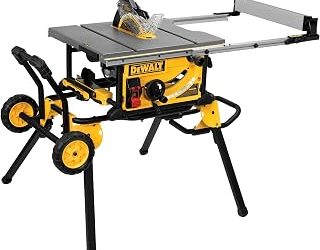
DEWALT DWE7491RS 10-Inch Table Saw
The DWE7491RS is our top all-around pick for cabinetmakers who need a full-size rip capacity in a package that still rolls into a corner. Its 32-1/2-inch rip fence and 15-amp 4,800-RPM motor handle plywood sheets and thick hardwood equally well, while the included rolling stand folds flat for tight shops. The rack-and-pinion fence tracks straight cut after cut, and the large cast-iron table surface gives you room to stage panels under even, shadow-free shop lighting.
DEWALT DWE7485 Compact Jobsite Table Saw
If your cabinet work leans toward face frames, drawer components, and smaller casework, the DWE7485 punches above its weight in an ultra-portable frame. Its 8-1/4-inch blade still manages cuts up to 2-1/4 inches deep at 90 degrees, and the compact footprint means it lives easily under a bright task-light canopy without consuming valuable bench space. Not ideal for full-sheet ripping, but unbeatable for precision joinery in small shops.
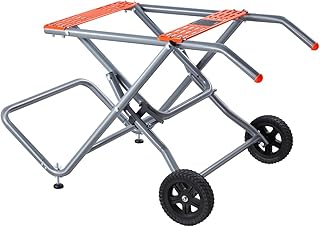
VEVOR Portable Table Saw Stand
Worth serious attention as an accessory, the VEVOR stand supports up to 350 pounds on 8-inch rubber wheels, making it the most practical rolling foundation for benchtop and jobsite saws alike. It folds for storage and positions your saw at an ergonomic height—crucial when you’re aligning cuts under focused pendant or track lighting for hours on end.
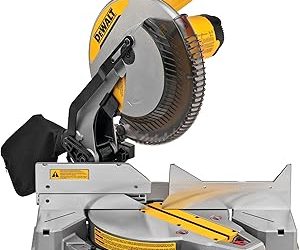
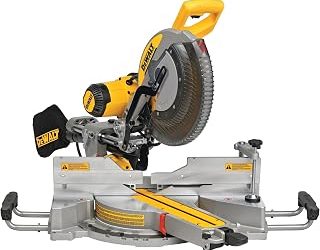
10-Inch Compound Miter Saw with Extension Table
While not a cabinetmaking table saw by definition, this 5,000-RPM compound miter saw earns its spot for trimming face frames, cutting crown molding, and crosscutting parts to final length. The single bevel range and extension table cover most cabinet-shop crosscut duties, and its compact profile slots neatly under a wall-mounted LED bar for precise, glare-free cut lines.
MXBAOHENG Mini Table Saw S3
A niche pick for hobbyists crafting miniature cabinetry, jewelry boxes, and small-scale architectural models. Its adjustable cut depth and seven-speed power supply give surprising control for intricate work, and a small LED ring light keeps the tiny blade visible against dark exotic woods. Not a production cabinet saw by any measure, but it fills a role nothing else here does.
Frequently Asked Questions
Do I need a 10-inch blade for cabinetmaking?
For most cabinet work, yes. A 10-inch blade provides the depth and cut quality needed for 3/4-inch plywood and solid hardwood. The DEWALT DWE7491RS excels here with its full 10-inch capacity and reliable fence alignment.
Can I build cabinets with a jobsite table saw?
Jobsite saws like the DEWALT DWE7485 handle face frames, doors, and small components perfectly well. For full-panel ripping you’ll eventually want a saw with greater rip capacity, but many accomplished cabinetmakers start—and stay—with portable units.
How important is dust collection for cabinet work?
Critical. Fine dust degrades finish quality and your health. Pair any saw in this guide with a 4-inch dust port, a quality cyclone or bag collector, and keep your overhead lighting fixtures sealed so particulate doesn’t dim or distort them over time.
Should I buy a separate rolling stand?
If your saw doesn’t include one, absolutely. The VEVOR portable stand supports heavy loads and folds for storage, keeping your shop floor adaptable and your work surface positioned exactly where your lighting setup demands.
Final Thoughts
For most cabinetmakers working out of a home shop, the DEWALT DWE7491RS delivers the best balance of power, rip capacity, and portability. The DEWALT DWE7485 is the smart secondary choice for smaller precision work, and the VEVOR stand is a worthwhile upgrade that makes any benchtop saw safer and more comfortable to use—especially when your workshop lighting is designed to complement a clean, dust-free workspace.