Key takeaways
- Pair your fan with ambient lighting, not just the fan’s built-in light. A single overhead source creates flat, unflattering illumination. Use wall sconces, string lights, or step lights alongside the fan to build depth and warmth in your outdoor room.
- Clean aluminum and ABS blades at least twice per outdoor season. Dust and pollen buildup reduces airflow efficiency by up to 15%, which means your fan works harder for less comfort.
- Run the fan counterclockwise in summer for a direct downward breeze, and clockwise in cooler months to push warm air down from the ceiling without creating a wind chill. This single adjustment extends the usable season of your outdoor space.
- If you’re on the fence about size, go larger. An oversized fan on a low setting moves more air quietly than a small fan at full speed. Air volume, not velocity, is what makes a space comfortable.
What's inside
What Is The Best Outdoor Ceiling Fan (2026) — Choosing the right outdoor ceiling fan is less about specs on a spreadsheet and more about how a space feels when you’re actually standing in it. A well-chosen fan disappears into the ambience of a patio or porch while silently doing the heavy lifting of air movement, humidity control, and comfort. Get it wrong, and you’ll hear the motor, feel nothing, or watch the housing corrode by next summer.
This guide walks you through the factors that matter most — wet ratings, motor types, blade design, smart controls, and airflow performance — so you can match a fan to your exact outdoor setting. Whether you’re outfitting a covered porch, an open gazebo, or a garage workshop, the recommendations and considerations below will help you land on a fan that performs well and looks like it belongs.
As an Amazon Associate we earn from qualifying purchases.




Start With the Rating: Wet vs. Damp Rated
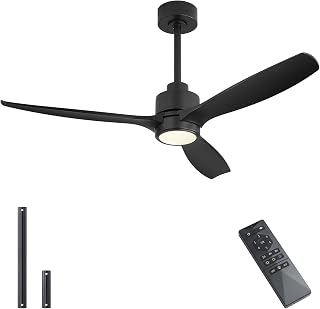
Every outdoor fan carries either a “damp rated” or “wet rated” designation, and confusing the two is the most common mistake buyers make. A damp rated fan is built for covered spaces — think screened porches, covered patios, and garage interiors — where moisture hangs in the air but rain doesn’t blow sideways onto the housing. The WINGBO 48″ Wet Rated fan, for instance, goes a step further with a true wet rating, meaning it can handle direct rain exposure, making it suitable for open pergolas and uncovered areas. If your fan will face the elements, always confirm the wet rating; a damp-rated unit on an exposed patio is a recipe for premature motor failure.
Understand Motor Technology: DC vs. AC
The shift toward DC (direct current) motors in outdoor fans is one of the quietest revolutions in ceiling fan design — literally. DC motors draw significantly less energy, run cooler, and operate at noise levels as low as 35 dB, which is barely a whisper. The Ohniyou 60″ Industrial fan exemplifies this with its 35 dB DC motor pushing 6,800 CFM of airflow. AC motors, while cheaper upfront, tend to generate more heat and noise, and they offer fewer speed options. For a 2026 purchase you plan to live with for a decade, a DC motor fan like the Minislak 72″ or the solid wood 52″ BLDC model delivers better long-term value in both energy savings and sonic comfort.
Blade Count, Material, and Airflow Performance
More blades does not automatically mean more air. What actually drives performance is blade pitch (the angle of each blade), blade span, and the material’s ability to move air efficiently without flexing. Aluminum blades — found on the Minislak 72″ and Ohniyou 60″ — are lightweight and resist warping in humid environments, which helps maintain consistent airflow over time. ABS plastic blades, like those on the WINGBO 48″, are fully waterproof and virtually maintenance-free. Solid wood blades on the rustic 52″ model offer a warm, organic aesthetic that metal simply can’t replicate, though they require a proper damp rating to handle outdoor humidity. For large spaces over 400 square feet, aim for a blade span of 60 inches or more and airflow north of 5,000 CFM.
Smart Controls and Lighting Integration
A fan without lights isn’t inherently worse — it’s a different design choice. The Minislak 72″ and Ohniyou 60″ omit lights to keep the silhouette clean and industrial, letting your architectural lighting do the talking. If you want integrated illumination, the 65″ Smart Outdoor fan with Alexa compatibility or the WINGBO 48″ with its 3CCT dimmable LED kit give you both air movement and layered lighting in one fixture. The addlon 20″ caged fan takes a different approach entirely — its plug-in design with a hanging hook makes it ideal for renters or temporary setups like gazebo parties, and its IP65 rating means it shrugs off direct water jets.
Size, Mounting, and Installation Reality
Before you fall in love with a model, measure your space honestly. A 72-inch fan like the Minislak demands at least 18 inches of clearance from blade tips to any wall or obstruction, and it needs a mounting height that keeps the blades at least seven feet above the floor. For lower ceilings or tighter spaces, the 48″ WINGBO or 52″ solid wood model fits far more gracefully. Also consider downrod length — most outdoor installations on vaulted or cathedral ceilings need a longer downrod to position the fan at the optimal height for air circulation. Verify that the mounting hardware included supports your ceiling type, whether it’s a standard joist, a sloped ceiling, or a concrete soffit.
Tips
- Pair your fan with ambient lighting, not just the fan’s built-in light. A single overhead source creates flat, unflattering illumination. Use wall sconces, string lights, or step lights alongside the fan to build depth and warmth in your outdoor room.
- Clean aluminum and ABS blades at least twice per outdoor season. Dust and pollen buildup reduces airflow efficiency by up to 15%, which means your fan works harder for less comfort.
- Run the fan counterclockwise in summer for a direct downward breeze, and clockwise in cooler months to push warm air down from the ceiling without creating a wind chill. This single adjustment extends the usable season of your outdoor space.
- If you’re on the fence about size, go larger. An oversized fan on a low setting moves more air quietly than a small fan at full speed. Air volume, not velocity, is what makes a space comfortable.
Frequently Asked Questions
Can I leave an outdoor ceiling fan on all the time?
Most DC motor outdoor fans are designed for extended operation, but leaving any fan running 24/7 accelerates bearing wear. The practical answer is to run it when the space is in use and shut it off during long absences. Fans with timer functions, like the addlon 20″, make this effortless.
Do I need an electrician to install an outdoor ceiling fan?
If you’re replacing an existing fan-rated junction box with another fan, a confident DIYer can handle it. If you’re adding a fan where none existed — especially outdoors where weatherproofing connections matters — a licensed electrician is the safe and code-compliant choice. Outdoor installations often require GFCI-protected circuits, which adds a layer of complexity.
What CFM should I look for in an outdoor ceiling fan?
For a typical patio or porch under 300 square feet, 3,000 to 5,000 CFM is plenty. For larger commercial-style spaces or open pergolas, target 6,000 CFM or above — the Ohniyou 60″ hits 6,800 CFM, which is strong enough for spaces well over 400 square feet. Always check the CFM-per-watt ratio for energy efficiency.
Is a plug-in outdoor fan as good as a hardwired one?
Plug-in models like the addlon 20″ offer flexibility and easy installation with no ceiling wiring required, making them ideal for renters or temporary setups. The trade-off is a visible cord and typically smaller blade spans. For a permanent, polished outdoor living space, hardwired fans deliver a cleaner look and more robust performance.
Conclusion
The best outdoor ceiling fan for your space in 2026 comes down to matching the right wet rating, motor type, blade size, and control features to your specific environment. A large uncovered patio calls for a wet-rated, high-CFML giant with a quiet DC motor, while a cozy covered porch might thrive with a compact fan and integrated dimmable lighting. Take the time to measure your space, confirm your electrical setup, and think about how you actually use the area — comfort outdoors isn’t accidental, it’s designed.