Key takeaways
- Install a dedicated water line with a shut-off valve behind the refrigerator to simplify filter changes and prevent leaks from disrupting your floors.
- Place a small decibel meter app on your phone near the unit during the first week to baseline compressor noise — you will notice patterns tied to ice-making cycles.
- If your kitchen relies on under-cabinet lighting, test how the refrigerator’s finish reflects it before committing; high-gloss stainless can create glare that disrupts a layered lighting plan.
- Keep a small bin of backup ice in the freezer during large gatherings so you never run dry when the built-in maker is still cycling.
What's inside
When a kitchen feels right, it is rarely just the countertops or cabinet color doing the work. The appliances themselves cast reflections, hum at certain frequencies, and anchor visual weight — a stainless steel French door unit catches the overhead pendants differently than a matte finish, and the glow from an interior ice-maker bin can subtly change how a midnight snack run feels. Choosing a refrigerator with a strong built-in ice maker is not only about convenience; it shapes the rhythm and atmosphere of your most-used room for the next decade.
This guide walks you through exactly what separates a genuinely good ice-maker refrigerator from one that merely lists the feature on its spec sheet. You will learn how ice type, capacity, noise, and finish interact with your kitchen’s lighting and layout — and you will get pointed, honest recommendations so you can buy with confidence in 2026.
As an Amazon Associate we earn from qualifying purchases.


Understand the Ice Types Before You Shop
Not all ice is created equal, and the shape flowing from your dispenser quietly affects everything from the clink in your evening cocktail to how fast your water chills. Nugget ice — the chewable, pellet-style ice found in models like the 20 Cu Ft French Door Refrigerator with Side Freezer & Water Dispenser — has become a cult favorite for its soft texture and rapid cooling. Standard crescent or cube ice, offered across most French door models including the Samsung 26 cu. ft. Mega Capacity RF27CG5400SRAA, works perfectly for everyday use and packs efficiently in a glass. The Samsung unit is notable for offering four distinct ice types, giving you flexibility no other single appliance on this list matches. If you entertain frequently or have family members with strong preferences, ice variety is worth prioritizing.
Match Capacity and Layout to Your Space
A refrigerator’s cubic footage matters, but its physical footprint — especially depth relative to your counters — determines whether the kitchen flows naturally or feels cramped. Counter-depth models like the KoolMore 22.5 Cu.Ft 4-Door French Door sit nearly flush with standard cabinetry, preserving the clean sight lines that make a kitchen feel open and intentional. For smaller kitchens or apartment layouts, the 16 Cu. Ft. French Door Refrigerator from LRAIN (and its near-identical counterpart) offers a full-size bottom-mount freezer drawer in a tighter frame, keeping prep space uncluttered without sacrificing ice-making capability. Measure twice: door swing clearance and ventilation gaps behind the unit affect both function and the way light and air circulate through the room.
Evaluate Ice-Maker Reliability and Production Rate
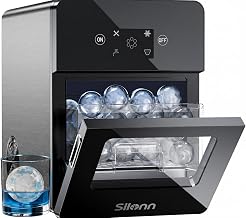
An ice maker is only useful when it works consistently. Look for daily production ratings — the 2-in-1 Ice Maker & Beverage Fridge, for instance, claims 120 lbs of ice per 24 hours with 30 lbs of onboard storage, making it ideal as a supplemental unit in a bar area or entertainment zone. Built-in refrigerator ice makers, while more modest in output, benefit from the appliance’s continuous power and water line. Check whether the ice maker uses a dedicated water filter and whether replacement cartridges are affordable and easy to source. Models with auto-defrost and frost-free operation, such as the LRAIN and its twin 16 Cu Ft model, reduce the maintenance burden that can quietly sabotage ice quality over time.
Consider Noise, Lighting, and Ambient Feel
This is where most buying guides stop paying attention, but it matters. A compressor that rattles at 42 decibels changes the mood of an open-plan kitchen during a quiet dinner. French door configurations generally open quieter than single-door models because the seals split across two narrower panels. Interior LED lighting in the ice-maker compartment — present in most modern French doors — helps you gauge supply at a glance without flooding the kitchen with cold blue light at 2 a.m. If your kitchen doubles as a gathering space, favor units known for quieter compressors and well-damped door hinges.
Balance Finish and Long-Term Maintenance
Stainless steel remains the dominant finish for good reason: it reads as professional and pairs with virtually any palette. However, fingerprint resistance varies widely. The Samsung RF27CG5400SRAA and the KoolMore 4-Door both use fingerprint-resistant coatings that hold up under daily use. If your kitchen leans toward warm tones — brass hardware, wood shelving, warm LED strips — a standard stainless finish reflects those hues beautifully and adds depth to the space. Budget models with a “stainless look” (like the two 16 Cu Ft units) use a coated finish that mimics the aesthetic at a lower price point, though it may show wear sooner under heavy kitchen traffic.
Tips
- Install a dedicated water line with a shut-off valve behind the refrigerator to simplify filter changes and prevent leaks from disrupting your floors.
- Place a small decibel meter app on your phone near the unit during the first week to baseline compressor noise — you will notice patterns tied to ice-making cycles.
- If your kitchen relies on under-cabinet lighting, test how the refrigerator’s finish reflects it before committing; high-gloss stainless can create glare that disrupts a layered lighting plan.
- Keep a small bin of backup ice in the freezer during large gatherings so you never run dry when the built-in maker is still cycling.
Frequently Asked Questions
Is nugget ice worth the higher price?
For most households, absolutely. Nugget ice chills beverages faster, is gentle on dental work, and elevates the experience of simple drinks like iced coffee or sparkling water. Models offering it — like the 20 Cu Ft French Door — tend to justify the premium within months of daily use.
How often should I replace the ice maker’s water filter?
Every six months is the standard recommendation, but if you have hard water or notice a change in ice clarity or taste, replace it sooner. Most filters cost between $30 and $60 and take under five minutes to swap.
Can a counter-depth refrigerator hold as much as a standard-depth model?
Roughly 10 to 15 percent less, typically. The KoolMore 22.5 Cu.Ft counter-depth unit closes that gap impressively, but you are still trading some interior volume for a flush, streamlined profile that benefits the room’s overall spatial balance.
Do I need a separate ice maker if my refrigerator already has one?
For most families, no. But if you host frequently, run a home bar, or simply go through large quantities of ice, a supplemental unit like the 2-in-1 Ice Maker & Beverage Fridge keeps the main refrigerator’s compressor from overworking and ensures you never ration ice during a party.
Conclusion
The best refrigerator ice maker in 2026 is the one that matches your daily habits, fits your kitchen’s physical and visual dimensions, and quietly does its job without demanding attention. Whether you choose the feature-rich Samsung Mega Capacity, the space-efficient LRAIN 16 Cu Ft, or the entertainment-ready KoolMore 4-Door, prioritizing ice quality, noise, and finish alongside raw capacity will lead you to a purchase you appreciate every single day.