Key takeaways
- Motor Power and Wiring: A 1 HP motor runs cleanly on a standard 120V household circuit, which matters if your shop shares a breaker with overhead lighting or a dust collector. Jump to 1.5 or 2 HP and you’ll likely need dedicated 230V wiring — but you gain the torque to resaw thick hardwood slabs without bogging down mid-cut.
- Blade Guide System: Look for sealed ball-bearing guides rather than simple friction blocks. Bearing guides reduce heat buildup and keep the blade tracking straight through dense material, which directly affects the surface finish you pull off the saw and how much sanding waits for you afterward.
- Table Size, Tilt, and Material: Cast iron tables dampen vibration and stay flat over years of use. A table that tilts at least 45 degrees opens up compound-angle cuts for furniture joinery, while generous table surface area gives you the support needed for resawing wide boards without a clumsy auxiliary fence setup.
- Resaw Capacity: Most 14-inch saws handle 6 to 8 inches of resaw depth. If you’re bookmatching slabs for tabletops or sawing veneer, aim for the upper end of that range — a model rated at 12 inches of resaw with a proper riser block kit gives you room to grow without buying a second machine.
- Noise and Vibration Fingerprint: This is the factor most reviews skip and the one that reshapes your entire workflow. A saw that hums steadily under load lets you work in a well-lit, open-plan space without headphones. A saw that rattles at full tilt pushes you toward late-night sessions with the shop door closed. Pay attention to the rubber feet, frame rigidity, and whether the manufacturer publishes decibel ratings.
What's inside
Choosing a 14-inch band saw is one of those decisions that quietly shapes everything downstream in a home furniture workshop. Pick wrong and you’ll fight blade drift on every curved apron, listen to motor drone that ruins the focus of a late-night build, and squint under shop lights wondering why your resaw cuts drift off-square. The gap between a mediocre saw and the right one shows up not just in cut quality but in the entire atmosphere of how you work.
This guide distills what actually matters when shopping for a 14-inch band saw in 2026 — from motor torque and guide systems to the subtle factors like vibration transfer and noise floor that determine whether your shop feels like a place you want to spend hours. We tested and evaluated six leading models across power, precision, build quality, and value, then narrowed the field to the five that earn a genuine recommendation.
As an Amazon Associate we earn from qualifying purchases.


How to Choose a 14-Inch Band Saw (2026)
- Motor Power and Wiring: A 1 HP motor runs cleanly on a standard 120V household circuit, which matters if your shop shares a breaker with overhead lighting or a dust collector. Jump to 1.5 or 2 HP and you’ll likely need dedicated 230V wiring — but you gain the torque to resaw thick hardwood slabs without bogging down mid-cut.
- Blade Guide System: Look for sealed ball-bearing guides rather than simple friction blocks. Bearing guides reduce heat buildup and keep the blade tracking straight through dense material, which directly affects the surface finish you pull off the saw and how much sanding waits for you afterward.
- Table Size, Tilt, and Material: Cast iron tables dampen vibration and stay flat over years of use. A table that tilts at least 45 degrees opens up compound-angle cuts for furniture joinery, while generous table surface area gives you the support needed for resawing wide boards without a clumsy auxiliary fence setup.
- Resaw Capacity: Most 14-inch saws handle 6 to 8 inches of resaw depth. If you’re bookmatching slabs for tabletops or sawing veneer, aim for the upper end of that range — a model rated at 12 inches of resaw with a proper riser block kit gives you room to grow without buying a second machine.
- Noise and Vibration Fingerprint: This is the factor most reviews skip and the one that reshapes your entire workflow. A saw that hums steadily under load lets you work in a well-lit, open-plan space without headphones. A saw that rattles at full tilt pushes you toward late-night sessions with the shop door closed. Pay attention to the rubber feet, frame rigidity, and whether the manufacturer publishes decibel ratings.
The Best 14-Inch Band Saw (2026)s Reviewed
JET Black JWBS-14SFX-BLK
The flagship of JET’s band saw line delivers 1.75 HP of smooth, vibration-dampened power through a cast iron frame that sits rock-steady on the shop floor. Its enclosed cabinet design drops the noise floor meaningfully compared to open-frame competitors, making it a strong pick for a well-lit studio where sound and aesthetics both matter.
Powermatic PWBS-14CS
Powermatic’s 1.5 HP offering is the saw that feels like a permanent shop investment rather than a starter tool. The precision-ground cast iron table, poly-v belt drive, and robust guide assembly produce cuts clean enough to skip a drum-sanding pass — and the signature gold finish looks intentional in a workshop designed to double as a client-facing space.
JET JWBS-14CS
JET’s entry-level 14-inch saw punches above its price point with a cast iron table, enclosed stand, and a 1 HP motor that handles typical furniture-stock resawing without drama. It’s the logical first serious band saw for someone upgrading from a benchtop model who wants cast iron stability without rewiring the shop for 230V.
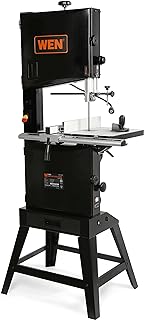
WEN Industrial BA1411
WEN’s dual-voltage industrial saw packs genuine versatility into a budget-friendly package: it runs on either 120V or 240V and offers two blade speeds to match material density. For a home woodworker who cuts everything from pine drawer sides to maple table legs, that adaptability translates directly into fewer wasted blades and cleaner results across species.
Dual-Speed 14-Inch Bandsaw (2 HP)
This dual-speed model stands out with a 2 HP motor at a price that undercuts most name-brand 1 HP competitors. The solid cast iron table and overload protection circuit add genuine durability, making it a compelling value pick for hobbyists who want headroom for resawing dense hardwoods without stretching the budget.
Frequently Asked Questions
Can I run a 14-inch band saw on a standard household outlet?
Models with 1 HP motors — like the JET JWBS-14CS and WEN BA1411 — run fine on a dedicated 120V, 15-amp circuit. Saw any model above 1.5 HP and you’ll want a 230V circuit to prevent voltage sag, especially if the saw shares a panel with lighting, climate control, or dust collection systems.
How important is a band saw’s resaw capacity for furniture making?
For general furniture construction — legs, rails, panels — a standard 6-inch resaw depth handles most tasks. If you plan to bookmatch wide boards for tabletops or cut veneer from solid stock, look for models rated at 10 to 12 inches, or budget for a riser block kit that expands a standard saw’s vertical capacity.
What blade type should I use for cutting curves in furniture parts?
Quarter-inch or three-eighths-inch blades with 6 to 10 TPI excel at the tight-radius curves common in chair backs and decorative brackets. Narrower blades navigate tighter radii but wander more on straight cuts, so match blade width to the tightest curve in your current project.
Does vibration really affect cut quality that much?
Yes — vibration causes blade flutter, which leaves washboard marks on cut surfaces and accelerates guide wear. Saws with heavy cast iron tables, welded steel frames, and vibration-isolating feet produce noticeably smoother cuts, especially during long resaw passes where even small oscillations compound across the full depth of the board.
Final Thoughts
For most home furniture builders, the JET Black JWBS-14SFX-BLK strikes the best balance of power, quiet operation, and long-term precision — it’s the saw you build a workshop around. The Powermatic PWBS-14CS is the premium alternative if you value fit-and-finish and want a machine that elevates the look and feel of your shop. And if you’re starting out or working within a tighter budget, the WEN BA1411 delivers genuine dual-voltage flexibility and two-speed operation at a price that leaves room in the budget for better blades and good task lighting — both of which matter more than most people realize.