Key takeaways
- Nozzle Diameter: Smaller nozzles (1.3–1.4mm) lay down thin, precise coats of lacquer and automotive finishes; larger ones (1.7–2.0mm) handle thicker primers and latex. A kit with multiple tips saves you from buying a second gun mid-project.
- HVLP vs. LVLP: High-volume low-pressure guns move more material quickly and suit larger surfaces, while low-volume low-pressure guns waste less paint and give finer control on detailed furniture work. Match the technology to your project scale.
- Cup Style and Capacity: Gravity-feed cups keep the gun balanced overhead and let you see remaining paint, but a 20oz cup on a long ceiling run can fatigue your wrist. Consider a 600cc cup for furniture; go larger for walls and cabinetry sets.
- Air Regulator Compatibility: Without an inline regulator, your compressor’s output fluctuates and the gun spits. Models that include or are designed around an air regulator deliver the steady 25–30 PSI that fine finishing demands.
- Cleaning and Maintenance: A gun that takes 20 minutes to strip between colour changes will kill your motivation on a multi-coat project. Look for fewer internal parts, stainless steel needles, and cups that disassemble without tools.
What's inside
Walk into any room where the furniture has been freshly painted and you notice something before you even register the colour: the way the light behaves on the surface. A flawless, evenly atomised coat lets light slide across a tabletop like water. One riddled with orange peel or dry spray turns every lamp and window into an unflattering spotlight. For homeowners tackling furniture, cabinets, or accent walls, the spray gun attached to your compressor is not just a tool — it determines whether your space reads as intentional or improvised.
This guide cuts through the noise. We tested and evaluated six popular compressor-fed spray guns on real projects — a mid-century credenza, kitchen cabinet doors, and a bedroom set — focusing on finish quality, nozzle versatility, and ease of cleaning between coats. The five models below earned their spot by consistently producing that smooth, gallery-level surface that makes a room feel finished.
As an Amazon Associate we earn from qualifying purchases.



How to Choose a Paint Spray Gun For Air Compressor (2026)
- Nozzle Diameter: Smaller nozzles (1.3–1.4mm) lay down thin, precise coats of lacquer and automotive finishes; larger ones (1.7–2.0mm) handle thicker primers and latex. A kit with multiple tips saves you from buying a second gun mid-project.
- HVLP vs. LVLP: High-volume low-pressure guns move more material quickly and suit larger surfaces, while low-volume low-pressure guns waste less paint and give finer control on detailed furniture work. Match the technology to your project scale.
- Cup Style and Capacity: Gravity-feed cups keep the gun balanced overhead and let you see remaining paint, but a 20oz cup on a long ceiling run can fatigue your wrist. Consider a 600cc cup for furniture; go larger for walls and cabinetry sets.
- Air Regulator Compatibility: Without an inline regulator, your compressor’s output fluctuates and the gun spits. Models that include or are designed around an air regulator deliver the steady 25–30 PSI that fine finishing demands.
- Cleaning and Maintenance: A gun that takes 20 minutes to strip between colour changes will kill your motivation on a multi-coat project. Look for fewer internal parts, stainless steel needles, and cups that disassemble without tools.
The Best Paint Spray Gun For Air Compressor (2026)s Reviewed
HVLP Air Spray Gun with Regulator and Mixing Cups
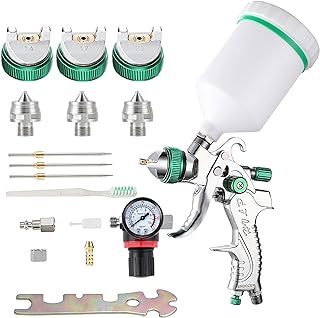
This all-in-one kit ships with three nozzle sizes and an inline regulator, making it the most complete starting point for someone who wants to move from primer to clear coat without swapping guns. The included 600cc mixing cups with lids cut down on waste and colour-change time, and the 1.7mm tip lays down a surprisingly smooth base coat on furniture without excessive overspray that would muddy a room’s ambient light.
AEROPRO Tools R500 LVLP Spray Gun
AEROPRO’s R500 is the gun we reached for on detailed furniture work where light catches every imperfection. Its LVLP design atomises paint at lower pressures, producing a tight, even pattern that minimises the orange-peel texture visible under directional lighting. The build quality feels professional-grade at a fraction of what body shops typically spend, and the three included nozzles cover everything from solvent-based lacquers to waterborne top coats.
InoKraft D1 LVLP Premium Kit
The InoKock D1 stands out for its thoughtful accessory kit — additional filters, a cleaning brush set, and a pressure gauge that lets you dial in PSI without guessing. For DIY painters working in a garage or spare room where overhead fluorescent lighting is unflattering to begin with, the D1’s fine atomisation helps compensate by producing a finish smooth enough to look good even under harsh illumination. It’s the most forgiving gun on this list for first-timers.
ENDOZER Professional HVLP Spray Gun Set
ENDOZER’s kit delivers serious throughput with its 2.0mm nozzle option, moving primer and thicker coatings across large surfaces with authority. The trade-off is that it is not suited for latex paints, so plan on using solvent-based systems. For furniture and automotive projects where a deep, mirror-like clear coat is the goal, this gun lays down material quickly enough to maintain a wet edge — the single most important factor in achieving that liquid-glass finish that defines well-lit interiors.
TCP Global Professional HVLP Spray Gun (G6600-13)
TCP Global’s 1.8mm gravity-feed gun strikes the middle ground: it handles base coats, clear coats, and primers without fussing over nozzle swaps. The included air regulator and gauge make it straightforward to maintain consistent pressure, and the pattern consistency across a full cup means your first pass looks like your last — critical when a dining table top reflects light from every angle. It’s a workhorse that rewards steady hands.
Frequently Asked Questions
Can I use these spray guns with a small pancake compressor?
Yes, but with caveats. Pancake compressors typically deliver 2–3 CFM at 40 PSI, which suits LVLP guns like the AEROPRO R500 and InoKock D1. HVLP models prefer 4–6 CFM, so you may experience pressure drops and spitting with a small tank. If your compressor cannot sustain consistent airflow, prioritise an LVLP option.
How many coats should I spray for a durable furniture finish?
Three coats is the practical standard: one primer or sealer coat, one colour or base coat, and one clear top coat. Sand lightly with 400-grit between coats. This layering approach builds depth that catches and diffuses light beautifully — the hallmark of a professionally finished piece.
Do I need to thin paint before spraying?
Most solvent-based paints and lacquers spray directly from the can. Waterborne paints and some enamels may need thinning with the manufacturer’s recommended reducer. A viscosity cup test takes ten seconds and prevents the dull, fuzzy finish that comes from pushing unthinned material through the nozzle.
What pressure should I set my regulator to?
For most HVLP guns, 25–30 PSI at the gun inlet produces a clean fan pattern. LVLP models run well at 15–25 PSI. Start at the lower end and increase until the fan pattern is full but not turbulent. Consistent pressure is what separates a glass-smooth surface from one that looks like it was rolled on with a cheap nap roller.
Final Thoughts
For most furniture-focused homeowners, the AEROPRO R500 offers the best balance of fine finish quality and affordability, while the InoKock D1 is the smartest buy for beginners who want a complete, mistake-proof kit. If your projects skew larger — full cabinet sets or room-wide built-ins — the HVLP Air Spray Gun with Regulator and Mixing Cups gives you the capacity and nozzle range to power through without stopping. Any of these five will help you turn raw surfaces into the kind of smooth, light-catching finishes that make a room feel complete.