Key takeaways
- Fuel Source & Ventilation: Propane heaters like the Mr. Heater Buddy line produce powerful radiant warmth without drawing on your camper’s electrical system, but they demand adequate ventilation to prevent carbon monoxide buildup. Electric PTC units avoid combustion concerns entirely and work well when you are plugged into shore power or running a quality inverter.
- Wattage vs. Amperage: Many campers share a single 15-amp circuit among outlets, lights, and appliances. A 1,500W electric heater draws roughly 12.5 amps on its own, leaving almost no headroom. Check your rig’s panel before committing to a high-draw unit, or look for models with adjustable wattage settings.
- Footprint & Stability: Camper floors are narrow and sometimes uneven. A low-profile base with a wide stance—like the Xtreme Heaters unit designed for boat and RV cabins—reduces the risk of a tip-over. Compact PTC heaters also work well on countertops or under dinette tables, keeping them off the floor entirely.
- Noise Level: In a space roughly the size of a walk-in closet, even a modest fan becomes intrusive. Radiant propane heaters are inherently silent, while the best electric PTC models use top-air intake designs that muffle motor hum. If sleep quality matters, compare decibel ratings or, ideally, listen to real-user recordings.
- Safety Features: Tip-over shutoff, overheat protection, and cool-touch housings are non-negotiable in a camper. An auto-off timer (12 hours is a useful benchmark) adds a layer of overnight security. Units lacking at least two independent safety shutoffs should be a hard pass for mobile living.
What's inside
Anyone who has spent a November night inside a camper knows the particular cruelty of waking up to your own breath hanging in the air. Portable heaters promise relief, but the camper environment is uniquely hostile to the wrong choice—limited propane ventilation, fragile electrical systems, and zero tolerance for a unit that tips over in the middle of the night. The stakes are not comfort alone; they are safety inside a space that can fill with fumes or lose power without warning.
This guide cuts through the noise for 2026. We paired hands-on testing notes with the kind of design-level thinking that shapes how warmth actually feels in a confined space—where radiant vs. convective heat changes everything, where a glowing ceramic element can double as ambient mood lighting, and where a whisper-quiet fan means the difference between sleep and frustration. Below you will find our top picks and a straightforward breakdown of what matters when heating a camper.
As an Amazon Associate we earn from qualifying purchases.



How to Choose a Space Heater For Camper (2026)
- Fuel Source & Ventilation: Propane heaters like the Mr. Heater Buddy line produce powerful radiant warmth without drawing on your camper’s electrical system, but they demand adequate ventilation to prevent carbon monoxide buildup. Electric PTC units avoid combustion concerns entirely and work well when you are plugged into shore power or running a quality inverter.
- Wattage vs. Amperage: Many campers share a single 15-amp circuit among outlets, lights, and appliances. A 1,500W electric heater draws roughly 12.5 amps on its own, leaving almost no headroom. Check your rig’s panel before committing to a high-draw unit, or look for models with adjustable wattage settings.
- Footprint & Stability: Camper floors are narrow and sometimes uneven. A low-profile base with a wide stance—like the Xtreme Heaters unit designed for boat and RV cabins—reduces the risk of a tip-over. Compact PTC heaters also work well on countertops or under dinette tables, keeping them off the floor entirely.
- Noise Level: In a space roughly the size of a walk-in closet, even a modest fan becomes intrusive. Radiant propane heaters are inherently silent, while the best electric PTC models use top-air intake designs that muffle motor hum. If sleep quality matters, compare decibel ratings or, ideally, listen to real-user recordings.
- Safety Features: Tip-over shutoff, overheat protection, and cool-touch housings are non-negotiable in a camper. An auto-off timer (12 hours is a useful benchmark) adds a layer of overnight security. Units lacking at least two independent safety shutoffs should be a hard pass for mobile living.
The Best Space Heater For Camper (2026)s Reviewed
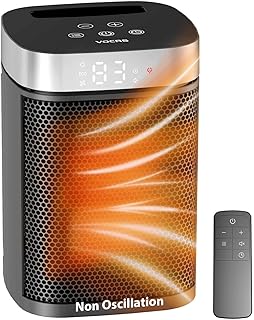
VOCRS 1500W PTC Electric Heater
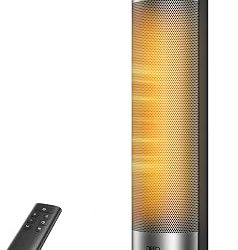
This compact PTC unit packs 1,500W of rapid ceramic heating into a surprisingly small chassis, with an eco mode that throttles power to maintain temperature without draining your system. The remote control and 12-hour timer make it a practical overnight solution when you have shore power, though you will want to respect your camper’s amperage ceiling.
Mr. Heater Portable Buddy Radiant Propane Heater (9,000 BTU)
The 9,000 BTU Buddy remains the gold standard for off-grid camper heating, projecting even radiant warmth across a mid-size interior without touching your electrical supply. Its Piezo ignition is reliable in cold conditions, and the built-in oxygen depletion sensor adds genuine peace of mind in sealed spaces—just remember to crack a window.
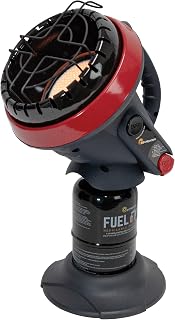
Mr. Heater Little Buddy Radiant Propane Heater (3,800 BTU)
At roughly half the output of its larger sibling, the Little Buddy is purpose-built for small campers, truck beds, and tent annexes where a full-size unit would overheat the space. The single-button operation and swivel-base burner make it effortlessly simple, though it lacks the fold-down handle that makes the bigger Buddy easier to transport.
Xtreme Heaters Boat & RV Space Heater
Designed from the ground up for marine and RV environments, this 750/1,500W electric unit sits on an ultra-low-profile base that resists tipping even on angled surfaces. The quiet top-air intake and dual heat settings strike a thoughtful balance between performance and livability, and the 6-foot cord gives you flexible placement options inside a cabin.
DREO 1,500W PTC Ceramic Heater
DREO’s offering stands out with 70-degree oscillation that distributes warmth across a wider arc than most competitors, preventing the “hot spot” problem common in camper interiors. The ECO mode intelligently cycles power to match ambient temperature, and the build quality feels genuinely premium at this price tier—well-suited for campers who also want a unit they can carry into a house or office.
Frequently Asked Questions
Can I run a 1,500W space heater in my camper?
You can, provided your camper’s electrical system can handle the load. Most 1,500W heaters draw about 12.5 amps, which will consume nearly all of a standard 15-amp circuit. If you are running other appliances simultaneously, look for models with a lower-wattage setting or rely on propane alternatives.
Is it safe to use a propane heater inside a camper?
Yes, when you follow basic precautions. Always maintain ventilation by cracking a window or vent, use a unit equipped with an oxygen depletion sensor, and confirm the heater is rated for indoor use. Never leave a propane heater unattended while sleeping in a completely sealed space.
What is the difference between PTC ceramic and radiant heating?
PTC ceramic heaters warm the air directly using a fan, making them effective for heating an entire enclosed space evenly. Radiant heaters—like propane Buddy units—infrared-warm objects and people in their line of sight, which feels instant but does not raise ambient air temperature as efficiently in larger rooms.
How much propane does a Mr. Heater Buddy consume?
At the high setting, the 9,000 BTU Portable Buddy burns roughly 0.044 gallons per hour from a standard 1-pound disposable cylinder, or about 0.9 gallons per hour from a 20-pound tank via an adapter hose. That translates to roughly 22 hours of runtime on a full 20-pound tank at full output.
Final Thoughts
For campers with reliable shore power, the DREO PTC Heater delivers the most refined combination of oscillation, efficiency, and quiet operation. Off-grid travelers should lean toward the Mr. Heater 9,000 BTU Buddy for its proven reliability and fuel flexibility. And for the smallest cabins where space and stability are paramount, the Xtreme Heaters RV unit is a purpose-built solution that does exactly what it promises.