Key takeaways
- Cavity Size & Interior Illumination: A 1.0 cu.ft cavity suits reheating and air-frying portions for two; 1.6 cu.ft handles a whole chicken or sheet-pan meal. Pay attention to interior lighting — LED-lit cavities with warm-spectrum LEDs let you monitor browning without opening the door, preserving both heat and the kitchen’s evening ambience.
- Installation Type: Built-in units (AAOBOSI, KoolMore) mount flush with cabinetry for a seamless visual line and zero counter footprint. Over-the-range models (BLACK+DECKER) reclaim counter space but demand proper venting. Countertop Toshiba units offer the most flexibility for renters or evolving layouts.
- Ventilation & Airflow: A 300 CFM vent (like the BLACK+DECKER’s) clears steam and grease effectively in open-concept kitchens where cooking odors drift toward living spaces. Units without external venting rely on recirculating filters — adequate but noisier over time.
- Control Interface & User Experience: Color touchscreens (TOSHIBA OptiChef PRO MAX’s 2.4-inch display) add visual sophistication and reduce the learning curve, while dial-and-button combos feel more tactile. Consider how the interface glows — bright blue LED panels can read harsh in a softly lit kitchen at night.
- Inverter Technology & Power Delivery: Inverter microwaves deliver consistent wattage rather than pulsing full power on and off. This means gentler defrosting, more even air-frying results, and — practically speaking — less electrical noise, which matters when the kitchen opens to a dining or living area.
What's inside
When you’re designing a kitchen where every surface, finish, and light source matters, choosing a wall oven microwave combo with air fryer becomes more than an appliance decision — it’s an aesthetic and functional commitment that will define your cooking zone for years. Buyers get paralyzed by the sheer volume of nearly identical spec sheets, confusing built-in vs. countertop terminology, and marketing jargon that masks real performance differences. The result: months of indecision or, worse, a rushed purchase that clashes with the kitchen’s rhythm.
This guide cuts through the noise. We evaluated the leading wall oven microwave combo with air fryer models of 2026 through the lens of both kitchen integration and cooking versatility — examining interior cavity lighting, door mechanics, surface finish warmth, and the kind of ambient hum (or silence) that shapes how a kitchen actually feels at 7 a.m. and 10 p.m. Below you’ll find our curated picks and a no-nonsense buying framework.
As an Amazon Associate we earn from qualifying purchases.



How to Choose a Wall Oven Microwave Combo With Air Fryer (2026)
- Cavity Size & Interior Illumination: A 1.0 cu.ft cavity suits reheating and air-frying portions for two; 1.6 cu.ft handles a whole chicken or sheet-pan meal. Pay attention to interior lighting — LED-lit cavities with warm-spectrum LEDs let you monitor browning without opening the door, preserving both heat and the kitchen’s evening ambience.
- Installation Type: Built-in units (AAOBOSI, KoolMore) mount flush with cabinetry for a seamless visual line and zero counter footprint. Over-the-range models (BLACK+DECKER) reclaim counter space but demand proper venting. Countertop Toshiba units offer the most flexibility for renters or evolving layouts.
- Ventilation & Airflow: A 300 CFM vent (like the BLACK+DECKER’s) clears steam and grease effectively in open-concept kitchens where cooking odors drift toward living spaces. Units without external venting rely on recirculating filters — adequate but noisier over time.
- Control Interface & User Experience: Color touchscreens (TOSHIBA OptiChef PRO MAX’s 2.4-inch display) add visual sophistication and reduce the learning curve, while dial-and-button combos feel more tactile. Consider how the interface glows — bright blue LED panels can read harsh in a softly lit kitchen at night.
- Inverter Technology & Power Delivery: Inverter microwaves deliver consistent wattage rather than pulsing full power on and off. This means gentler defrosting, more even air-frying results, and — practically speaking — less electrical noise, which matters when the kitchen opens to a dining or living area.
The Best Wall Oven Microwave Combo With Air Fryer (2026)s Reviewed
AAOBOSI 24 Inch Built-in Convection Oven
The strongest true built-in contender. Its 11-level power range and 12+ cooking modes give you granular control over browning intensity — critical when you’re chasing that golden exterior without overcooking. The drop-down door integrates cleanly into upper cabinetry, and at 1000W with sensor cooking, it handles high-volume air-frying with consistent results. Best suited for kitchens designed with a dedicated 24-inch appliance column.
KoolMore Reserve Built-in Combo
The soft-close door is the standout detail here — it eliminates the slam that disrupts a calm kitchen environment, and the NEMA 5-20P plug means true plug-and-play in most modern kitchens without hardwiring. Sensor cook and the 1.6 cu.ft cavity deliver reliable everyday performance. The black stainless finish reads warmer and less clinical than standard stainless, pairing well with dark cabinetry or matte hardware.
BLACK+DECKER Over-the-Range with Air Fryer
The practical choice for kitchens where counter and cabinet real estate are already claimed. Its 6-in-1 modes and 300 CFM vent cover the essentials — air frying, convection bake, sensor reheat — while the over-the-range mounting keeps sightlines clear. Interior lighting is functional but utilitarian; this unit wins on value and space efficiency rather than design statement.
TOSHIBA OptiChef PRO MAX
The premium countertop option, and the one that feels most considered from a design standpoint. The 2.4-inch color screen serves as a visual focal point, Origin Inverter Technology delivers whisper-quiet operation ideal for open floor plans, and Alexa compatibility lets you control it without breaking your cooking flow. The silver finish catches ambient kitchen light beautifully — it looks like it belongs in a designed space, not just a functional one.
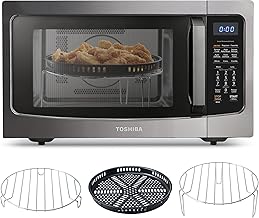
TOSHIBA 4-in-1 Countertop Microwave
A solid entry point that punches above its price. The position-memory turntable is a thoughtful touch — it returns to the same spot after each cycle, which sounds minor until you realize it keeps your kitchen counter visually orderly. The mute function is essential for late-night cooking without disrupting the household, and the black stainless finish coordinates well with most contemporary appliance suites.
Frequently Asked Questions
Can a microwave air fryer really replace a dedicated air fryer?
For most households, yes — with caveats. Combo units air-fry effectively but typically have smaller baskets than standalone air fryers. If you routinely cook for five or more, a dedicated unit may still earn a spot. For couples and small families, the combo eliminates countertop clutter without meaningful sacrifice.
Do built-in microwave combos require professional installation?
Generally, yes. Units like the AAOBOSI and KoolMore need precise cabinet cutouts and proper ventilation clearance. Factor installation cost ($200–$500) into your budget. Countertop models like the Toshiba OptiChef PRO MAX skip this entirely.
What’s the difference between convection and inverter technology?
Convection uses a fan and heating element for oven-like baking and roasting. Inverter technology controls microwave energy delivery more precisely — no power surging. They serve different functions; the best units (like the AAOBOSI and OptiChef PRO MAX) combine both.
How noisy are these combos during operation?
Inverter-equipped models (TOSHIBA OptiChef PRO MAX, TOSHIBA 4-in-1) run noticeably quieter — around 50 dB or less. Standard magnetron units and those with high-CFM vents can reach 60–65 dB, which is audible conversation-level noise in an open kitchen.
Final Thoughts
For built-in integration and cooking precision, the AAOBOSI 24 Inch leads the field. If kitchen calm matters as much as performance — and for anyone who thinks about design it does — the TOSHIBA OptiChef PRO MAX earns its premium through inverter quiet, intuitive controls, and a finish that actually enhances the room. And for budget-conscious buyers who refuse to look cheap, the TOSHIBA 4-in-1 delivers surprising polish at a fraction of the cost. Any of these three will elevate both your kitchen’s function and its atmosphere.