Key takeaways
- Roof material and gauge: Galvanized steel panels resist corrosion and shed snow more effectively than polycarbonate. Thicker gauge steel holds up longer under repeated accumulation and ice damming.
- Frame construction: Powder-coated aluminum frames shed weight without rusting, while heavier steel frames add rigidity but demand a level, reinforced foundation to prevent sinking or shifting.
- Roof pitch and ventilation: A steeper peak sheds snow faster and reduces pooling. Double-roof designs allow airflow that moderates interior temperature and limits condensation buildup in freezing conditions.
- Drainage and runoff management: Integrated gutter systems channel meltwater away from seating and deck surfaces. Poor drainage turns a snowstorm into a sheet-ice hazard directly beneath your gazebo.
- Dimensions and placement clearance: Measure your footprint with at least 18 inches of buffer on all sides. A gazebo pressed against a house wall needs a lean-to profile; freestanding pavilions require unobstructed overhead clearance for safe snow shed.
What's inside
Choosing a hardtop gazebo that can genuinely handle heavy snowfall is not the same as picking one that looks sharp in a catalog photo. Load-bearing capacity, roof pitch, drainage routing, and material fatigue under freeze-thaw cycles all factor into whether a structure survives its second winter or becomes a twisted liability. Buyers often fixate on square footage and overlook the engineering that keeps a roof from buckling under two feet of wet snow.
From my perspective as a lighting and ambience designer, I also pay close attention to how a gazebo’s structure shapes the atmosphere underneath it—ceiling height affects light diffusion, roof material changes the quality of shade, and built-in features like LED mounts or netting rails determine how easily you can layer warmth into an evening setting. This guide pairs structural readiness with livability so you invest in something that performs on the coldest nights and still feels inviting when the party spills outside.
As an Amazon Associate we earn from qualifying purchases.


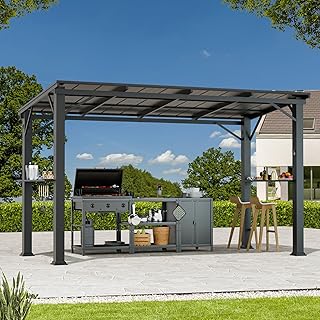


How to Choose a Hardtop Gazebo For Snow Load (2026)
- Roof material and gauge: Galvanized steel panels resist corrosion and shed snow more effectively than polycarbonate. Thicker gauge steel holds up longer under repeated accumulation and ice damming.
- Frame construction: Powder-coated aluminum frames shed weight without rusting, while heavier steel frames add rigidity but demand a level, reinforced foundation to prevent sinking or shifting.
- Roof pitch and ventilation: A steeper peak sheds snow faster and reduces pooling. Double-roof designs allow airflow that moderates interior temperature and limits condensation buildup in freezing conditions.
- Drainage and runoff management: Integrated gutter systems channel meltwater away from seating and deck surfaces. Poor drainage turns a snowstorm into a sheet-ice hazard directly beneath your gazebo.
- Dimensions and placement clearance: Measure your footprint with at least 18 inches of buffer on all sides. A gazebo pressed against a house wall needs a lean-to profile; freestanding pavilions require unobstructed overhead clearance for safe snow shed.
The Best Hardtop Gazebo For Snow Load (2026) Reviews
Aoxun 12′ x 16′ Hardtop Gazebo with Drainage System
This is the workhorse of the group. The galvanized steel double roof paired with an aluminum frame delivers serious snow-shedding geometry, and the built-in drainage channels keep meltwater from pooling at your feet. It is the largest option here and the one I would specify for a spacious patio where you want to arrange furniture in distinct zones—dining on one side, lounge lighting on the other—without feeling cramped under the canopy.
10×12 Cedar Wood Hardtop Gazebo
Cedar brings a warmth that metal gazebos simply cannot replicate. The natural grain catches afternoon light beautifully and ages into a silver patina that photographs well in every season. Structurally, the peak roof with galvanized steel panels handles snow admirably, and the wood frame absorbs wind vibration rather than transferring it to the ground anchors. If ambience matters as much as durability, this one earns its keep.
Aoxun 12′ x 16′ Hardtop Gazebo with Netting and Curtains
A close sibling to the drainage-equipped Aoxun above, this variant trades the focus on runoff for breathable netting and privacy curtains that extend the gazebo’s usability deep into shoulder seasons. The galvanized steel double top still performs in heavy snow, and the netting gives you a practical insect barrier without compromising airflow. It is a strong pick for anyone who wants to soften the industrial edges of a metal pavilion with layered textiles.
Domi 10′ x 10′ Wall-Mounted Lean-To
Perfect for smaller decks or courtyards where a freestanding structure would dominate the space, this wall-mounted lean-to channels snow off a single sloped roof away from the house. The galvanized steel roof and integrated drainage system punch above what you might expect from a compact footprint. I appreciate this one for the way it frames a doorway or sliding glass door—it creates a threshold experience that transitions indoor light to outdoor shelter without abruptness.
Patio Gazebo 11′ x 13′ with LED Lights and Bluetooth Speaker
This is the most “plug-and-play” ambience option in the lineup. Built-in LED strips eliminate the need for separate string lights or pendant fixtures, and the integrated Bluetooth speaker means you can set the mood from your phone without additional wiring. The double-roof design handles moderate snow loads, though the soft-top canopy underneath means you should clear accumulation promptly rather than let it sit. For entertainers who want instant atmosphere, it delivers.
Frequently Asked Questions
How much snow can a hardtop gazebo typically support?
Most hardtop gazebos with galvanized steel roofs are rated for roughly 20 to 30 pounds per square foot, which translates to approximately 18 to 24 inches of fresh, dry snow. Wet, compacted snow weighs significantly more, so proactive clearing after major storms is wise regardless of your gazebo’s rating.
Do I need a permit to install a hardtop gazebo?
Requirements vary by municipality. Permanent structures with footings often trigger permit requirements, especially if they exceed a certain square footage or are attached to your home. Check your local building codes before ordering—the last thing you want is a compliance issue after the structure is assembled.
Can I leave a hardtop gazebo up year-round?
Yes, most hardtop gazebos with aluminum frames and galvanized steel roofs are designed for permanent installation. They withstand UV exposure, rain, and snow across all four seasons. Remove or secure any curtains, netting, or fabric panels before winter to prevent wind damage.
What foundation does a hardtop gazebo require?
A level surface is non-negotiable. Concrete pads, paver patios, and reinforced deck framing all work well. Avoid placing a hardtop gazebo directly on bare soil or loose gravel—ground anchors need stable substrate to resist uplift forces during high winds or shifting snow loads.
Final Thoughts
For maximum snow performance with a refined aesthetic, the Aoxun 12′ x 16′ with Drainage System leads the pack with its engineered runoff and generous footprint. Homeowners who prioritize natural warmth and year-round character should look closely at the Cedar Wood Hardtop Gazebo, whose organic material brings genuine soul to a structure that still meets the engineering demands of heavy winters. And for those shopping a tighter footprint, the Domi Lean-To proves that thoughtful design does not require massive square footage.