Key takeaways
- Match orifice size to your GPM: A 4.0 orifice paired with a 2.0 GPM washer starves flow; a 3.0 orifice on a 4.0 GPM machine restricts pressure. Check both numbers before clicking buy.
- Connector standard: Nearly every unit here uses 1/4″ quick-connect, but verify your wand accepts it. Adapters exist, yet each joint is a potential leak point under 4,000 PSI.
- Material and housing: Stainless steel internals resist mineral buildup far better than brass or plastic housings, especially if you draw from a well or live in a hard-water region.
- Rotating mechanism quality: Cheap spring-loaded bearings produce an uneven cone pattern, leaving visible circles on flat surfaces. Look for mention of ceramic bearings or precision-ground internals.
- Heat tolerance: If you own a hot-water pressure washer, confirm the nozzle is rated above 212°F. Standard turbo nozzles can deform or lose their seal at sustained high temperatures.
What's inside
Choosing a turbo nozzle for your pressure washer sounds simple until you’re staring at six nearly identical listings, each claiming 4,000 PSI ratings and “universal” fit. The reality is that nozzle orifice size, rotating mechanism quality, and connector tolerances vary wildly — and the wrong pick can leave streaks on your patio or, worse, damage softer surfaces like painted siding. Getting this right means matching your machine’s GPM output to the correct orifice diameter, a step most buyers skip entirely.
Below, we break down the six turbo nozzles worth considering in 2026, ranked by spray consistency, build durability, and real-world cleaning speed. Whether you’re blasting moss off brick pavers or restoring a weathered deck, the right oscillating tip transforms a two-hour job into a forty-five-minute one.
As an Amazon Associate we earn from qualifying purchases.
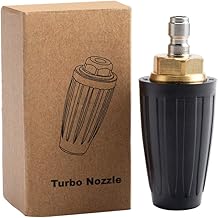


How to Choose a Turbo Nozzle Pressure Washer (2026)
- Match orifice size to your GPM: A 4.0 orifice paired with a 2.0 GPM washer starves flow; a 3.0 orifice on a 4.0 GPM machine restricts pressure. Check both numbers before clicking buy.
- Connector standard: Nearly every unit here uses 1/4″ quick-connect, but verify your wand accepts it. Adapters exist, yet each joint is a potential leak point under 4,000 PSI.
- Material and housing: Stainless steel internals resist mineral buildup far better than brass or plastic housings, especially if you draw from a well or live in a hard-water region.
- Rotating mechanism quality: Cheap spring-loaded bearings produce an uneven cone pattern, leaving visible circles on flat surfaces. Look for mention of ceramic bearings or precision-ground internals.
- Heat tolerance: If you own a hot-water pressure washer, confirm the nozzle is rated above 212°F. Standard turbo nozzles can deform or lose their seal at sustained high temperatures.
The Best Turbo Nozzle Pressure Washer (2026)s Reviewed
AURORA CAR 4000 PSI Turbo Nozzle
A solid entry for homeowners tackling concrete driveways and brick facades. The 4.0 GPM rating aligns well with most mid-range residential machines, and the rotating spray pattern delivers noticeably even coverage compared with a fixed 25° tip. It’s a no-frills performer that punches above its price point.
Simpson 4500 PSI Quick Connect Turbo Nozzle (80144)
Rated for hot-water operation up to 212°F, this is the nozzle to reach for when you’re running a commercial-grade heated unit on grimy decking or oil-stained patios. Simpson’s oscillating jet covers up to 50% more area per pass, and the build quality holds up season after season in professional settings.
Tool Daily 360° Rotating Turbo Nozzle
Stainless steel construction at a budget price makes this a smart first upgrade for anyone still using the stock nozzle kit. The 360° rotation is smooth and consistent across its 3,600 PSI range, and it handles wooden surfaces with less risk of fiber tear-out than higher-pressure alternatives.
AURORA CAR Rotating Turbo Nozzle & 6-in-1 Kit
The included 6-in-1 quick-changeover tip alone justifies the slight price premium — switching between a 0° pencil jet and a 40° fan without swapping nozzles saves real time on multi-surface jobs. The turbo nozzle itself performs on par with the brand’s standalone unit, making this a versatile two-tool package.
Stainless Steel 360° Rotating Turbo Spray Tips
An unbranded contender that delivers where it counts: consistent cone pattern and reliable quick-connect fitment. At 3.0 GPM, it’s optimized for smaller electric washers that popular brands overlook. Garden cleanup and light car washing are its sweet spot.
Pressure Washer Tips Rotating Turbo Nozzle Kit
Shipped with seven spray jet nozzles and a 1/4″ quick connector, this kit is ideal for buyers who want a complete arsenal rather than a single tip. The turbo nozzle handles the heavy lifting on concrete and brick, while the color-coded accessories cover everything from soap application to a razor-thin 0° blast.
Frequently Asked Questions
What does a turbo nozzle actually do differently than a regular nozzle?
A turbo nozzle spins a zero-degree jet in a rapid cone pattern, concentrating the full force of your washer across a wider swath. The result is the cleaning power of a 0° tip with the surface coverage of a 25° fan — faster results with less risk of etching.
Can I use a turbo nozzle on car paint?
Exercise caution. While some owners use turbo nozzles on trucks and wheel wells, the concentrated jet can strip clear coat if held too close or too long. A 40° fan nozzle with a surface cleaner attachment is safer for automotive paint.
Will a turbo nozzle work with my electric pressure washer?
Yes, provided the nozzle’s GPM and PSI ratings align with your machine’s output. Most electric washers deliver 1.2 to 2.0 GPM, so a 3.0 orifice nozzle is typically a better match than a 4.0.
How long does a turbo nozzle last?
Ceramic-bearing models from established brands typically outlast cheap spring-loaded alternatives by two to three times. Flushing the nozzle with clean water after each session — especially in hard-water areas — extends life significantly.
Final Thoughts
For most homeowners, the Simpson 80144 stands out as the premium pick thanks to its hot-water capability and professional-grade build. Budget-minded buyers won’t go wrong with the Tool Daily stainless steel unit, and if versatility matters most, the AURORA CAR 6-in-1 kit covers more ground than any single nozzle in this roundup. Pair your choice with the right orifice size for your washer’s GPM, and you’ll notice the difference on the very first pass.