Key takeaways
- Cutting Capacity: Measure the maximum thickness and width of the stock you actually work with — not the project you might tackle someday. A 5-inch capacity handles most furniture-scale metal, while 7-inch and above opens the door to structural tubing and angle iron.
- Motor Power: Amps and horsepower determine whether the blade keeps its line through interrupted cuts. For consistent work on steel up to ¼ inch, look for at least ½ HP; heavier fabrication benefits from ¾ HP or above so the motor doesn’t labor and bog down mid-cut.
- Variable Speed Control: Adjustable blade speed (measured in feet per minute) lets you match the tooth pitch to the material. Slower speeds protect blade life on hard alloys; faster feeds speed production on softer metals. A saw locked to a single speed limits what you can do.
- Table Design and Tilt: A cast-iron or heavy-gauge steel worktable that stays flat under vibration makes every cut more predictable. Tilting capability — especially 0 to 45 degrees — eliminates the need for angled fixtures when mitered metal joints are in the plan.
- Build Quality and Footprint: Rigid steel frames absorb the harmonic buzz that cheaper sheet-metal housings amplify. Consider the saw’s physical dimensions and weight relative to your available space; a benchtop model with a vibration-dampening base can outperform a larger unit bolted to a flimsy surface.
What's inside
Choosing a vertical band saw for metal work is less about raw specs and more about how the tool reshapes your entire workflow — the rhythm of your cuts, the steadiness of the table under load, and whether the machine earns a permanent place in your shop or sits gathering rust after two weekends. Many buyers chase the highest horsepower number and end up with an oversized unit that rattles their workbench, while others settle for a compact model that stalls on anything thicker than sheet steel.
This guide narrows the field to six real contenders and evaluates each through the lens that matters most: how they perform when you’re standing over them for hours, making the kind of precise, repetitive cuts that furniture hardware and metal bracketry demand. Whether you need a portable unit you can carry to a job site or a stationary saw that anchors a dedicated station, the picks below cover the full spectrum without wasting your time on filler.
As an Amazon Associate we earn from qualifying purchases.


How to Choose a Vertical Band Saw For Metal Cutting (2026)
- Cutting Capacity: Measure the maximum thickness and width of the stock you actually work with — not the project you might tackle someday. A 5-inch capacity handles most furniture-scale metal, while 7-inch and above opens the door to structural tubing and angle iron.
- Motor Power: Amps and horsepower determine whether the blade keeps its line through interrupted cuts. For consistent work on steel up to ¼ inch, look for at least ½ HP; heavier fabrication benefits from ¾ HP or above so the motor doesn’t labor and bog down mid-cut.
- Variable Speed Control: Adjustable blade speed (measured in feet per minute) lets you match the tooth pitch to the material. Slower speeds protect blade life on hard alloys; faster feeds speed production on softer metals. A saw locked to a single speed limits what you can do.
- Table Design and Tilt: A cast-iron or heavy-gauge steel worktable that stays flat under vibration makes every cut more predictable. Tilting capability — especially 0 to 45 degrees — eliminates the need for angled fixtures when mitered metal joints are in the plan.
- Build Quality and Footprint: Rigid steel frames absorb the harmonic buzz that cheaper sheet-metal housings amplify. Consider the saw’s physical dimensions and weight relative to your available space; a benchtop model with a vibration-dampening base can outperform a larger unit bolted to a flimsy surface.
The Best Vertical Band Saw For Metal Cutting (2026)s Reviewed
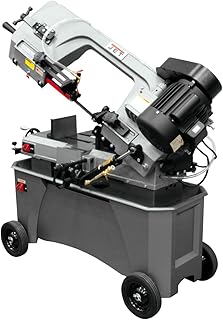
JET 7″ × 12″ Deluxe Metal Cutting Band Saw
The HVBS-712D is the workshop anchor many fabricators reach for first. Its ¾ HP motor drives the blade with a composure that lesser motors can’t match, and the horizontal-to-vertical conversion feels deliberate rather than like an afterthought — the kind of engineering detail that pays dividends over years of daily use.
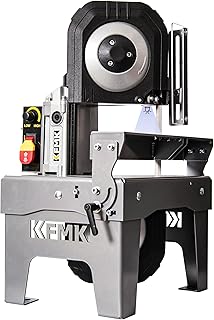
KAKA Industrial 23-Inch Vertical Band Saw
Built around a rigid steel frame with an integrated blade welder and carbide guides, the VS-2313 is unambiguously industrial. Its 23-inch cutting envelope dwarfs every other saw on this list, and the tilting table adds versatility that makes it viable for both heavy fabrication and precise furniture-hardware work at 220V.
WEN Metal Band Saw With Stand
The BA4664 hits the sweet spot for a home shop that needs a dedicated metal saw without dedicating an entire corner to it. The included stand raises the working height to a comfortable level out of the box, and the footprint stays small enough to share space with a drill press and grinder.
JET 5″ × 6″ Metal Cutting Band Saw
For tasks that don’t demand the 712D’s capacity, the HVBS-56 delivers the same dual-mode functionality at roughly half the price and weight. It’s a smart choice for hobbyists and small furniture studios that cut metal in moderate volumes and value floor space as much as cutting power.
5-Inch Benchtop Variable Speed Band Saw
At 10 Amps with adjustable speed from 137 to 472 FPM, this tabletop unit punches above its compact dimensions. The liftable worktable and dual-material blade compatibility make it a surprisingly flexible entry point for builders who split their time between wood and metal components.
Frequently Asked Questions
Can a vertical band saw replace an angle grinder for metal cutting?
For straight and gently curved cuts, a vertical band saw is significantly more accurate and repeatable than a grinder with a cutoff wheel. Where the grinder still wins is in tight spaces and rough demolition cuts where blade clearance is limited — keep both tools in your arsenal for different roles.
What blade length and tooth pitch work best for mild steel?
For mild steel under ¼ inch, a 14-tooth-per-inch bi-metal blade handles most cuts cleanly while resisting breakage. Thicker stock benefits from 10 or 8 TPI blades that clear chips faster and reduce heat buildup along the kerf.
Do I need 220V for a serious metal band saw?
Not necessarily. Many mid-range saws run on standard 115V circuits and deliver enough torque for furniture-scale metal work. 220V becomes relevant when you step into industrial-capacity machines like the KAKA VS-2313, where the motor demands a dedicated circuit to perform consistently.
How often should I replace or sharpen the blade?
Bi-metal blades in a home shop typically last 8 to 15 hours of active cutting before dulling noticeably. Signs to replace include rough cut faces, the motor working harder to maintain speed, and blade drift that no guide adjustment corrects. Sharpening is generally not cost-effective for disposable bi-metal blades — replacing them keeps cut quality predictable.
Final Thoughts
For a well-rounded home shop, the JET 7″ × 12″ Deluxe earns its place as the most capable all-around pick, while the WEN BA4664 offers genuinely useful capacity at a price that doesn’t strain a workshop budget. If your projects trend toward heavy-gauge material and you have the electrical infrastructure to support it, the KAKA Industrial VS-2313 is a serious machine that won’t be outgrown anytime soon.