Key takeaways
- Climate Compatibility: If your region swings between intense sun and heavy rain, synthetic materials like HDPE resist moisture warping and UV fading far better than untreated wood. Coastal salt air accelerates corrosion on unprotected steel frames, so look for powder-coated or galvanized hardware.
- Weight and Portability: Wrought iron and solid hardwood tables anchor a space beautifully but are genuinely heavy to reposition. HDPE and polywood composites keep things movable without sacrificing structural integrity, which matters if you rearrange for seasonal gatherings.
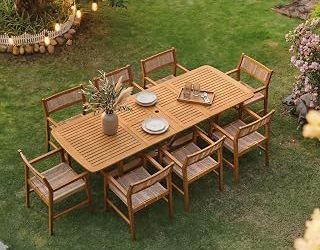
- Surface Texture and Visual Warmth: Natural acacia develops a rich patina over time that amplifies candlelit evening meals with organic depth. HDPE with wood-grain finishes mimics this effect without the maintenance cycle, though up close the difference in tactile warmth is noticeable.
- Maintenance Realism: Be honest about upkeep. Acacia and wrought iron need periodic oiling, sealing, or rust treatment. HDPE and polywood composites wipe clean with soap and water, making them genuinely low-effort for households that use the table weekly.
- Seating Capacity vs. Footprint: An 84-inch rectangular table comfortably seats six to eight people but demands a larger deck or patio. A 61-inch or square option works better for compact spaces while still hosting a full meal for four to six.
What's inside
Choosing an outdoor dining table material feels like solving a puzzle where the pieces keep changing. UV exposure, sudden downpours, freeze-thaw cycles, and sticky summer humidity all conspire against whatever sits on your patio. Buyers often grab the first table that looks right online, only to watch it warp, fade, or develop a chalky film within a single season. The result is wasted money and a dining space that never feels inviting.
As someone who designs lighting and ambiance for residential outdoor spaces, I approach furniture material the way I approach light itself: it shapes how a space feels at every hour. The grain of natural wood catches golden-hour warmth differently than the clean surface of HDPE. This guide breaks down the strongest material options for 2026, reviews five standout tables, and helps you match the right surface to the atmosphere you actually want to create.
As an Amazon Associate we earn from qualifying purchases.


How to Choose a Material for Your Outdoor Dining Table (2026)
- Climate Compatibility: If your region swings between intense sun and heavy rain, synthetic materials like HDPE resist moisture warping and UV fading far better than untreated wood. Coastal salt air accelerates corrosion on unprotected steel frames, so look for powder-coated or galvanized hardware.
- Weight and Portability: Wrought iron and solid hardwood tables anchor a space beautifully but are genuinely heavy to reposition. HDPE and polywood composites keep things movable without sacrificing structural integrity, which matters if you rearrange for seasonal gatherings.
- Surface Texture and Visual Warmth: Natural acacia develops a rich patina over time that amplifies candlelit evening meals with organic depth. HDPE with wood-grain finishes mimics this effect without the maintenance cycle, though up close the difference in tactile warmth is noticeable.
- Maintenance Realism: Be honest about upkeep. Acacia and wrought iron need periodic oiling, sealing, or rust treatment. HDPE and polywood composites wipe clean with soap and water, making them genuinely low-effort for households that use the table weekly.
- Seating Capacity vs. Footprint: An 84-inch rectangular table comfortably seats six to eight people but demands a larger deck or patio. A 61-inch or square option works better for compact spaces while still hosting a full meal for four to six.
The Best Materials for Outdoor Dining Tables (2026) — Reviewed
SERWALL Outdoor 84″ HDPE Rectangular Dining Table
This 84-inch HDPE table earns its spot for sheer versatility. It seats six to eight without crowding, and the pre-cut umbrella hole lets you layer soft overhead shade into your setup—a detail I value when designing evening dining ambiance. The all-weather brown finish holds its tone season after season with zero refinishing, making it the strongest low-maintenance pick for larger patios.
MFSTUDIO Outdoor Wrought Iron Dining Table
The MFSTUDIO pairs a wrought iron frame with a polywood top, blending industrial gravitas with practical weather resistance. At 61 inches, it fits tighter decks and porches without feeling cramped. The iron base gives it real visual weight at dusk—paired with string lights or lanterns, the dark frame creates sharp, architectural shadows across the table surface that elevate the entire setting.
Devoko Acacia Wood Dining Table
For buyers who want genuine wood character, the Devoko’s acacia construction delivers authentic grain patterns and a warm walnut-brown tone. It transitions smoothly between indoor kitchen duty and outdoor patio use, which is ideal if you entertain in a combined living space. Acacia’s natural oils provide decent weather resistance, though an annual sealant application keeps it performing at its best.
Flamaker Acacia Wood Dining Table with Steel Frame
Flamaker pairs an acacia top with a powder-coated steel frame, striking a balance between organic surface warmth and structural rigidity. The mixed-material design fits modern-rustic aesthetics particularly well—think matte black lanterns alongside natural linen runners. It handles poolside placement and garden settings with equal ease, though the steel frame benefits from a quick wipe-down after rain to prevent water spots.
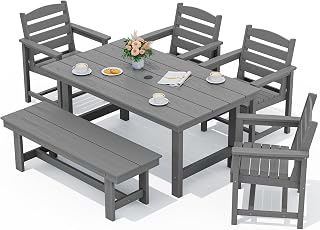
5-Piece HDPE Outdoor Dining Set
This complete five-piece set includes a square table and four chairs, all with waterproof wood-grain HDPE surfaces. Each chair supports up to 300 pounds, and the 1.7-inch umbrella hole accommodates standard patio umbrellas. For smaller patios or apartment balconies, the coordinated set eliminates guesswork and delivers a polished, unified look straight out of three boxes.
Frequently Asked Questions
Does HDPE outdoor furniture hold up in extreme heat?
Yes. HDPE resists UV degradation and does not absorb heat the way metal surfaces do, so table tops remain touchable even under direct afternoon sun—a practical advantage during peak summer dining.
How often does acacia wood need sealing?
A single coat of exterior wood oil or sealant once per year is typically sufficient. Applying it in spring before heavy outdoor use keeps the grain nourished and prevents premature graying.
Can wrought iron tables stay outdoors year-round?
Powder-coated wrought iron handles year-round outdoor placement in most climates. In regions with harsh winter salt exposure, a breathable furniture cover adds meaningful protection against surface rust.
Which material feels most premium during evening meals?
Natural acacia wood creates the most inviting tactile and visual experience under warm ambient lighting. Its organic grain catches candlelight and string lights with a depth that synthetic surfaces approximate but do not replicate.
Final Thoughts
For maximum durability with minimal upkeep, the SERWALL 84″ HDPE Table stands out as the most dependable all-around choice. If warmth and character anchor your vision, the Devoko Acacia Wood Table delivers authentic material beauty that rewards you over time. For small-space owners who want a complete solution, the 5-Piece HDPE Dining Set offers coordinated style and rock-solid practicality in a single package.