Key takeaways
- Lay geometry: Traditional gathered-end hammocks curve you into a banana shape, which suits back sleepers but pinches side sleepers. Flat-lay or asymmetric designs use spreader lines and a diagonal ridge to give you something closer to a mattress plane, and they are the better call for full-night use.
- Light control: A mosquito net is also a diffuser. Fine-mesh dark netting softens streetlight and early sun into an even wash, while a pitched rainfly acts as your blackout layer — pitch it low over the head end and you gain another 40 minutes of sleep at sunrise.
- Fabric weight and color: Lighter denier nylon breathes better but transmits more light; dark green, charcoal, and navy canopies read as genuine shade at midday, whereas pale grey and sky blue glow like a paper lantern once the sun is up.
- Suspension quality: Tree straps with multiple loops let you fine-tune sag to roughly a 30-degree hang angle, which is what makes a hammock feel flat instead of folded. Skip anything that ships with rope only.
- Capacity and width: Rated weight is a proxy for fabric strength, not comfort. Width is what buys you diagonal room, so a double is worth the extra ounces even for solo sleepers.
What's inside
Anyone who has spent a night in a hammock knows the failure mode: you drift off easily, then wake at 4 a.m. with your shoulders squeezed, one hip cold, and a slice of moonlight or a security lamp landing directly across your face. Sleeping in a hammock is less about the fabric and more about the envelope you build around it — the lay angle, the airflow, and above all the way light moves through the material at dusk and dawn. Most buyers shop on capacity and packed weight, then discover that the real variables are geometry and glow.
I design lighting and ambience for living spaces and outdoor rooms, so I evaluate hammocks the way I’d evaluate a lampshade: how does it filter, diffuse, or block light, and what does that do to rest? This guide covers six sleeping hammocks worth considering in 2026 — from full three-in-one shelters with integrated nets and rainflies to minimal double hangs for a shaded porch — plus the specifications that actually determine whether you sleep through the night.
As an Amazon Associate we earn from qualifying purchases.


How to Choose a Sleeping Hammock (2026)
- Lay geometry: Traditional gathered-end hammocks curve you into a banana shape, which suits back sleepers but pinches side sleepers. Flat-lay or asymmetric designs use spreader lines and a diagonal ridge to give you something closer to a mattress plane, and they are the better call for full-night use.
- Light control: A mosquito net is also a diffuser. Fine-mesh dark netting softens streetlight and early sun into an even wash, while a pitched rainfly acts as your blackout layer — pitch it low over the head end and you gain another 40 minutes of sleep at sunrise.
- Fabric weight and color: Lighter denier nylon breathes better but transmits more light; dark green, charcoal, and navy canopies read as genuine shade at midday, whereas pale grey and sky blue glow like a paper lantern once the sun is up.
- Suspension quality: Tree straps with multiple loops let you fine-tune sag to roughly a 30-degree hang angle, which is what makes a hammock feel flat instead of folded. Skip anything that ships with rope only.
- Capacity and width: Rated weight is a proxy for fabric strength, not comfort. Width is what buys you diagonal room, so a double is worth the extra ounces even for solo sleepers.
The Best Sleeping Hammocks of 2026, Reviewed
3-in-1 Camping Hammock Tent with Mosquito Net & RainFly (Dark Green)
This is the most complete sleep system here: hammock, bug net, and waterproof fly in one packable bundle, with the dark green canopy doing real work as a light barrier at dawn. Best for backpackers who want a shelter that seals out both insects and unwanted brightness without carrying a separate tarp.
ENO DoubleNest Special Edition
The DoubleNest remains the benchmark for build quality — evenly woven nylon, confidence-inspiring stitching, and a hang that stays comfortable over years of use. The Special Edition colorways matter more than they sound: the deeper tones cast a much calmer shade than the brighter options when you are lounging in afternoon sun.
Lightweight Double Camping Hammock, 772 lb Capacity (Black)
A serious capacity rating and a genuinely wide double panel make this an easy pick for anyone who sleeps on their side and needs diagonal space. Black fabric is the most neutral choice for ambience, absorbing rather than tinting light, which keeps a porch or patio setup visually quiet.
SZHLUX Camping Hammock Double & Single
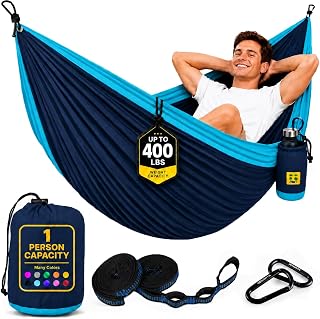
Straps and a sewn-in carry bag come standard, which removes the usual first-night hassle of improvising a suspension. Bear in mind that the Light Grey and Sky Blue panels transmit a fair amount of daylight, so pair them with overhead shade if you plan on morning sleep-ins.
Flat Lay Camping Hammock Tent with Net & RainFly
The flat-lay architecture is the headline feature and the reason this belongs on any full-night shortlist, delivering a near-level sleeping plane that traditional gathered-end hammocks cannot match. The integrated net and fly give you layered light control: mesh for diffusion, fly for blackout.
Frequently Asked Questions
Can you actually sleep all night in a hammock?
Yes, provided you get the hang angle and lay geometry right. Aim for straps at roughly 30 degrees, sleep diagonally, and choose a flat-lay or wide double model if you are a side or stomach sleeper.
Does the canopy color really affect sleep?
Noticeably. Fabric color determines how much light reaches your eyelids at dawn, and morning light is the strongest signal telling your body to wake. Darker canopies and a low-pitched rainfly buy you meaningful extra rest.
Do I need insulation underneath?
Below about 70°F, yes. Your sleeping bag compresses under you and loses loft, so an underquilt or closed-cell foam pad handles the cold shoulder and hip that most first-timers report.
Can I hang one of these indoors?
Only from structural framing with rated hardware, never drywall anchors. Indoors, a hammock reads as a soft sculptural element, so position it where a lamp or window can wash the fabric from the side rather than overhead.
Final Thoughts
For genuine all-night comfort with layered light control, the Flat Lay Camping Hammock Tent is the strongest overall choice, with the Dark Green 3-in-1 Camping Hammock Tent close behind for anyone prioritizing a darker, more sealed sleeping envelope. If you want a simpler hang that will outlast everything else on your gear shelf, the ENO DoubleNest is still the one to buy.