Key takeaways
- Material and finish: Matte metal surfaces absorb overhead light and recede visually, which suits moody or industrial rooms, while light-toned wood or white lacquer bounces ambient light and can make a tight space feel more open and airy.
- Dimensions and ceiling height: Measure from floor to the lowest ceiling obstruction — crown molding, ceiling fans, or pendant fixtures — and leave at least two inches of clearance so the armoire reads as intentional rather than cramped.
- Internal configuration: Prioritize adjustable shelving and a removable hanging rod if your storage needs shift seasonally, since a fixed layout will eventually fight the way you actually use the space.
- Door and hardware style: Soft-close hinges and magnetic closures eliminate the percussive sound that undermines a calm bedroom environment, while integrated mirrors or drawer faces can double as reflective accent planes that amplify natural light.
- Room traffic and placement: A freestanding wardrobe positioned near a window can either block light or frame it — consider which wall placement lets the piece anchor the room without creating a dead zone behind the bed or beside the door.
What's inside
Choosing an armoire wardrobe is one of those decisions that quietly reshapes a room’s entire atmosphere. A poorly matched cabinet can swallow light, disrupt sight lines, and make even a spacious bedroom feel cluttered. From a lighting-and-ambience standpoint, the right armoire doesn’t just store clothes — it acts as a vertical surface that reflects, absorbs, or diffuses the light already in your space, influencing warmth and perceived depth across the whole room.
This guide evaluates six popular armoire wardrobes through that dual lens: practical storage design and the way each piece interacts with your room’s existing palette, finishes, and light sources. Whether you need a freestanding metal unit for a spare room or a statement wooden piece for your primary bedroom, the picks below balance real-world function with the visual weight that makes or breaks an interior scheme.
As an Amazon Associate we earn from qualifying purchases.




How to Choose an Armoire Wardrobe (2026)
- Material and finish: Matte metal surfaces absorb overhead light and recede visually, which suits moody or industrial rooms, while light-toned wood or white lacquer bounces ambient light and can make a tight space feel more open and airy.
- Dimensions and ceiling height: Measure from floor to the lowest ceiling obstruction — crown molding, ceiling fans, or pendant fixtures — and leave at least two inches of clearance so the armoire reads as intentional rather than cramped.
- Internal configuration: Prioritize adjustable shelving and a removable hanging rod if your storage needs shift seasonally, since a fixed layout will eventually fight the way you actually use the space.
- Door and hardware style: Soft-close hinges and magnetic closures eliminate the percussive sound that undermines a calm bedroom environment, while integrated mirrors or drawer faces can double as reflective accent planes that amplify natural light.
- Room traffic and placement: A freestanding wardrobe positioned near a window can either block light or frame it — consider which wall placement lets the piece anchor the room without creating a dead zone behind the bed or beside the door.
The Best Armoire Wardrobe (2026)s Reviewed
GAIOUS Metal Wardrobe Cabinet
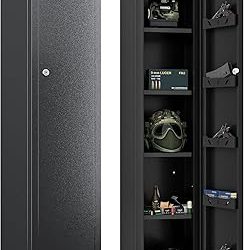
This black steel armoire’s matte finish is remarkably effective at grounding an eclectic or industrial-leaning room without competing with brighter accent pieces. The two drawers provide concealed storage below the hanging rod, and the single adjustable shelf lets you carve out a mid-zone for folded items or accessories — a layout that keeps the interior from becoming a visual black hole when the doors swing open.
White Armoire Wardrobe Closet with 9 Drawers
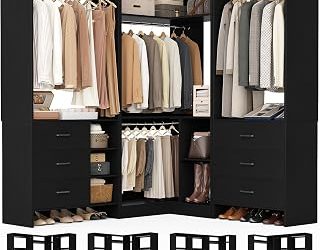
At 95 inches wide, this six-door wooden wardrobe dominates a wall the way a gallery panel would, and its white finish actively redistributes window light across the bedroom. Nine drawers eliminate the need for a separate dresser entirely, freeing floor space for ambient lighting elements like a low table lamp or LED floor uplight — details that transform the room from a storage zone into a genuine retreat.
VOWNER 71″ Armoire with Mirror
The built-in mirror is the standout design feature here, functioning less as a convenience add-on and more as a second light source that bounces illumination back into the room. Six doors open to reveal generous compartmentalized storage, and the mirror panels on the exterior help break up what would otherwise be a tall, monolithic black cabinet — a smart choice for bedrooms where visual relief at eye level matters.
ANCTOR 3-Door Farmhouse Armoire
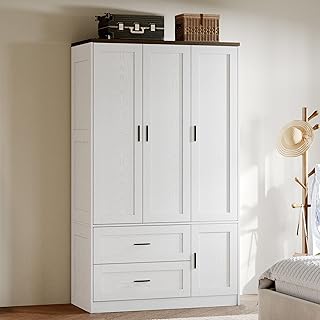
The ANCTOR’s white farmhouse silhouette brings a softness that reads beautifully in rooms layered with warm wood tones and textured textiles. Three doors keep the footprint manageable, and the two-drawer base provides a visual anchor that prevents the tall cabinet from feeling top-heavy — an important detail when you’re balancing a room’s vertical proportions against a low headboard or pendant light.
Metal Armoire Wardrobe with Mirror
This freestanding black steel closet pairs a generous interior with an exterior mirror that adds practical depth and light reflection without requiring wall mounting. Adjustable shelves and a hanging rod give you modular flexibility, and the tall narrow profile makes it ideal for tighter walls or corners where a wider unit would block a floor lamp or obstruct natural light paths.
Frequently Asked Questions
Do metal armoire wardrobes make a room feel cold?
A matte black metal wardrobe can feel stark in a room with cool-toned walls and minimal textiles, but pairing it with warm ambient lighting — think 2700K bulbs in a nearby floor lamp or warm-toned string lights — and layering in soft furnishings like a wool throw or linen curtains immediately balances the temperature.
Can a large armoire work in a bedroom under 120 square feet?
Yes, but placement and finish matter more than raw dimensions. A white or light-finished armoire reflecting window light will feel far less imposing than a dark unit in the same position. Place it on the wall opposite the window so it catches and redistributes daylight rather than casting a shadow toward the bed.
How often should I expect to adjust shelves in a modular wardrobe?
Most people reconfigure their interior shelving two to three times a year as seasonal clothing rotates between hanging and folded storage. Models with tool-free shelf clips make this a five-minute task instead of an afternoon project, which is worth confirming before purchase.
Is a freestanding wardrobe as stable as a built-in closet?
A quality freestanding armoire with a wide base or included anti-tip hardware is safe for everyday use, though anchoring to a wall stud is always recommended for tall units in homes with children or in seismically active regions.
Final Thoughts
For most bedrooms, the VOWNER 71″ Armoire with Mirror offers the best balance of visual depth, flexible storage, and light-enhancing design. Shoppers with more wall space who want a furniture centerpiece should consider the White 9-Drawer Wardrobe for its commanding presence and light-bouncing finish. And for smaller rooms where a lighter footprint is essential, the ANCTOR 3-Door Farmhouse Armoire keeps proportions friendly without sacrificing real storage capacity.