Key takeaways
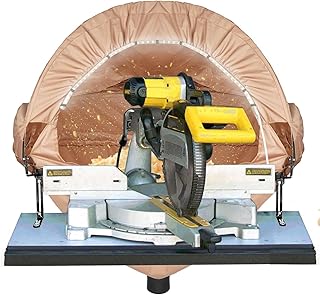
- Integrated light quality: A hood-mounted LED sits above and slightly forward of the blade, which is precisely where you want it. That geometry kills the hand shadow that ruins fine miters. Look for a light you can angle rather than one fixed straight down.
- Port diameter and adapters: A 4″ port moves far more air than the 2.5″ spout on your shop vac hose. Buy a hood that includes a stepped adapter so you’re not improvising with duct tape at 9pm.
- Fabric weight: Heavy Oxford fabric holds its shape under suction instead of collapsing inward. Thin nylon flutters, loses volume, and lets fines escape at the seams.
- Coverage geometry: Sliding saws throw debris further back than chop saws. Measure your rail travel and check the hood’s depth, or you’ll capture 60% of the cut and coat the wall with the rest.
- Accessory holes and packability: Grommets for clamps and stops keep the hood from becoming an obstacle. A storage bag matters more than it sounds if your saw shares a bench with everything else.
What's inside
Anyone who has framed a workshop for photography knows the enemy isn’t darkness, it’s haze. Airborne sawdust behaves exactly like theatrical fog: it catches every beam, softens edges, and turns a crisp pencil line into a suggestion. Most miter saw owners blame their eyes or their blade when a cut drifts, but the real culprit is a cloud of fines diffusing the only light source in the room. Add the shadow your own hand throws across the kerf and you’re cutting half-blind in a space you thought was well lit.
A dust hood solves two problems at once, which is why it’s the rare accessory worth fussing over. It captures the plume before it can scatter light, and the newer generation builds an LED directly into the canopy so illumination arrives from above the cut rather than behind your shoulder. This guide looks at the hoods and adapters worth your money in 2026, judged on capture rate, fabric quality, port fit, and how usefully they light the work.
As an Amazon Associate we earn from qualifying purchases.



How to Choose a Miter Saw Best Dust Collection (2026)
- Integrated light quality: A hood-mounted LED sits above and slightly forward of the blade, which is precisely where you want it. That geometry kills the hand shadow that ruins fine miters. Look for a light you can angle rather than one fixed straight down.
- Port diameter and adapters: A 4″ port moves far more air than the 2.5″ spout on your shop vac hose. Buy a hood that includes a stepped adapter so you’re not improvising with duct tape at 9pm.
- Fabric weight: Heavy Oxford fabric holds its shape under suction instead of collapsing inward. Thin nylon flutters, loses volume, and lets fines escape at the seams.
- Coverage geometry: Sliding saws throw debris further back than chop saws. Measure your rail travel and check the hood’s depth, or you’ll capture 60% of the cut and coat the wall with the rest.
- Accessory holes and packability: Grommets for clamps and stops keep the hood from becoming an obstacle. A storage bag matters more than it sounds if your saw shares a bench with everything else.
The Best Miter Saw Best Dust Collection (2026)s Reviewed
Tredre Miter Saw Dust Collection Hood with Light
The most complete package here, and the one I’d hand to someone setting up a garage shop from scratch. It fits both 10″ and 12″ saws, ships with the 4″-to-2.5″ adapter you’ll actually need, and the built-in light throws an even wash across the fence with almost no hot spot.
Heavy-Duty Oxford Dust Collection Hood, Grey
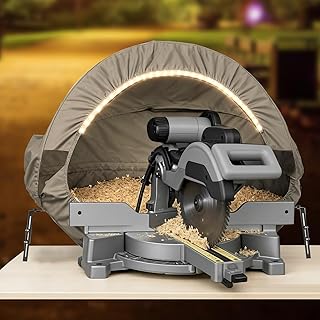
No light, but the stiffest fabric of the group and the best-behaved under strong suction. If your bench already has good overhead illumination, this is the pragmatic choice: it holds a proper volume and doesn’t billow when the vac kicks on.
Universal-Fit Dust Collection Hood with Light, Khaki
The universal-fit pattern earns its name, adapting to odd saw footprints where rigid hoods won’t sit flat. The khaki fabric is a quiet win too, reflecting the LED softly instead of bouncing glare back into your eyes the way pale interiors do.
GARVIN Miter Saw Dust Collection Hood with Light
GARVIN’s version is tuned for standard 10″ saws and gets the accessory holes right, so clamps and length stops stay usable. The light is bright and slightly cool in tone, which reads pencil marks on softwood better than warmer LEDs do.
Bench Miter Saw Dust Hood with Light and 4″ Port
A straightforward, well-priced hood with a full 4″ port and a decent onboard light. Best suited to a permanently mounted bench saw, since setup rewards a little patience with positioning.
Frequently Asked Questions
How much dust will a hood actually catch?
Paired with a shop vac, expect 70–90% depending on fit and cut type. Crosscuts in dry pine capture beautifully; long bevels on sheet goods less so.
Is the built-in light bright enough to work by?
It’s a task light, not room lighting. It excels at revealing the cut line and eliminating hand shadow, but keep your ambient fixtures on.
Do I need a 4″ port if I only own a shop vac?
Yes, and use the included adapter. The larger opening reduces the pressure drop at the hood even when the hose downstream is narrower.
What about the DWS779/DWS780 adapter?
The Improved Miter Saw Dust Collection Adapter is a five-in-one connector for those saws specifically. It’s a complement to a hood, not a replacement, handling collection at the source port.
Final Thoughts
For most workshops, the Tredre hood is the pick: correct adapters, wide saw compatibility, and lighting placed where it does real work. Choose the heavy-duty Oxford grey model if you want the sturdiest canopy and already have good overhead light, or the GARVIN if your bench setup depends on clamps and stops staying accessible.