Key takeaways
- Roof pitch over roof material: A steep, sloped or peaked panel sheds accumulation before it ever becomes a load problem. Flat or barely-angled tops hold wet snow, and wet snow is roughly three times heavier than the dry powder most spec sheets assume.
- Post cross-section, in numbers: Ask for the actual dimension. A 4.6-inch cedar post behaves fundamentally differently under vertical load than a hollow 3-inch tube, and the difference shows up in how little the frame flexes when you’re up a ladder hanging fixtures.
- Anchoring is not optional: Wind and snow arrive together. Bolt into concrete footings or a properly rated deck substrate, and treat any gazebo sitting loose on pavers as a temporary structure regardless of its rating.
- Drainage and meltwater paths: Integrated gutters and downspouts stop the freeze-thaw cycle from building ice dams along the eaves. Ice at the perimeter is what pulls trim, brackets, and light clips loose.
- Built-in mounting hardware: Factory hooks, ceiling beams, and double-roof cavities give you clean routes for low-voltage cable, dimmable string light runs, and a small transformer kept out of the weather. Retrofitting all of that later is tedious and rarely looks intentional.
What's inside
Snow does something strange to outdoor light. A single warm bulb that looks thin in July becomes generous in January, because every flake on the ground throws it back up at you. That’s the reward for keeping a gazebo standing through winter. The punishment for choosing the wrong one is a collapsed roof in February, a tangle of severed string lights, and a patio you avoid until April. I spend my working life planning where fixtures hang and how a space feels after dark, and the frame overhead is the single biggest constraint on both.
This guide looks at gazebos built for genuine snow load, judged on the things that matter once temperatures drop: roof pitch and shedding behavior, post and beam substance, anchoring, drainage, and whether the structure gives you honest mounting points for lighting rather than forcing you to improvise with zip ties. Six models are covered below, spanning cedar-and-steel builds and powder-coated aluminum hardtops.
As an Amazon Associate we earn from qualifying purchases.


How to Choose a Gazebo For Heavy Snow (2026)
- Roof pitch over roof material: A steep, sloped or peaked panel sheds accumulation before it ever becomes a load problem. Flat or barely-angled tops hold wet snow, and wet snow is roughly three times heavier than the dry powder most spec sheets assume.
- Post cross-section, in numbers: Ask for the actual dimension. A 4.6-inch cedar post behaves fundamentally differently under vertical load than a hollow 3-inch tube, and the difference shows up in how little the frame flexes when you’re up a ladder hanging fixtures.
- Anchoring is not optional: Wind and snow arrive together. Bolt into concrete footings or a properly rated deck substrate, and treat any gazebo sitting loose on pavers as a temporary structure regardless of its rating.
- Drainage and meltwater paths: Integrated gutters and downspouts stop the freeze-thaw cycle from building ice dams along the eaves. Ice at the perimeter is what pulls trim, brackets, and light clips loose.
- Built-in mounting hardware: Factory hooks, ceiling beams, and double-roof cavities give you clean routes for low-voltage cable, dimmable string light runs, and a small transformer kept out of the weather. Retrofitting all of that later is tedious and rarely looks intentional.
The Best Gazebo For Heavy Snow (2026)s Reviewed
Modern Shade Wood Grill Gazebo 12′ x 16′
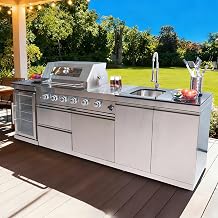
The 4.6-inch cedar posts and sloped galvanized steel roof make this the most reassuring structure here under sustained load, and the size gives you room for a proper three-layer lighting plan: task light over the grill, ambient wash across the ceiling, and a low warm layer at seating height. The exposed timber beams take screw-in hooks beautifully, which most metal frames cannot claim.
Modern Shade Permanent Wood Gazebo 12×14
Essentially the same engineering logic in a slightly tighter footprint, with sturdy hooks already fitted, so pendant lanterns or a single centered fixture go up without drilling into new cedar. The 12×14 proportion reads more intimate after dark, which suits dining more than entertaining.
10×12 ft Cedar Wood Gazebo with Steel Peak Roof
The pronounced peak sheds snow decisively and creates enough interior height that a hanging fixture stops feeling like a head hazard. This is the value pick for smaller decks where the twelve-foot-wide models would crowd the space.
UDPATIO 10’x12′ Hardtop Gazebo
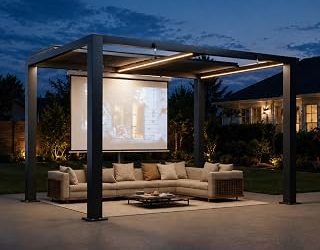
Rated to 49 mph wind and six inches of snow, with dual-track sidewalls that let you run privacy panels and mesh independently. The grey aluminum frame reads cool under white LEDs, so specify 2400–2700K lamps to keep it from feeling clinical in winter.
EROMMY 10′ x 12′ Hardtop Gazebo
The galvanized steel double roof vents heat in summer and gives you a genuinely useful cavity for concealing cable runs and a transformer. Curtains and netting come included, and backlighting them from inside produces one of the softest glows you can get from an off-the-shelf structure.
Frequently Asked Questions
Do I still need to clear snow off a snow-rated gazebo?
Yes, after major storms. Ratings assume even distribution and a specific snow density; drifting and refreezing break both assumptions. Use a roof rake from the ground, never a shovel from above.
Can I leave string lights up all winter?
Only fixtures rated for wet locations with sealed sockets. Route cable along beams rather than the roof edge, where ice will find it, and put everything on a GFCI circuit.
Is cedar or aluminum better in cold climates?
Cedar handles vertical load with more margin and takes hardware well. Aluminum needs no finishing and never rots. Both work; the deciding factor is usually whether you want to maintain a finish.
Does a double roof help in winter?
It helps mostly with wind pressure and gives you a concealed channel for wiring. The snow benefit comes from pitch, not layering.
Final Thoughts
For serious snow country, the Modern Shade 12′ x 16′ cedar gazebo is the structure I would build a lighting scheme around without hesitation, with the Modern Shade 12×14 as the smaller sibling that gives up almost nothing. If you prefer low-maintenance metal, the UDPATIO 10’x12′ hardtop is the sensible choice, and its dual-track sidewalls make winter evenings genuinely usable rather than merely survivable.