Key takeaways
- Airflow (CFM) and Pressure (PSI): Most sandblasting guns demand a minimum of 10–15 CFM at 90 PSI just to maintain a usable media stream. Rotary screw units like the 40HP VSD model deliver 185 CFM at 125 PSI, providing headroom for continuous blasting without pressure sag. Always match your compressor’s output to the gun’s consumption, then add a 20% buffer for line losses and duty cycling.
- Tank Size and Duty Cycle: An 80-gallon ASME-rated tank acts as a buffer that smooths out demand spikes, letting a smaller motor keep up with blasts that would stall a tankless setup. Bench-top cabinets operating at 6–25 CFM can run on modest tanks, but full-scale surface prep gravitates toward 80+ gallon reserves or continuous rotary screw designs.
- Power Supply and Phase Requirements: Industrial rotary screw compressors typically require 480V three-phase power, which means checking your electrical panel before committing. If your workshop only has single-phase 230V service, a 7.5KW unit like the all-in-one rotary screw system bridges the gap between residential power availability and serious blasting output.
- Filtration and Moisture Control: Moisture is the silent enemy of clean blasting. Integrated air dryers and water traps prevent condensation from contaminating your abrasive media and marring the surface you’re prepping. Units that bundle dryers with the compressor eliminate the guesswork of piecing together aftermarket moisture management.
- Portability vs. Stationary Footprint: Handheld blast guns and portable cabinets give you flexibility for small projects and varied locations, but they depend entirely on a reliable compressor feeding them. Stationary systems trade mobility for consistent performance — a worthwhile trade if your blasting work is concentrated in one shop area.
What's inside
Choosing the right air compressor for sand blasting is one of those decisions that can quietly make or break your entire workshop setup. Too little CFM and your blast cabinet sits idle mid-job; too much pressure without the right filtration and you’re wasting energy while chasing inconsistent finishes across every surface you touch.
This guide breaks down the six compressors and blast tools that actually earn their floor space in 2026, comparing airflow capacity, duty cycles, noise profiles, and real-world versatility so you can match a unit to your specific blasting demands — whether that’s stripping decades of paint off a truck frame or etching delicate glass panels for a custom furniture project.
As an Amazon Associate we earn from qualifying purchases.




How to Choose an Air Compressor For Sand Blasting (2026)
- Airflow (CFM) and Pressure (PSI): Most sandblasting guns demand a minimum of 10–15 CFM at 90 PSI just to maintain a usable media stream. Rotary screw units like the 40HP VSD model deliver 185 CFM at 125 PSI, providing headroom for continuous blasting without pressure sag. Always match your compressor’s output to the gun’s consumption, then add a 20% buffer for line losses and duty cycling.
- Tank Size and Duty Cycle: An 80-gallon ASME-rated tank acts as a buffer that smooths out demand spikes, letting a smaller motor keep up with blasts that would stall a tankless setup. Bench-top cabinets operating at 6–25 CFM can run on modest tanks, but full-scale surface prep gravitates toward 80+ gallon reserves or continuous rotary screw designs.
- Power Supply and Phase Requirements: Industrial rotary screw compressors typically require 480V three-phase power, which means checking your electrical panel before committing. If your workshop only has single-phase 230V service, a 7.5KW unit like the all-in-one rotary screw system bridges the gap between residential power availability and serious blasting output.
- Filtration and Moisture Control: Moisture is the silent enemy of clean blasting. Integrated air dryers and water traps prevent condensation from contaminating your abrasive media and marring the surface you’re prepping. Units that bundle dryers with the compressor eliminate the guesswork of piecing together aftermarket moisture management.
- Portability vs. Stationary Footprint: Handheld blast guns and portable cabinets give you flexibility for small projects and varied locations, but they depend entirely on a reliable compressor feeding them. Stationary systems trade mobility for consistent performance — a worthwhile trade if your blasting work is concentrated in one shop area.
The Best Air Compressor For Sand Blasting (2026) Reviews
40HP VSD Rotary Screw Air Compressor
This variable-speed rotary screw unit is the heavyweight of the roundup, pushing 185 CFM at 125 PSI across a three-phase 480V supply. The VSD drive adjusts motor speed to match real-time demand, trimming energy consumption during lighter blasting passes while delivering full power when you open the gun wide on heavy rust removal. It’s purpose-built for shops that run sandblasting as a primary daily operation.
7.5KW 10HP Rotary Screw All-in-One
Bundling an 80-gallon ASME tank, rotary screw compressor, and integrated air dryer into a single footprint, this 230V three-phase system solves the “where do I put everything” problem that plagues modular setups. At 35 CFM and 125 PSI it handles medium-duty blasting with从容, and the built-in dryer keeps moisture from turning your aluminum oxide into a clumpy mess inside the hose line.
Light-Duty Air Sandblaster Gun Kit
This ceramic-nozzle gun kit works with both siphon and gravity feed, making it a practical entry point for furniture refinishing, glass etching, and spot-rust removal on smaller metal pieces. It won’t replace a cabinet system for large panels, but as a handheld tool paired with a capable compressor, it brings sandblasting precision to detail work that larger rigs handle clumsily.
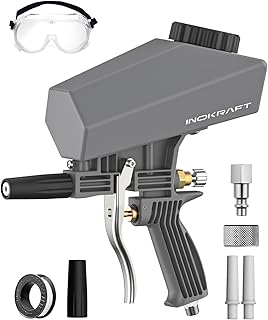
Inokraft Portable Sand Blaster Gun
Designed for 60–120 PSI compressors, this compact gun accepts aluminum oxide, soda, and other fine media, making it a solid companion for paint stripping on vintage furniture frames and small metal hardware. The leak-proof construction matters here — inconsistent seal quality is the most common frustration with budget blast guns, and Inokock’s engineering addresses that directly.
40 Gallon Bench Top Sandblasting Cabinet
This enclosed cabinet turns messy blasting into a contained, visible operation with its included gun and four interchangeable nozzles. Rated at 60–125 PSI and 6–25 CFM, it pairs comfortably with mid-range compressors and keeps abrasive dust off your shop floor — a practical choice for anyone doing repeated rust removal or paint stripping on furniture components.
Frequently Asked Questions
How much CFM do I really need for sand blasting?
Most handheld blast guns require 10–15 CFM at 90 PSI minimum, while bench-top cabinets operate comfortably at 6–25 CFM. Larger rotary screw compressors delivering 35–185 CFM suit continuous or industrial-scale blasting. Always check your specific gun or cabinet’s requirements and add a margin for hose length and fittings.
Can I use a regular shop compressor for sand blasting?
A standard pancake or hot-dog compressor rarely sustains the airflow sand blasting demands. These units might start a blast stream, but pressure drops within seconds. A tank of 40 gallons minimum with a compressor rated above 10 CFM is a more realistic baseline for anything beyond very brief spot work.
What abrasive media works with these compressors?
Aluminum oxide, glass bead, soda, and fine sand are all compatible with the compressors and guns listed here. The media choice depends on your surface — soda for delicate finishes, aluminum oxide for aggressive rust removal, glass bead for a uniform matte texture on metal furniture parts.
Do I need an air dryer for sand blasting?
Yes, moisture in compressed air clumps abrasive media and creates uneven blasting patterns. If your compressor doesn’t include an inline dryer or moisture trap, adding one protects both your equipment and your finish quality. The all-in-one rotary screw system eliminates this concern entirely with its built-in drying unit.
Final Thoughts
For high-volume shop work, the 40HP VSD Rotary Screw Compressor delivers unmatched airflow and efficiency. The 7.5KW All-in-One offers the best balance of integrated features for mid-scale operations, while the 40 Gallon Bench Top Cabinet paired with a solid compressor hits the sweet spot for furniture-focused blasting projects. Match your compressor to your project scale, invest in moisture control, and your blasting results will reflect the care you put into choosing the right setup.