Key takeaways
- Weave and sheen: Matte, tight weaves like linen and stitched fabrics diffuse lamplight softly and hide glare. Chenille and velvet have directional pile that catches light along its nap, giving you a subtle sheen shift as you move — beautiful, but it will show every angle of your lighting.
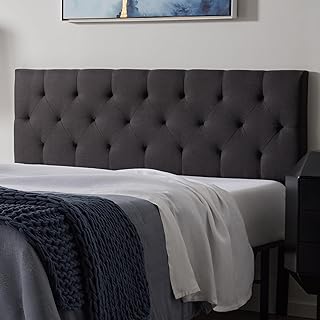
- Tuft depth: Deep diamond tufting creates real shadow geometry, which looks rich under a warm downlight and muddy under flat overhead light. Shallow stitched tufting stays legible in almost any lighting scheme, making it the safer pick for rooms with a single ceiling fixture.
- Height range versus light geometry: Measure from mattress top to the bottom of your sconce or plug-in reading light before you buy. Adjustable legs let you set the panel so the light spills onto the page instead of grazing the fabric and creating a hotspot.
- Mounting method: Wall-mounted panels sit flush and leave a shadow gap you can exploit with a hidden LED strip. Frame-mounted panels are easier to move but tend to lean slightly, which tilts any backlighting up the wall.
- Color under warm light: Creams and beiges warm up considerably at 2700K; grays stay neutral; light browns lean amber. If your bulbs are warm, choose one shade cooler than what looks right on screen.
What's inside
Most padded headboards are chosen in the wrong light. Buyers scroll through listings shot under bright, even studio lighting, then install the piece in a room lit by two bedside lamps at 2700K and a dimmer that rarely goes above forty percent. Under those conditions a fabric that looked crisp and pale in photos can read yellow-green, deep button tufting can throw shadow pockets that make the whole panel look grubby, and a tall wingback can swallow the very sconce light it was supposed to frame. The panel is usually the largest soft surface in the room, which makes it the biggest single influence on how your bedroom’s light behaves after dark.
This guide looks at padded headboards the way an ambience designer would: how the weave scatters or absorbs lamplight, how tuft depth reads under a low-angle glow, how much clearance you have for wall-mounted reading lights, and whether the mounting method leaves room to hide an LED strip for that clean wash of light behind the bed. Fit, build quality, and adjustability still matter, so those are covered too — but the ranking below weighs how each option performs at night, not just how it photographs at noon.
As an Amazon Associate we earn from qualifying purchases.


How to Choose a Padded Headboard (2026)
- Weave and sheen: Matte, tight weaves like linen and stitched fabrics diffuse lamplight softly and hide glare. Chenille and velvet have directional pile that catches light along its nap, giving you a subtle sheen shift as you move — beautiful, but it will show every angle of your lighting.
- Tuft depth: Deep diamond tufting creates real shadow geometry, which looks rich under a warm downlight and muddy under flat overhead light. Shallow stitched tufting stays legible in almost any lighting scheme, making it the safer pick for rooms with a single ceiling fixture.
- Height range versus light geometry: Measure from mattress top to the bottom of your sconce or plug-in reading light before you buy. Adjustable legs let you set the panel so the light spills onto the page instead of grazing the fabric and creating a hotspot.
- Mounting method: Wall-mounted panels sit flush and leave a shadow gap you can exploit with a hidden LED strip. Frame-mounted panels are easier to move but tend to lean slightly, which tilts any backlighting up the wall.
- Color under warm light: Creams and beiges warm up considerably at 2700K; grays stay neutral; light browns lean amber. If your bulbs are warm, choose one shade cooler than what looks right on screen.
The Best Padded Headboards of 2026, Reviewed
Beige Tufted Queen Headboard, Adjustable 37–51 in
The 14-inch height range is the real feature here, letting you tune the panel’s top edge to sit just below a sconce so the light washes down rather than blowing out the fabric. The beige reads noticeably warmer under incandescent-tone bulbs, which suits amber-lit rooms and fights with cool white LEDs.
Upgraded One-Piece Curved Chenille Headboard, Light Brown
The one-piece build means no seam line to catch a shadow across the middle, and the gentle curve pulls light around its face for a soft gradient instead of a flat wall of fabric. Chenille’s pile gives it a quiet glow under low dimmer settings, which is where most bedrooms actually live.
Furpopup Linen Upholstered Headboard, King/Cal King
High-density sponge padding keeps the surface taut, so linen’s matte weave diffuses light evenly with no rippling or sag lines. It supports both wall and frame mounting, and the wall option is the one to take if you plan to tuck an LED strip behind it.
Madison Park Amelia Wingback Headboard, Queen
The wings act like a light baffle: they block sidelight from a partner’s lamp and concentrate your own reading light, which is genuinely useful in shared bedrooms. Nail head trim picks up specular highlights, so aim your lamps to graze rather than hit it directly.
Linen Stitched Tufted Queen Headboard, Gray
Stitched tufting instead of deep buttons means shallow, predictable shadow lines that hold their shape under any color temperature. The gray stays color-neutral as you shift bulbs, making this the most forgiving pick for anyone still experimenting with their lighting.
Frequently Asked Questions
Can I mount reading lights right above a padded headboard?
Yes, with clearance. Keep LED fixtures at least four inches from the fabric face and avoid halogen entirely — it runs hot enough to discolor upholstery over time. Aim for a downward beam so the light lands on the page, not the panel.
Will a large padded headboard make my bedroom feel darker?
Somewhat. Fabric absorbs light where painted drywall would bounce it, so a full-width dark panel can cost you noticeable perceived brightness. Compensate with a lighter fabric or add a wall-grazing light source above the bed.
Which fabric hides wear best under lamplight?
Textured matte weaves. Linen and stitched fabrics scatter light in every direction, which visually breaks up scuffs and pressure marks. Smooth or high-sheen materials reflect coherently and reveal every crease.
Wall mount or frame mount for hidden backlighting?
Wall mount. It holds the panel parallel to the wall, giving you a consistent gap for an LED strip and an even upward wash. Frame-mounted panels lean, which makes the light spread unevenly.
Final Thoughts
For most bedrooms, the Furpopup linen panel is the strongest all-rounder — matte, taut, and wall-mountable for clean hidden lighting. The one-piece curved chenille option is the better choice if you want a soft glow at low dimmer levels, while the Madison Park Amelia earns its place in shared rooms where controlling stray lamplight matters more than anything else.