Key takeaways
- Thickness versus your body weight: Two to three inches gently softens a firm mattress and suits lighter or stomach-dominant sleepers. Four to five inches is a genuine rebuild, and it’s what heavier sleepers or anyone bottoming out on a tired mattress will need for real lumbar support.
- Support before softness: Plushness alone lets your hips sink and twists the spine. Look for either a dense foam base under a pillow-top layer, or high-loft fill with reinforced edge structure — the load-bearing part is what protects your back.
- Heat management: Memory foam holds warmth, and overheating fragments sleep just as reliably as pain does. Gel infusion, mesh side panels, or a bamboo-derived rayon cover all pull heat away; on a king, that surface area matters more than people expect.
- Pocket depth and anchoring: Kings shift. Confirm the skirt fits your mattress height — 18″ to 21″ deep pockets cover most pillow-top builds — and favour models with corner straps if you change positions often through the night.
- Certification and off-gassing: CertiPUR-US certified foam limits VOCs, which is worth caring about in a room you breathe in for eight hours. Expect a short airing-out window regardless, ideally with a window cracked for a day.
What's inside
I spend my working life adjusting how a room feels after sunset — dimmer curves, 2700K versus 3000K, where the shadows land on a headboard. What I’ve learned is that ambience is a full-body calculation, not just a visual one. You can build the most beautifully layered bedroom light scheme in the world and still wake up at 3 a.m. with a locked lower back, because the surface underneath you is fighting the calm you just spent money creating. A sagging king mattress is the equivalent of a bare bulb overhead: technically functional, quietly hostile.
This guide treats a king size topper the way I’d treat a lighting retrofit — the cheapest, least invasive way to change the character of a room without gutting it. Below are six toppers built for back pain relief, ranging from breathable bamboo-faced pillow tops to five-inch dual-layer foam rebuilds. I’ve broken down what actually matters for spinal alignment, how thickness interacts with heat, and which pick suits which sleeping style, so you can choose once and stop thinking about it.
As an Amazon Associate we earn from qualifying purchases.


How to Choose a King Size Mattress Topper For Back Pain (2026)
- Thickness versus your body weight: Two to three inches gently softens a firm mattress and suits lighter or stomach-dominant sleepers. Four to five inches is a genuine rebuild, and it’s what heavier sleepers or anyone bottoming out on a tired mattress will need for real lumbar support.
- Support before softness: Plushness alone lets your hips sink and twists the spine. Look for either a dense foam base under a pillow-top layer, or high-loft fill with reinforced edge structure — the load-bearing part is what protects your back.
- Heat management: Memory foam holds warmth, and overheating fragments sleep just as reliably as pain does. Gel infusion, mesh side panels, or a bamboo-derived rayon cover all pull heat away; on a king, that surface area matters more than people expect.
- Pocket depth and anchoring: Kings shift. Confirm the skirt fits your mattress height — 18″ to 21″ deep pockets cover most pillow-top builds — and favour models with corner straps if you change positions often through the night.
- Certification and off-gassing: CertiPUR-US certified foam limits VOCs, which is worth caring about in a room you breathe in for eight hours. Expect a short airing-out window regardless, ideally with a window cracked for a day.
The Best King Size Mattress Topper For Back Pain (2026)s Reviewed
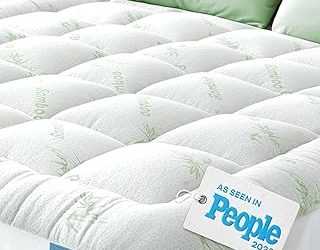
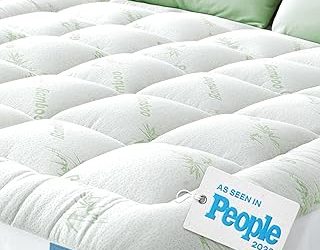
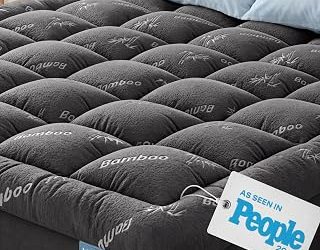
Niagara Sleep Solution Bamboo Cooling Topper
A quilted pillow-top with a rayon-from-bamboo face that runs noticeably cooler than foam, plus a 20″ deep pocket that swallows tall mattresses without popping corners. Best for sleepers whose back pain comes from a mattress that’s slightly too firm rather than one that’s collapsed.
Mega Support 5 Inch Dual Layer Topper
The most transformative option here: 2.5″ of pillow top stacked over 2.5″ of gel-infused memory foam, which effectively resurfaces a worn-out king. Heavier sleepers and side sleepers with hip-and-lumbar complaints get the most from this depth.
Linenspa 3 Inch Gel Memory Foam Topper
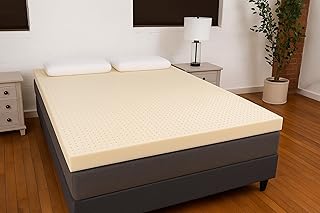
The dependable middle setting — three inches of gel-infused foam that contours enough to relieve pressure points without erasing the mattress underneath. It’s the pick I’d suggest for a guest room or a first attempt, since it costs little and changes a lot.
SHOUREN 5 Inch Gel Memory Foam Topper
Five inches of gel foam with genuine body contouring and four-way anchoring straps, aimed squarely at chronic back pain rather than general comfort. Expect a warmer sleep surface than the bamboo options, and give it two days to fully expand before judging it.
BEDLORE Viscose Bamboo Pillow Top
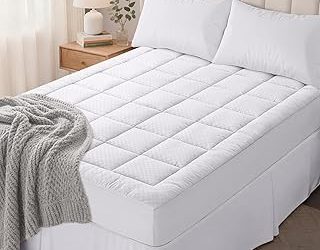
A thick, breathable pillow-top pad with stretch pockets spanning 6″ to 18″, so it works across almost any king setup including adjustable bases. A strong choice for couples where one person sleeps hot and neither wants the sinking sensation of deep memory foam.
Frequently Asked Questions
Does a soft topper make back pain worse?
It can, if softness is all it offers. Sinking without support tilts the pelvis and strains the lower back — which is why layered builds, combining a plush surface over a supportive base, outperform single-layer fluff.
How thick should a topper be for back pain?
Three inches suits most people on a reasonably intact mattress. Move to five inches if you’re a heavier sleeper, a dedicated side sleeper, or if you can feel coils or a dip through the current surface.
Will a memory foam topper sleep hot?
Traditional foam does retain heat. Gel infusion and mesh venting reduce it meaningfully, while bamboo-derived rayon covers stay coolest to the touch — the practical trade-off is a little less deep contouring.
Can a topper fix a genuinely worn-out mattress?
It can mask moderate wear convincingly for a year or two. Once there’s a visible sag or broken support core, a topper only redistributes the problem, and replacement is the honest answer.
Final Thoughts
If your back pain traces to a mattress that’s gone soft in the middle, the Mega Support 5 Inch Dual Layer is the closest thing to a full rebuild, with the SHOUREN 5 Inch a close alternative if you value the anchoring straps. For sleepers who run hot or simply want the edge taken off a too-firm king, the Niagara Sleep Solution bamboo topper is the smarter call — and the Linenspa 3 Inch remains the low-risk way to test whether a topper solves your problem at all.