Key takeaways
- Motor power and blade speed: Look for at least 15 amps and blade speeds above 4,500 RPM. Adequate power means the blade won’t bog down in hardwoods, keeping cuts clean instead of scorched.
- Table real estate and rip capacity: A generous rip capacity—30 inches or more—lets you handle full plywood sheets without awkward workarounds. Extendable wings or telescoping fences dramatically expand what a compact saw can do.
- Portability versus stability: Folding stands with rolling casters let you reclaim floor space between sessions, but a heavier chassis dampens vibration and improves cut accuracy. Decide which trade-off fits your shop layout.
- Bevel range and cut precision: A 0–45° bevel capacity covers most furniture joinery. Micro-adjustable fences and clear blade guards make repeatable cuts far less tedious than coarse, notch-style adjustments.
- Dust collection compatibility: Home shops live or die by dust management. Saws with standard 2-½-inch dust ports connect easily to shop vacs, keeping ambient particulate low and your workspace genuinely livable.
What's inside
Choosing a table saw for home woodworking is one of those decisions that quietly shapes every project that follows. Whether you’re building a live-edge coffee table, sizing drawer fronts, or breaking down sheet goods for built-in shelving, the wrong machine turns a creative session into a frustrating tolerance game—and that frustration compounds fast when you’re working in a garage or spare room where space, dust, and noise already work against you.
This guide distills what actually matters when buying a home-use table saw in 2026, drawing on real workshop experience rather than spec-sheet assumptions. Below you’ll find a curated shortlist of six saws across different budgets and footprints, followed by a straightforward breakdown of the criteria that separate a reliable tool from a regrettable impulse purchase.
As an Amazon Associate we earn from qualifying purchases.



How to Choose a Table Saw For Home Use (2026)
- Motor power and blade speed: Look for at least 15 amps and blade speeds above 4,500 RPM. Adequate power means the blade won’t bog down in hardwoods, keeping cuts clean instead of scorched.
- Table real estate and rip capacity: A generous rip capacity—30 inches or more—lets you handle full plywood sheets without awkward workarounds. Extendable wings or telescoping fences dramatically expand what a compact saw can do.
- Portability versus stability: Folding stands with rolling casters let you reclaim floor space between sessions, but a heavier chassis dampens vibration and improves cut accuracy. Decide which trade-off fits your shop layout.
- Bevel range and cut precision: A 0–45° bevel capacity covers most furniture joinery. Micro-adjustable fences and clear blade guards make repeatable cuts far less tedious than coarse, notch-style adjustments.
- Dust collection compatibility: Home shops live or die by dust management. Saws with standard 2-½-inch dust ports connect easily to shop vacs, keeping ambient particulate low and your workspace genuinely livable.
The Best Table Saw For Home Use (2026) Reviewed
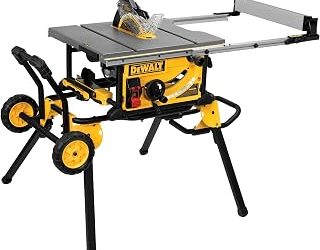
DEWALT DWE7491RS
The DWE7491RS is the saw most home workshops grow into—and for good reason. Its 32-½-inch rip capacity handles cabinet-grade plywood without flinching, while the included rolling stand folds down to a surprisingly compact footprint. The 4,800-RPM motor cuts through hardwoods with a calm authority that cheaper 15-amp saws simply cannot match. If you build furniture regularly, this is the benchmark.
SKIL TS6307-00
SKIL’s portable jobsite entry punches above its price point. The rack-and-pinion fence locks down accurately, and the folding stand makes it easy to tuck into a corner when you’re not cutting. For weekend woodworkers tackling smaller furniture pieces—picture frames, cutting boards, small shelving units—it delivers a satisfying balance of capability and convenience without the bulk of a full-size cabinet-style saw.
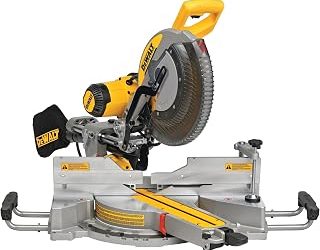
DEWALT DWE7485
Shrinking DEWALT’s proven platform down to an 8-¼-inch blade, the DWE7485 is designed for builders who value portability above all else. It won’t rip a full sheet of plywood, but for dimensional lumber and thinner stock, it performs with surprising poise. The compact footprint makes it ideal for apartment workshops or shared garage spaces where every square inch counts.
DOVAMAN DTS10A
The DOVAMAN DTS10A brings a 5,300-RPM copper-wound motor to the budget tier, and the extra speed translates to noticeably smoother cuts on cross-grain work. The extendable table on one side is a practical touch—useful when you need a bit more support but don’t want a permanently large footprint. It’s a strong value pick for hobbyists who want capable performance without a premium price tag.
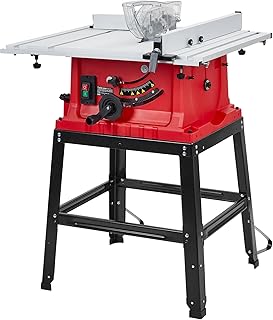
10-Inch 15 Amp 5000RPM Tablesaw With Stand
This no-frills 10-inch saw ships with a protective cover and a folding stand, covering the essentials at an accessible price. The 5,000-RPM motor and adjustable bevel handle basic woodworking, acrylic, and plastic cutting with competence. It’s a sensible entry point for anyone testing the waters before committing to a higher-end platform.
Frequently Asked Questions
Can a portable table saw handle hardwood furniture projects?
Absolutely. Modern portable saws with 15-amp motors and quality blades cut oak, maple, and walnut cleanly. The key is using sharp, appropriately toothed blades and taking manageable feed rates rather than forcing material through.
What blade should I use for general furniture woodworking?
A 60-tooth combination blade strikes the right balance between rip cuts and crosscuts. For finer joinery, step up to an 80-tooth finishing blade. Always match blade quality to material—cheap blades dull fast and leave tear-out.
How important is a dust collection port on a home-use saw?
Extremely. Fine sawdust is both a health hazard and a nuisance in a home environment. A saw with a standard dust port connected to even a basic shop vac captures the majority of particulate before it spreads through your living space.
Is a rolling stand worth the extra cost?
If your saw lives in a shared space—a garage, a spare room, a basement—yes. Rolling stands let you retract the saw to a compact position when not in use, preserving valuable floor area for other tasks and furniture assembly.
Final Thoughts
For most home furniture builders, the DEWALT DWE7491RS remains the most capable all-around choice, offering the rip capacity and build quality to grow with your skills. Budget-conscious shoppers will find strong value in the SKIL TS6307-00 or the DOVAMAN DTS10A, both of which deliver reliable performance without overcommitting financially. Whichever you choose, pairing your saw with good lighting and a clean, organized workspace will elevate the quality of every cut you make.