Key takeaways
- Timber species and tone: Beech is denser and takes a smoother finish; pine is lighter, softer, and reads warmer under 2700K bulbs. Hold a sample against your wall paint before committing — pine can go orange under warm incandescent, while beech stays neutral and plays better with cool daylight from a north-facing window.
- Load rating and anchor points: Look for a stated capacity of at least 600 lbs, and count the wall anchors. Nine-anchor designs spread force across more studs and flex less during dynamic work. Never mount into drywall alone, regardless of what the hardware bag suggests.
- Finish sheen, not just color: This is the detail nobody lists in the spec sheet and everybody notices. Satin and matte finishes diffuse light softly across each rung. High-gloss lacquer creates hot specular streaks under any downlight, which flattens the wood grain and makes the ladder look cheaper than it is.
- Rung diameter and spacing: Around 1.2 to 1.5 inches suits most adult hands for hanging work. Tighter spacing gives you more grip options; wider spacing casts a cleaner, more graphic shadow pattern and feels less visually busy on a narrow wall.
- Attachment ecosystem: Removable pull-up bars, dip bars, and strap anchors extend what one wall can do. Prioritize attachments that stow flat, because protruding steel is what breaks the sculptural line and turns a handsome timber frame into visual clutter.
What's inside
Most people shopping for a Swedish ladder are solving a movement problem and accidentally creating a room problem. A stall bar is not a dumbbell you tuck under a bench — it is a wall-mounted architectural fixture, usually seven feet of vertical timber bolted into studs, sitting in your sightline every single day. I spend my working hours deciding where light lands in a room, and I can tell you that a nine-rung ladder rearranges a wall’s entire visual rhythm: it throws a ladder of horizontal shadows, it catches raking light from a window, and depending on its finish it either drinks that light or bounces it back as glare.
This guide looks at the current crop of Swedish ladders through two lenses at once: whether they hold up as training equipment, and whether they read as furniture once the lamps come on. I cover the specs that actually matter — timber species, load rating, anchor count, rung diameter — alongside the finish, tone, and placement details that decide whether your home gym looks intentional or looks like storage.
As an Amazon Associate we earn from qualifying purchases.


How to Choose a Swedish Ladder (2026)
- Timber species and tone: Beech is denser and takes a smoother finish; pine is lighter, softer, and reads warmer under 2700K bulbs. Hold a sample against your wall paint before committing — pine can go orange under warm incandescent, while beech stays neutral and plays better with cool daylight from a north-facing window.
- Load rating and anchor points: Look for a stated capacity of at least 600 lbs, and count the wall anchors. Nine-anchor designs spread force across more studs and flex less during dynamic work. Never mount into drywall alone, regardless of what the hardware bag suggests.
- Finish sheen, not just color: This is the detail nobody lists in the spec sheet and everybody notices. Satin and matte finishes diffuse light softly across each rung. High-gloss lacquer creates hot specular streaks under any downlight, which flattens the wood grain and makes the ladder look cheaper than it is.
- Rung diameter and spacing: Around 1.2 to 1.5 inches suits most adult hands for hanging work. Tighter spacing gives you more grip options; wider spacing casts a cleaner, more graphic shadow pattern and feels less visually busy on a narrow wall.
- Attachment ecosystem: Removable pull-up bars, dip bars, and strap anchors extend what one wall can do. Prioritize attachments that stow flat, because protruding steel is what breaks the sculptural line and turns a handsome timber frame into visual clutter.
The Best Swedish Ladders (2026) Reviewed
Multi-Function Wall-Mounted Gymnastics Swedish Ladder
A genuinely versatile pick for mixed households, with a bar setup that suits both kids climbing and adults training. The lighter wood tone works well on a shaded wall where you want the frame to lift rather than recede, and the uncluttered frame keeps shadow lines clean.
GMWD Swedish Ladder Stall Bar
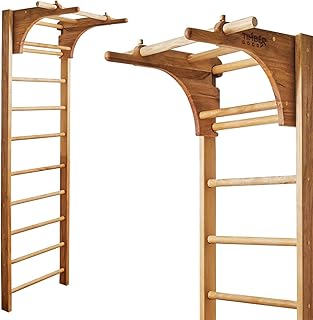
The nine-rod layout is the standout here, giving you real range for core work, stretching, and suspension training from a single anchored frame. Grain and finish are consistent enough that it holds up under a wall wash or a nearby floor lamp without patchy sheen.
DHT Wood Stall Bar, Black
The black finish is the interesting move: it absorbs light rather than reflecting it, so the ladder reads as a quiet graphic element instead of a bright timber grid. Pair it with a warm wall and indirect uplighting, since direct downlights on dark wood can look severe.
9-Anchor Solid Pine Swedish Ladder
Nine anchor points and an adjustable pull-up and dip station make this the most confidence-inspiring mount of the group for heavier adult use. Solid pine keeps the weight manageable during installation and glows nicely in late-afternoon side light.
Swedish Ladder Wall Gym with Straps and Dip Bars
The most complete package if you want a full-body setup out of the box, with pull-up bar, dip bars, and exercise straps included. Plan your placement carefully, because strap hardware hanging free will cast irregular shadows that undercut the frame’s symmetry.
Frequently Asked Questions
Can a Swedish ladder work in a living room rather than a dedicated gym?
Absolutely, and it often looks better there. Treat it as a wall feature: center it, give it breathing room from artwork, and light it deliberately with a wall washer or an adjacent sconce so it reads as a chosen object.
What lighting setup flatters a wooden ladder most?
Grazing light from above or the side at 2700K to 3000K brings out grain depth and creates soft rung shadows. Avoid a single ceiling downlight directly in front of it, which flattens the wood and doubles the shadow lines confusingly.
How much wall clearance does one need?
Budget roughly three feet of open floor in front for hanging and stretching, plus clearance overhead. Mount it away from windows if possible, since a backlit ladder puts your training in silhouette and makes form hard to check.
Will the wood finish fade in direct sunlight?
Pine and beech both shift tone under sustained UV exposure, usually ambering over a few years. Sheer window film or positioning the ladder off the direct sun path keeps the color even.
Final Thoughts
For most homes, the GMWD Swedish Ladder Stall Bar offers the best balance of training range and clean visual presence, while the 9-Anchor Solid Pine model is the one I would specify for heavier adult loads. If your room leans dark, moody, or gallery-like, the DHT Wood Stall Bar in black disappears into the wall in the best possible way.