Key takeaways
- Service life versus capacity: A cartridge rated for five years is only honest if your household volume matches the gallon rating. Heavy ice users on hard water should read the gallons, not the calendar.
- Filtration grade: Standard carbon block handles chlorine, taste, and odor. Ultrafiltration down to 0.01 micron catches the fine turbidity that makes cubes look milky under directional light.
- Certification: Look for NSF/ANSI 42 testing. It confirms the aesthetic claims — chlorine, taste, odor, particulate — rather than leaving you with marketing copy.
- Fitting type: Direct-connect push fittings suit tidy retrofits on existing 1/4-inch tubing. Quick-connect kits with tubing and a T-connector suit fresh installs where no line exists yet.
- Physical footprint: Measure the gap behind the unit. A long cartridge that forces the appliance forward will telegraph across a run of cabinetry, and that shadow line is hard to unsee.
What's inside
Ice is the only element in a room that gets lit from every direction at once. It sits in a glass under a pendant, catches the warm spill from a bar shelf, throws it back at the ceiling. When cubes come out gray and clouded, that little optical event dies. Light hits the trapped sediment and mineral haze and scatters into a flat, chalky white instead of bending through the cube the way clear ice does. Most people blame the freezer. More often it’s the water line: chlorine, fine grit, and dissolved off-flavors arriving from the municipal supply, freezing into place, and dulling both the taste and the look of every drink you serve.
An inline water filter is the quiet fix. It clamps into the 1/4-inch line feeding your refrigerator or standalone ice maker, strips the chlorine and particulate before freezing, and disappears behind the cabinet. This guide covers what actually matters when choosing one for ice production specifically, then reviews five filters worth your money in 2026, from long-service cartridges to ultrafiltration models built for the pickiest palates and the most exposed glassware.
As an Amazon Associate we earn from qualifying purchases.


How to Choose a Inline Ice Maker Water Filter (2026)
- Service life versus capacity: A cartridge rated for five years is only honest if your household volume matches the gallon rating. Heavy ice users on hard water should read the gallons, not the calendar.
- Filtration grade: Standard carbon block handles chlorine, taste, and odor. Ultrafiltration down to 0.01 micron catches the fine turbidity that makes cubes look milky under directional light.
- Certification: Look for NSF/ANSI 42 testing. It confirms the aesthetic claims — chlorine, taste, odor, particulate — rather than leaving you with marketing copy.
- Fitting type: Direct-connect push fittings suit tidy retrofits on existing 1/4-inch tubing. Quick-connect kits with tubing and a T-connector suit fresh installs where no line exists yet.
- Physical footprint: Measure the gap behind the unit. A long cartridge that forces the appliance forward will telegraph across a run of cabinetry, and that shadow line is hard to unsee.
The Best Inline Ice Maker Water Filter (2026)s Reviewed
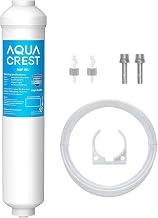
AQUA CREST INL 5-Year Inline Filter
The workhorse of the category: a five-year carbon cartridge with 1/4-inch direct-connect fittings that drops into an existing line in about ten minutes. Chlorine and odor reduction is solid, and the long interval means you install it and genuinely forget it.
Waterdrop INL Inline Filter
NSF-certified and built for high throughput, this one earns its place in busy kitchens where the ice bin empties daily. The one-year interval is shorter than some rivals, but the certification and consistent sediment handling justify the trade.
PureWater Filters Inline Kit
The most complete option if you’re plumbing an ice maker from scratch — 15 feet of NSF line, a T-connector, and quick-connect fittings arrive in the box, made in the USA. Ideal for island installs or a built-in bar cabinet where the supply run is long.
AQUA CREST INL-PLUS 5-Year Inline Filter
A higher-capacity sibling to the standard INL, aimed at larger households and hard-water regions where the base model would tire early. Same painless direct-connect install, more headroom on sediment and chlorine.
Waterdrop 15UC-UF 0.01 μm Inline Filter
The choice for genuinely bright ice. Ultrafiltration at 0.01 micron pulls out the ultrafine turbidity that carbon alone leaves behind, and cubes come out noticeably more translucent under warm downlighting. Two-year service life, NSF/ANSI 42 certified.
Frequently Asked Questions
Will an inline filter give me crystal-clear ice?
It removes the sediment and chlorine that cause haze from the water side, which helps considerably. Full optical clarity also depends on freezing speed and direction, so expect a marked improvement rather than bar-quality clear blocks.
How often should I replace the cartridge?
Follow the gallon rating first, the date second. If ice starts tasting flat or flow drops noticeably, replace early. Multi-packs like the 2-pack NSF 42 inline sets are useful for staying ahead of that curve.
Does a filter slow ice production?
A fresh cartridge causes negligible pressure loss. A saturated one does restrict flow, and slow ice output is usually the first symptom that a change is overdue.
Can I install one myself?
Yes. Shut off the supply valve, cut or disconnect the 1/4-inch line, push the fittings home, then run a few gallons through to flush the carbon fines before collecting ice.
Final Thoughts
For most kitchens, the AQUA CREST INL 5-Year is the sensible default — long service, easy fit, low fuss. Step up to the Waterdrop 15UC-UF if visual clarity matters to how your glassware reads under display lighting, and choose the PureWater Filters Kit when you’re running a new line and want every fitting in one box.