Key takeaways
- Shade height vs. seated eye level: Aim for the bottom edge of the shade to sit near 40–42 inches off the floor when the lamp is on its table. Higher than that and you’ll stare into the bulb from the sofa; lower and you lose the useful spread of light across the room.
- Diffusion quality: White linen scatters light softly and evenly, making it the most forgiving choice for a room where people gather. Tight-woven dark or metallic shades throw light down in a narrow cone — excellent for reading, less useful for ambience.
- Base mass and material: A living room lamp needs enough physical presence to read as furniture rather than an accessory. Ceramic, resin, and stone-look bases hold their own beside a large sofa; slim glass or acrylic works better on layered surfaces with other objects.
- Color temperature and dimming: Look for 2700K or warmer for evening use. If the lamp includes an LED bulb, confirm it’s dimmable — a fixed-output bulb locks your room into one mood.
- Switch placement and ports: Rotary switches on the base are easy to find in the dark; touch controls suit nightstands and end tables you reach for repeatedly. Integrated USB-A and USB-C ports save you an outlet and a visible cable run.
What's inside
Most living rooms are lit from one place: the ceiling. That single overhead source flattens a room, pushes shadows into corners, and makes 7pm feel like an office at 3pm. A table lamp fixes this not by adding brightness but by lowering it — dropping a pool of warm light to seated eye level, where conversation actually happens. Buyers usually shop for a lamp the way they shop for a vase, judging the silhouette on a white background, then wonder why the room still feels cold once it’s plugged in.
This guide approaches the problem from the other direction. I’ve evaluated these six lamps for the qualities that determine how a room feels after dark: shade material and how it diffuses, the height of the light source relative to a sofa, color temperature and dimming behavior, and whether the base has enough visual weight to anchor a console or side table. Below you’ll find quick specs on each, followed by a selection framework and honest notes on where each lamp performs best.
As an Amazon Associate we earn from qualifying purchases.




How to Choose a Table Lamp For Living Room (2026)
- Shade height vs. seated eye level: Aim for the bottom edge of the shade to sit near 40–42 inches off the floor when the lamp is on its table. Higher than that and you’ll stare into the bulb from the sofa; lower and you lose the useful spread of light across the room.
- Diffusion quality: White linen scatters light softly and evenly, making it the most forgiving choice for a room where people gather. Tight-woven dark or metallic shades throw light down in a narrow cone — excellent for reading, less useful for ambience.
- Base mass and material: A living room lamp needs enough physical presence to read as furniture rather than an accessory. Ceramic, resin, and stone-look bases hold their own beside a large sofa; slim glass or acrylic works better on layered surfaces with other objects.
- Color temperature and dimming: Look for 2700K or warmer for evening use. If the lamp includes an LED bulb, confirm it’s dimmable — a fixed-output bulb locks your room into one mood.
- Switch placement and ports: Rotary switches on the base are easy to find in the dark; touch controls suit nightstands and end tables you reach for repeatedly. Integrated USB-A and USB-C ports save you an outlet and a visible cable run.
The Best Table Lamp For Living Room (2026)s Reviewed
JONATHAN Y Montreal 29″ Teardrop Gourd Glass Lamp
The ice blue teardrop body catches ambient light during the day and glows faintly at night, giving it a presence most glass lamps lack, while the white linen drum shade keeps the output soft and wide. At 29 inches on a chrome pedestal and clear acrylic base, it suits a console or an end table where you want light without visual bulk.
USumkky 25″ Ceramic Lamps, Set of 2
Matched pairs are the fastest way to build symmetry in a living room, and these white-washed ceramic bases carry enough texture to avoid looking generic on either side of a sofa. At 25 inches they’re on the shorter end, so pair them with a taller side table to bring the shade up toward seated eye level.
JONATHAN Y Dallas 31.5″ Ceramic and Metal Lamp
This is the tallest lamp here, and the extra height genuinely changes how light lands — the linen drum shade casts a broader pool across a seating area than a 25-inch lamp can manage. The column base in white and chrome reads transitional rather than trend-specific, and the silk-wrapped cord plus rotary switch are details that suggest care in the build.
BOBOMOMO Modern Table Lamp Set of 2
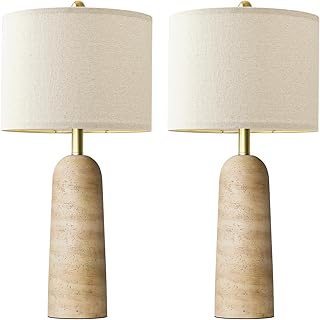
The warm beige resin with a natural stone finish brings quiet tonal warmth to a room, which matters more than it sounds — cool white bases can fight against warm bulbs and make the light look thin. At 27.25 inches with linen shades, this pair sits in the sweet spot for most standard-height end tables.
G-SAFAVA 23.75″ Retro Farmhouse Black Lamp
Two light sources let you run a low ambient glow or full task output from the same fixture, and the USB-C and USB-A ports make it the most practical pick for a lamp beside a chair where you actually sit and work. The black farmhouse body reads best in rooms with wood tones or darker accents to echo.
Frequently Asked Questions
How tall should a living room table lamp be?
Measure from the floor to your eye level while seated on the sofa, usually 40 to 42 inches. A lamp between 24 and 32 inches on a standard end table typically lands close to that mark.
Do I need two lamps or is one enough?
One lamp lights a corner; two create balance and eliminate the harsh contrast that makes a room feel half-lit. If your seating spans more than about eight feet, use a pair or supplement with a floor lamp.
What bulb color temperature works best in a living room?
Stay between 2200K and 2700K for evening ambience. Anything above 3000K starts reading as clinical in a space meant for relaxing.
Are lamps with built-in USB ports worth it?
Yes, if the lamp sits next to seating you use for reading or working. They remove a wall wart from the outlet and keep charging cables short and contained.
Final Thoughts
For most living rooms, the JONATHAN Y Dallas is the strongest single choice — its height puts light where it does the most work, and the linen shade handles diffusion well. If you’re building symmetry around a sofa, the BOBOMOMO set of two offers the best combination of scale and warm tonal balance, while the G-SAFAVA is the one to pick if a reading chair and charging convenience are your priorities.