Key takeaways
- Match capacity to cubic feet, not square feet: A closet has the floor area of a doormat and the volume of a phone booth. A 30–35 oz thermoelectric unit handles most reach-ins; walk-ins with an exterior wall or a bathroom door justify 60 oz or more.
- Decide powered or passive first: If there is no outlet inside the closet — and there usually isn’t — hanging bags and calcium chloride tubs do real work without an extension cord snaking under the door. Powered units dry faster and hold a steadier level.
- Treat noise as a bedroom spec: Closets sit off bedrooms, and a compressor rattling behind a louvred door at 2am is a design failure. Look for 24–30 dB thermoelectric models; anything advertised louder belongs in a basement.
- Insist on auto shut-off: A full tank left running in an enclosed cabinet is how you get a damp shelf instead of a dry one. Auto-off protects the unit and, more importantly, protects the wood beneath it.
- Use the light layer deliberately: Ambient LED modes are worth having if you can set a single steady low-brightness colour — a warm amber reads as a soft floor wash and lets you find a shoe without triggering the harsh overhead. Cycling rainbow modes are noise, not lighting.
What's inside
A closet is the one room in the house nobody lights properly. You crack the door, a single overhead bulb throws hard shadows across folded knits, and the corners stay dim enough that you never notice the faint chalky bloom creeping along a leather shoulder seam until spring. That dimness is not just a visual problem. Still air, no daylight, and a few degrees of temperature drop against an exterior wall create exactly the conditions mildew wants, and the dark is what keeps you from catching it early.
I spend my working life thinking about how small enclosed spaces feel — how a soft glow reads at 11pm versus how a cold beam reads at 7am — and I have come to treat closet humidity as part of the same design brief. This guide covers what actually matters when you are choosing a dehumidifier for a wardrobe, reach-in, or walk-in: real capacity versus marketing ounces, noise levels you can sleep beside, whether the unit needs an outlet at all, and yes, whether that seven-colour ambient light is a gimmick or a genuinely useful low-level marker in an unlit space.
As an Amazon Associate we earn from qualifying purchases.


How to Choose a Dehumidifier For Closets (2026)
- Match capacity to cubic feet, not square feet: A closet has the floor area of a doormat and the volume of a phone booth. A 30–35 oz thermoelectric unit handles most reach-ins; walk-ins with an exterior wall or a bathroom door justify 60 oz or more.
- Decide powered or passive first: If there is no outlet inside the closet — and there usually isn’t — hanging bags and calcium chloride tubs do real work without an extension cord snaking under the door. Powered units dry faster and hold a steadier level.
- Treat noise as a bedroom spec: Closets sit off bedrooms, and a compressor rattling behind a louvred door at 2am is a design failure. Look for 24–30 dB thermoelectric models; anything advertised louder belongs in a basement.
- Insist on auto shut-off: A full tank left running in an enclosed cabinet is how you get a damp shelf instead of a dry one. Auto-off protects the unit and, more importantly, protects the wood beneath it.
- Use the light layer deliberately: Ambient LED modes are worth having if you can set a single steady low-brightness colour — a warm amber reads as a soft floor wash and lets you find a shoe without triggering the harsh overhead. Cycling rainbow modes are noise, not lighting.
The Best Dehumidifier For Closets (2026)s Reviewed
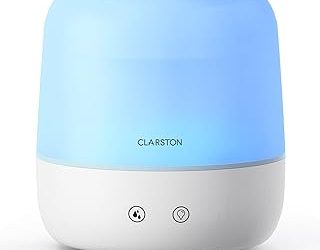
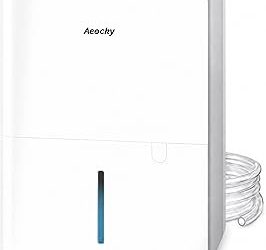
35 oz Quiet Dehumidifier with 7-Colour Light
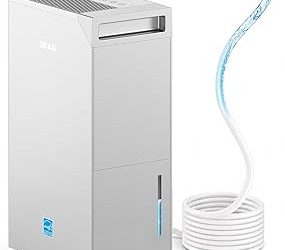
The most balanced pick for a standard reach-in: 280 sq ft of stated coverage is generous marketing, but in a closet-sized volume it pulls moisture down convincingly, and 28 dB genuinely disappears behind a closed door. Set the light to a single warm tone and it doubles as a soft locator glow on the closet floor.
30 oz Compact Ultra-Quiet Dehumidifier
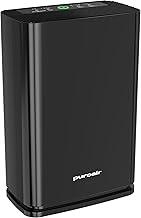
At 24 dB this is the quietest thing here, and its narrow footprint slides onto a shelf edge or into the gap beside a shoe rack without demanding real estate. Best for wardrobes, campers, and any closet sharing a wall with a headboard.
Vacplus Moisture Absorber, 6 Pack
The unpowered workhorse. Fragrance-free calcium chloride tubs cost almost nothing per closet, need no outlet, and are the right answer for hall closets, coat cupboards, and under-stair storage where running a cord would be absurd. Rotate them roughly every six to eight weeks in humid months.
60 oz Dual-Semiconductor Dehumidifier
Step up here for walk-ins, closets backing onto bathrooms, or anywhere you have already found spotting on leather. The timer and sleep mode are the useful features — schedule it to run while you are out and keep the LED dimmed or off overnight.
Moisture Absorber Packets, 10 Pack
Hanging bags put desiccant at garment height rather than on the floor, which is where it matters for shoulders and collars. Unscented, so nothing transfers to wool or silk, and the flat profile fits between a rail and a shelf without stealing hanging space.
Frequently Asked Questions
Do I need to leave the closet door open?
Cracking it a few inches helps a powered unit exchange air and reach equilibrium faster. Passive absorbers work fine in a sealed closet — a closed space is actually easier for them to dry out.
What humidity level should I aim for?
Between 45 and 55 percent relative humidity. Below 40 percent starts drying out leather and wood; above 60 percent is where mildew becomes likely.
Are the ambient light modes actually useful?
Yes, if the unit lets you lock one colour at low brightness. A steady warm glow at floor level gives you enough orientation to grab something at night without flooding the bedroom with light. Auto-cycling modes are distracting and I turn them off.
How often do passive absorbers need replacing?
Tubs and bags typically last six weeks to three months depending on local humidity. Check monthly; once the crystals have collapsed into liquid or the bag feels heavy and solid, swap it.
Final Thoughts
For most closets the 35 oz quiet dehumidifier is the right first purchase — capable, near-silent, and with a light mode you can actually design around. Choose the 30 oz compact model if the closet adjoins a bedroom and silence is paramount, and keep a 6-pack of Vacplus absorbers on hand for every unpowered cupboard in the house. Together they cover almost every moisture problem a home throws at its storage.