Key takeaways
- Power reality: Decide first whether the unit will ever see shore power. Compressor and thermoelectric models need a constant outlet; renewable desiccant cylinders and hanging absorber bags work on a mooring ball with nothing plugged in. Many owners end up running both.
- Volume, not floor area: Marketing lists square footage, but boats are odd shapes with tall V-berths and shallow bilges. Estimate cubic feet instead, and treat every closed locker as its own separate zone rather than assuming one unit reaches everywhere.
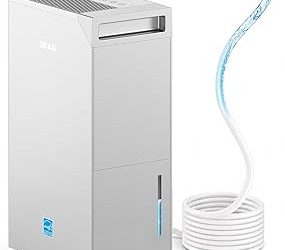
- Unattended drainage: A tank that fills and shuts off does nothing for the six weeks you’re away. Look for a continuous drain hose you can route to a sink, sump, or through-hull, and confirm the unit drains by gravity rather than requiring a pump.
- Noise you’ll live beside: Overnight aboard, sound carries through a hull like a drum. Thermoelectric units hum quietly enough to sleep near; compressors cycle loudly. If you plan to run it while aboard, treat quiet operation as non-negotiable.
- Visual footprint: Cabins are small enough that appliances become furniture. Consider colour, cable route, and whether an indicator light will glare at 3 a.m. Some units offer dimmable or switchable ambient lighting, which is genuinely useful rather than gimmicky.
What's inside
Spend enough time hanging pendant lights in galley nooks and tucking LED strips under settee cushions, and you learn something unglamorous about boats: moisture ruins ambience faster than bad fixtures. Damp air fogs the inside of ports so daylight arrives grey and flat. It dulls varnish until it stops bouncing warm light back into the cabin. It creeps into upholstery and leaves that closed-up smell that no amount of soft 2700K glow can talk you out of. A cabin can be beautifully lit and still feel unwelcoming if the air in it is heavy.
This guide looks at boat dehumidifiers the way I look at any piece of cabin equipment: what it does to the space you actually sit in. Below you’ll find picks for unpowered lockers and lazarettes, compact electric units for cabins on shore power, and one option that handles humidity and low-level evening light in the same footprint. I’ve flagged noise, drainage, and how each unit behaves when nobody’s aboard, because those details decide whether a dehumidifier becomes part of the room or an eyesore you trip over.
As an Amazon Associate we earn from qualifying purchases.


How to Choose a Dehumidifier For Boats (2026)
- Power reality: Decide first whether the unit will ever see shore power. Compressor and thermoelectric models need a constant outlet; renewable desiccant cylinders and hanging absorber bags work on a mooring ball with nothing plugged in. Many owners end up running both.
- Volume, not floor area: Marketing lists square footage, but boats are odd shapes with tall V-berths and shallow bilges. Estimate cubic feet instead, and treat every closed locker as its own separate zone rather than assuming one unit reaches everywhere.
- Unattended drainage: A tank that fills and shuts off does nothing for the six weeks you’re away. Look for a continuous drain hose you can route to a sink, sump, or through-hull, and confirm the unit drains by gravity rather than requiring a pump.
- Noise you’ll live beside: Overnight aboard, sound carries through a hull like a drum. Thermoelectric units hum quietly enough to sleep near; compressors cycle loudly. If you plan to run it while aboard, treat quiet operation as non-negotiable.
- Visual footprint: Cabins are small enough that appliances become furniture. Consider colour, cable route, and whether an indicator light will glare at 3 a.m. Some units offer dimmable or switchable ambient lighting, which is genuinely useful rather than gimmicky.
The Best Dehumidifier For Boats (2026)s Reviewed
Eva-Dry EDV-365 Rechargeable System
Two desiccant cylinders alternate on a blower base, so one is drying the air while the other renews in about two hours, giving you genuinely continuous protection in spaces up to roughly 400 cubic feet. This is the one I recommend for chart tables, hanging lockers, and any varnished joinery you want still catching light next season.
Caframo Stor-Dry Air Dryer
A marine-bred workhorse that combines gentle warmth with a blower to keep air circulating rather than simply pulling water out of it. Because it moves air, it’s the strongest choice for winter layup, where stagnant pockets behind cushions and inside cabinetry cause the worst damage.
Eva-Dry EDV-2400 with Humidistat
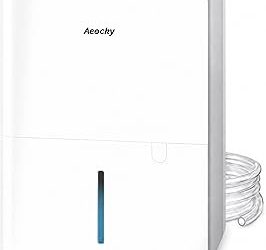
The adjustable humidistat is the reason to buy this one: set a target level and it manages itself, cycling only as needed instead of running flat out. With the included drain hose routed to a sink, it will hold a mid-size cabin steady for months without anyone aboard.
68oz Mini Dehumidifier with Drain Hose
Ultra-quiet thermoelectric operation and a 2000ml tank make this a sensible aft-cabin or head unit, and the drain hose lets you bypass the tank entirely for longer stints. Coverage claims are optimistic for open saloons, so treat it as a single-compartment tool.
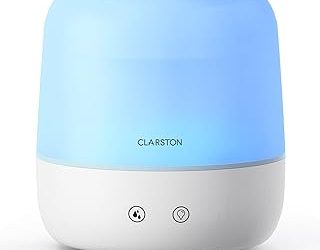
95oz Dehumidifier with 7-Colour Ambient Light
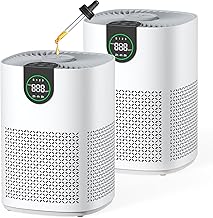
The soft colour-cycling light is more than decoration on a boat, where it doubles as low-glare night lighting that won’t wreck your dark adaptation on deck. Auto shut-off and quiet running make it my pick for a saloon where the unit has to earn its visual place in the room.
Frequently Asked Questions
What humidity level should I aim for aboard?
Between 45 and 55 percent relative humidity. Below that, timber joinery can shrink and open at the seams; above it, mould begins colonising fabric and headliner.
Do hanging moisture absorber bags actually work?
For small, enclosed spaces, yes. Charcoal-based hanging bags handle odours and light dampness in lockers, engine bays, and cockpit stowage where no electric unit can reach, and they cost little enough to distribute several around the boat.
Can I leave one running unattended over winter?
Only with a continuous drain and reliable shore power. Never rely on tank capacity, and check that your marina permits equipment running on unattended boats.
Will a dehumidifier stop condensation on my ports?
It will reduce it substantially, though cold single glazing will always weep somewhat. Pairing a dehumidifier with better air circulation gives you the clear glass and honest daylight that make a cabin feel bright.
Final Thoughts
For unpowered protection that keeps working season after season, the Eva-Dry EDV-365 is the most reliable choice; for winter layup and stagnant air, the Caframo Stor-Dry remains the marine standard. If you want set-and-forget control in a cabin you actually live in, the Eva-Dry EDV-2400 with its humidistat and drain hose is the one I’d wire in first.