Key takeaways
- Weight Rating and Frame Material: Look for chairs rated at 400 lbs or above with steel-reinforced mechanisms. Kiln-dried hardwood frames are a plus, but welded steel is the benchmark for long-term durability under real load.
- Seat Width and Cushion Depth: A wide seat (25 inches minimum) paired with high-resilience foam prevents the compressed, bottomed-out feeling that cheaper padding develops within weeks. Deeper seats distribute pressure more evenly across the thighs and lower back.
- Upholstery Durability: Top-grain leather and tightly woven chenille both hold up well, but they age differently. Leather develops a patina; chenille resists pet scratches. Choose based on how your household actually lives.
- Mechanism Quality and Type: Power recline with a heavy-duty motor offers smooth, consistent motion under load. Manual mechanisms are simpler to repair but require more effort. Check whether the manufacturer specifies motor wattage or cycle testing.
- Room Context and Lighting: A bulky recliner can dominate a small room. Measure clearance for full recline, and consider how the chair’s color and texture interact with your existing light sources—dark leather absorbs light and grounds a space, while lighter fabrics brighten corners.
What's inside
Shopping for a recliner when you need serious weight capacity and genuine comfort can feel like wading through a swamp of vague claims and flimsy frames. Most listings bury structural specs deep in bullet points while leading with fabric swatches and cup-holder counts, leaving bigger buyers guessing whether a chair will actually hold up after six months of daily use.
As someone who designs living spaces around how furniture performs in real light and real life, I approach recliners differently. I look at frame rigidity, cushion density under compression, upholstery resilience, and how a chair’s silhouette ages in a room over time. This guide distills those priorities into a shortlist of recliners that genuinely support heavier bodies without sacrificing the warm, settled feel a good lounge chair brings to a space.
As an Amazon Associate we earn from qualifying purchases.




How to Choose a Recliner For a Heavy Person (2026)
- Weight Rating and Frame Material: Look for chairs rated at 400 lbs or above with steel-reinforced mechanisms. Kiln-dried hardwood frames are a plus, but welded steel is the benchmark for long-term durability under real load.
- Seat Width and Cushion Depth: A wide seat (25 inches minimum) paired with high-resilience foam prevents the compressed, bottomed-out feeling that cheaper padding develops within weeks. Deeper seats distribute pressure more evenly across the thighs and lower back.
- Upholstery Durability: Top-grain leather and tightly woven chenille both hold up well, but they age differently. Leather develops a patina; chenille resists pet scratches. Choose based on how your household actually lives.
- Mechanism Quality and Type: Power recline with a heavy-duty motor offers smooth, consistent motion under load. Manual mechanisms are simpler to repair but require more effort. Check whether the manufacturer specifies motor wattage or cycle testing.
- Room Context and Lighting: A bulky recliner can dominate a small room. Measure clearance for full recline, and consider how the chair’s color and texture interact with your existing light sources—dark leather absorbs light and grounds a space, while lighter fabrics brighten corners.
The Best Recliners For a Heavy Person (2026) Reviewed
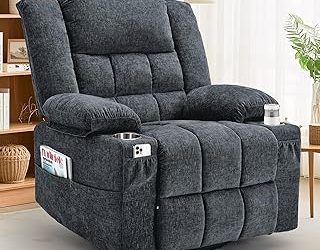
Large Power Lift Recliner with Massage and Heat (Grey)
This overstuffed lift recliner pairs a dual-motor power mechanism with built-in massage nodes and lumbar heat—features that matter when you’re choosing furniture for someone with mobility concerns. The wide seat, dual cup holders, and side pocket make it a self-contained comfort station. The grey upholstery reads neutral in most lighting schemes, blending easily into contemporary or transitional rooms without visually overwhelming the space.
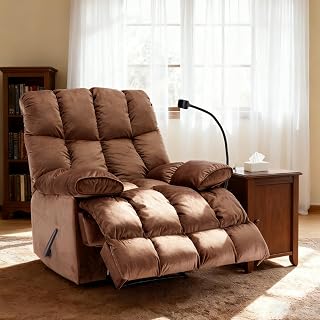
Euthymia Oversized Recliner (Dark Brown)
Rated for 400 lbs, the Euthymia uses dense chenille over a reinforced steel frame and opts for a clean, single-piece silhouette that avoids the “puffy” look common in heavy-duty recliners. Its dark brown tone adds warmth under ambient lighting and hides everyday wear remarkably well—a practical choice for high-traffic living rooms or bedrooms.
Watson & Whitely Oversized Leather Power Recliner (Dark Brown)
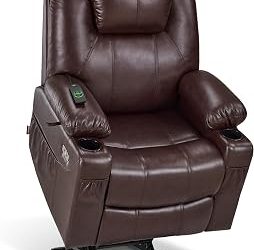
The most refined option on this list, this genuine leather wall-hugger recliner requires only inches of clearance behind it, making it ideal for tighter rooms. Power headrests and integrated charging ports add modern convenience. The dark brown leather catches warm lamp light beautifully, giving the chair a rich, lived-in presence that elevates the entire seating area.
450 lbs Oversized Power Recliner in Beige Chenille
Built specifically for the 450-lb threshold with a 52-inch-wide frame, this is the most structurally ambitious chair here. USB and Type-C ports are standard. The beige chenille keeps the visual footprint surprisingly light for a chair this large—under warm overhead lighting, it feels airy rather than fortress-like, which matters in smaller rooms.
Large Power Lift Recliner with Massage and Heat (Dark Gray)
A close relative of the first pick, this version features anti-skid fabric and concealed cup holders for a sleeker look. The anti-skid surface provides practical grip during lift transitions. Its dark gray tone works well in rooms with cool-toned lighting or mixed-metal finishes, offering a modern alternative to the traditional brown recliner aesthetic.
Frequently Asked Questions
What weight should a heavy-duty recliner support?
Most recliners marketed for heavy people are rated between 350 and 500 lbs. For daily use, aim for a chair rated at least 50 lbs above your actual weight to preserve mechanism longevity and cushion integrity over years of use.
Can a recliner affect the feel of a room’s lighting?
Absolutely. Dark leather absorbs ambient light and creates a visual anchor in a seating area, while lighter fabrics reflect more light and can make a corner feel open. Material choice matters as much as color when you’re designing around existing light sources.
Power lift versus manual—what fails first?
Manual recliner mechanisms are mechanically simpler and typically outlast budget electric motors. However, premium power motors with proper weight ratings are extremely reliable. The weak point in any recliner is usually foam compression, not the mechanism itself.
How much clearance does a wall-hugger recliner need?
Wall-hugger designs like the Watson & Whitely model typically require 4 to 6 inches of space behind the chair. Standard recliners need 12 to 18 inches for full recline. Always measure before ordering, accounting for baseboard depth.
Final Thoughts
For the best balance of structural strength and room-friendly design, the Watson & Whitely genuine leather recliner stands out as the premium pick, pairing serious build quality with visual sophistication. If budget is a primary concern, the 450 lbs oversized power recliner in beige chenille delivers the highest weight capacity in the group at a more accessible price point. For households prioritizing lift assistance and therapeutic features, either of the power lift models with massage and heat provides genuinely useful functionality wrapped in a chair that still looks intentional in a well-lit living space.