Key takeaways
- Motor Horsepower and Voltage: Most 60-gallon verticals run on 230V circuits and land between 3.5 and 5 HP. Higher horsepower recovers tank pressure faster, which matters when multiple tools fire in quick succession—less downtime, more consistent output.
- CFM at 90 PSI: Cubic feet per minute is the true measure of sustained airflow. Match the compressor’s 90-PSI CFM rating to the highest-demand tool you plan to run, then add a 20% buffer for reliability and longevity.
- Oil-Lubricated vs. Oil-Free: Oil-lubricated pumps run cooler and quieter, making them preferable for enclosed spaces where sound and heat accumulate. Oil-free units require less maintenance but tend to be louder and generate more vibration during extended cycles.
- Tank Size and Recovery Rate: A 60-gallon tank stores enough volume for most framing and finishing jobs, but recovery speed determines how quickly you are back at full pressure. A faster recovery means less idle time between tool bursts.
- Noise Output and Workspace Placement: Decibel ratings directly affect whether you can position the compressor inside your primary work area or need to isolate it in an adjacent space. Lower dB ratings allow flexible placement and reduce fatigue over long shop sessions.
What's inside
Anyone who has walked into a working shop knows that the compressor quietly dictates the rhythm of the space. It hums, it breathes, it powers every nail gun, every sander, every finishing tool that turns raw lumber into a chair or a cabinet. But choose wrong and that same machine becomes a source of vibration through the floor, a heat source that warps your stored finishes, and a noise floor that makes concentration impossible. The 60-gallon vertical compressor sits at the sweet spot for serious garage and home workshops—large enough for sustained runs, compact enough to tuck against a wall—yet the market is crowded with specs that look identical on paper while delivering very different real-world experiences.
This guide cuts through the spec sheets. We evaluated each 60-gallon compressor not just on raw output but on how it actually shapes the environment it occupies: thermal behavior during long sessions, vibration transfer to surrounding surfaces, and how its duty cycle supports uninterrupted creative workflow. Whether you are framing a build-out or running a furniture workshop, the right unit gives you clean, steady air without turning your space into an industrial pressure cooker.
As an Amazon Associate we earn from qualifying purchases.


How to Choose an Air Compressor 60 Gallon (2026)
- Motor Horsepower and Voltage: Most 60-gallon verticals run on 230V circuits and land between 3.5 and 5 HP. Higher horsepower recovers tank pressure faster, which matters when multiple tools fire in quick succession—less downtime, more consistent output.
- CFM at 90 PSI: Cubic feet per minute is the true measure of sustained airflow. Match the compressor’s 90-PSI CFM rating to the highest-demand tool you plan to run, then add a 20% buffer for reliability and longevity.
- Oil-Lubricated vs. Oil-Free: Oil-lubricated pumps run cooler and quieter, making them preferable for enclosed spaces where sound and heat accumulate. Oil-free units require less maintenance but tend to be louder and generate more vibration during extended cycles.
- Tank Size and Recovery Rate: A 60-gallon tank stores enough volume for most framing and finishing jobs, but recovery speed determines how quickly you are back at full pressure. A faster recovery means less idle time between tool bursts.
- Noise Output and Workspace Placement: Decibel ratings directly affect whether you can position the compressor inside your primary work area or need to isolate it in an adjacent space. Lower dB ratings allow flexible placement and reduce fatigue over long shop sessions.
The Best Air Compressor 60 Gallon (2026)s Reviewed
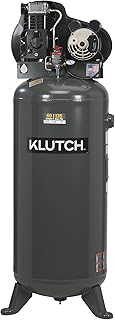
Klutch 60-Gallon Vertical
The Klutch 60 delivers steady, dependable compressed-air output through a 3.7 HP single-stage pump that balances performance with maintenance simplicity. Its vertical footprint keeps floor space open, and the pump layout makes routine oil checks and filter service straightforward—ideal for a workshop where you want reliable air without constant babysitting.
Campbell Hausfeld 60 Gallon
With a maximum pressure of 175 PSI, the Campbell Hausfeld 60-gallon pushes well beyond the baseline, giving you a larger usable air reserve before the pump cycles back on. This extra headroom translates to fewer start-stop interruptions, which keeps your workspace quieter and your tools performing at a more consistent level.
VEVOR 5HP Oil-Lubricated
The VEVOR 5HP unit stands out with 12 SCFM at 90 PSI, making it the strongest performer in this roundup for high-demand, continuous-use applications. The oil-lubricated pump runs cooler and quieter than its oil-free siblings, a real advantage in enclosed workshops where ambient temperature and sound pressure accumulate quickly.
DEWALT 60 Gallon Vertical
DEWALT’s 60-gallon entry brings a 155 PSI max and the brand’s reputation for jobsite durability into a stationary format. It handles a wide range of pneumatic tools without hesitation and integrates cleanly into a organized shop layout where equipment reliability is non-negotiable.
VEVOR 4HP Oil-Free
The VEVOR 4HP oil-free model trades a slight step-down in airflow (10 SCFM at 90 PSI) for genuinely hands-off operation. There is no oil to monitor or dispose of, which keeps long-term maintenance costs low and makes it a practical choice for workshops that want clean, hassle-free compressed air.
Frequently Asked Questions
How big of a compressor do I need for home woodworking?
For a home woodworking shop running nailers, brad guns, and occasional blow guns, a 60-gallon unit with at least 4 to 5 SCFM at 90 PSI covers most tasks comfortably. Larger spray guns or planers demand higher CFM ratings and may push you toward the 5 HP models.
Can I run a 60-gallon compressor on a standard household outlet?
No. Nearly all 60-gallon compressors require a dedicated 230V circuit. Plan for a 20-amp or 30-amp breaker depending on the motor’s amperage draw, and run the appropriate gauge wiring to a location near the compressor’s permanent position.
How often should I change the oil in an oil-lubricated compressor?
Most manufacturers recommend an oil change after the first 20 hours of operation and then every 300 to 500 hours thereafter. Check the sight glass regularly—oil that darkens or foams signals it is time for a swap, regardless of hours logged.
Is a quieter compressor worth the extra cost?
Absolutely, if the unit lives near your primary work area. Reducing noise from the mid-80s to the low-70s decibel range changes the entire experience of working in the shop. You can hold conversations, listen for tool feedback, and avoid the fatigue that comes from sustained loud environments.
Final Thoughts
For most home and garage workshops, the Campbell Hausfeld 60 Gallon hits the best balance of pressure, price, and reliability. If sustained high-volume airflow is your priority, the VEVOR 5HP Oil-Lubricated is the clear performance leader. And for those who value zero-maintenance simplicity above all, the VEVOR 4HP Oil-Free keeps your air clean and your schedule free of upkeep tasks. Pick the one that matches how your space actually works, and the compressor will fade into the background—exactly where it belongs.