Key takeaways
- Material and electrical safety: If you touch wiring at all, choose fiberglass. Non-conductive rails are the standard for electrical work, and they’re worth the modest premium over aluminum. Reserve aluminum for painting, dusting, drapery, and lamp placement where no circuit is in play.
- Duty rating, not just body weight: Type I handles 250 lb, Type IA 300 lb, Type IAA 375 lb. Add your tools, a coil of wire, and a 40 lb fixture, and a Type I ladder gets tight fast. For chandelier and multi-light installs, step up to IA or IAA.
- Platform versus plain step: Ambience work means holding a position for minutes at a time while you aim a head or level a shade. A wide platform with an extended rail lets you stand comfortably and lean into the work instead of balancing on a narrow rung.
- Tool tray and cord management: Look for a top with tool slots and a lip deep enough to keep wire nuts, screws, and a driver from rolling off onto a glass diffuser. A magnetic surface or hook point for a work light earns its keep.
- Storage and access: A ten-foot A-frame is a big object. Telescoping models collapse to a fraction of the length for apartments and van storage, while twin-front designs let two people work either side of a long fixture run.
What's inside
Anyone who has hung a chandelier, swapped out recessed trims, or run a run of picture lights along a hallway knows the real bottleneck isn’t the fixture. It’s reach. Ceilings in newer builds routinely sit at nine or ten feet, stairwell voids climb higher still, and the six-foot ladder in the garage leaves you stretching on the top cap with a pendant canopy in one hand and a wire nut in the other. That’s how ceilings get scuffed, glass shades get chipped, and installers get hurt. A proper ten-foot step ladder turns a two-person, half-day fixture swap into a calm solo afternoon.
This guide looks at ten-foot step ladders through the lens of lighting and ambience work: the platforms you can actually stand on while you fuss with alignment, the duty ratings that hold you plus a heavy cast-brass fixture, and the fiberglass rails that keep you insulated when a junction box turns out to be live. We compare current best-price options across fiberglass, aluminum, and telescoping designs, then break down how to pick the right one for your ceilings and your budget.
As an Amazon Associate we earn from qualifying purchases.


How to Choose a 10 Ft Step Ladder Best Price (2026)
- Material and electrical safety: If you touch wiring at all, choose fiberglass. Non-conductive rails are the standard for electrical work, and they’re worth the modest premium over aluminum. Reserve aluminum for painting, dusting, drapery, and lamp placement where no circuit is in play.
- Duty rating, not just body weight: Type I handles 250 lb, Type IA 300 lb, Type IAA 375 lb. Add your tools, a coil of wire, and a 40 lb fixture, and a Type I ladder gets tight fast. For chandelier and multi-light installs, step up to IA or IAA.
- Platform versus plain step: Ambience work means holding a position for minutes at a time while you aim a head or level a shade. A wide platform with an extended rail lets you stand comfortably and lean into the work instead of balancing on a narrow rung.
- Tool tray and cord management: Look for a top with tool slots and a lip deep enough to keep wire nuts, screws, and a driver from rolling off onto a glass diffuser. A magnetic surface or hook point for a work light earns its keep.
- Storage and access: A ten-foot A-frame is a big object. Telescoping models collapse to a fraction of the length for apartments and van storage, while twin-front designs let two people work either side of a long fixture run.
The Best 10 Ft Step Ladder Best Price (2026)s Reviewed
Louisville Ladder 10-Foot Fiberglass Step Ladder (FS1510)
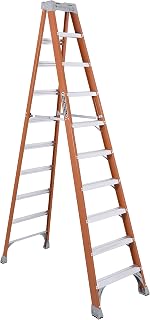
This is the default recommendation for anyone regularly working around live boxes: Type IA fiberglass, 300 lb capacity, and a footprint that stays planted on hardwood and tile. It’s the sensible middle of the range, priced well below the heavy-duty models while giving you the insulation and rigidity that lighting work demands.
Louisville Ladder 10-Foot Fiberglass Step Ladder, Type IAA (FS1410HD)
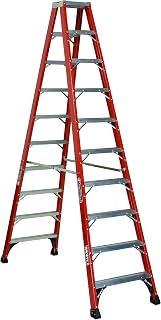
The 375 lb rating makes a noticeable difference in feel, not just on paper: less flex at the top, more confidence when you’re hoisting a heavy cast fixture overhead. Worth the upgrade if you install chandeliers, large drum shades, or anything you’d rather not carry up in two trips.
Louisville Ladder 10-Foot Fiberglass Pro Platform Ladder (FXP1710)
The platform and extended rail turn precision jobs into something close to comfortable, letting you stand flat-footed while you level a shade or dial in a track head’s aim. If your work is fussy and slow rather than quick in-and-out, this is the one to own.
Louisville Ladder 10-Foot Aluminium Step Ladder with Tool Tray (AS2110)
Light, affordable, and easy to reposition around a room, which matters when you’re chasing a run of recessed cans across a ceiling. Keep it to non-electrical tasks such as painting, cleaning fixtures, and hanging non-wired decor.
10 FT A-Frame Telescoping Ladder
The 330 lb collapsible A-frame is the practical answer for small homes and mobile installers, folding down small enough for a closet or a car trunk. Multi-position versatility and stair use make up for the fact that it feels less solid underfoot than a fixed fiberglass frame.
Frequently Asked Questions
How high can I actually reach from a 10-foot step ladder?
Most people work comfortably around 14 to 16 feet of vertical reach, standing on a step two or three down from the top with arms raised. That covers standard nine and ten-foot ceilings and many two-story entry fixtures.
Is fiberglass really necessary for lighting work?
Yes, if you’re handling wiring. Fiberglass rails don’t conduct, which gives you a margin of safety when a circuit you believed was dead turns out otherwise. Aluminum is fine for everything that doesn’t involve a junction box.
What does Type IAA mean?
It’s the highest common duty rating for these ladders, certified for 375 pounds including you, your clothing, tools, and materials. Heavier ratings usually mean thicker rails and less sway.
Can I use a step ladder on stairs?
Not a standard A-frame, which needs all four feet on level ground. Telescoping multi-position ladders are the ones designed to configure for stairwells and uneven surfaces.
Final Thoughts
For most homeowners tackling fixture swaps and ambience upgrades, the Louisville FS1510 hits the right balance of price, capacity, and electrical safety. Step up to the FS1410HD if you’re regularly wrestling heavy chandeliers, or choose the FXP1710 platform model when the job calls for standing still and getting the alignment exactly right.