Key takeaways
- Depth of cradle: Aim for 3 inches or more of conforming material. Anything thinner sits like a thin gel over a harsh source — it changes the texture of the surface without changing where the pressure goes.
- Soft top, firm base: The best performers layer a yielding surface over a denser support core. That structure lets the shoulder sink without letting the torso follow, which is what keeps the spine reading straight from behind.
- Thermal behavior: Deep cradling means more of you is surrounded by material, and that traps warmth. Gel infusions, open-cell foam, and viscose or rayon-from-bamboo covers all buy you back a few degrees.
- Response speed: Slow-recovering foam holds you in place; quicker springs or fiber fill let you turn freely. If shoulder pain wakes you and you need to switch sides, favor the responsive option.
- Anchoring and fit: Check pocket depth against your mattress and look for elastic skirts or a grip base. A topper that migrates overnight loses its alignment exactly where you need it.
What's inside
I spend my working life thinking about how a room lands on the body before anyone consciously notices it: where the light falls hard, where it softens, which surfaces absorb and which ones push back. A bed behaves the same way. For a side sleeper with an aching shoulder, a too-firm mattress acts like a bare bulb at eye level — all of the load concentrated in one narrow spot, the joint pressed up into the socket for six or seven hours until it protests. The shoulder is the smallest contact patch your body offers in that position, and it carries an unfair share of your weight through it.
The fix is rarely a new mattress. It is usually a diffusion layer: something placed on top that spreads pressure the way a scrim spreads a beam, letting the shoulder and hip drop in while the ribs and waist stay supported. This guide covers the toppers I would specify for that job, what actually separates a cradling surface from a mushy one, and how to keep the whole arrangement from sleeping hot — because heat wrecks a bedroom’s atmosphere as thoroughly as bad light does.
As an Amazon Associate we earn from qualifying purchases.



How to Choose a Mattress Topper For Side Sleepers With Shoulder Pain (2026)
- Depth of cradle: Aim for 3 inches or more of conforming material. Anything thinner sits like a thin gel over a harsh source — it changes the texture of the surface without changing where the pressure goes.
- Soft top, firm base: The best performers layer a yielding surface over a denser support core. That structure lets the shoulder sink without letting the torso follow, which is what keeps the spine reading straight from behind.
- Thermal behavior: Deep cradling means more of you is surrounded by material, and that traps warmth. Gel infusions, open-cell foam, and viscose or rayon-from-bamboo covers all buy you back a few degrees.
- Response speed: Slow-recovering foam holds you in place; quicker springs or fiber fill let you turn freely. If shoulder pain wakes you and you need to switch sides, favor the responsive option.
- Anchoring and fit: Check pocket depth against your mattress and look for elastic skirts or a grip base. A topper that migrates overnight loses its alignment exactly where you need it.
The Best Mattress Topper For Side Sleepers With Shoulder Pain (2026)s Reviewed
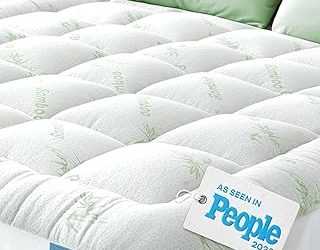
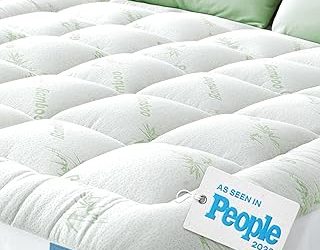
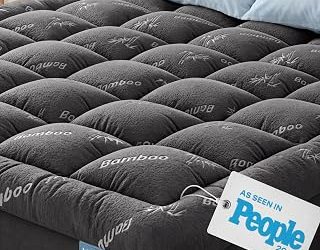
BEDLORE Viscose Bamboo Pillow Top Topper
A generous fiber-filled pillow top with a smooth viscose-bamboo face that stays cool to the touch, and stretch pockets that grip mattresses from 6 to 18 inches. Best suited to sleepers whose mattress is only slightly too firm and who want plushness without the enclosed feeling of foam.
PERLECARE 3-Inch Gel Memory Foam Topper
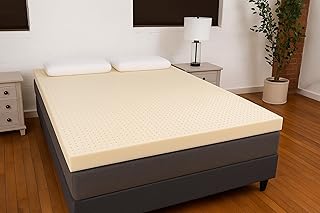
Three inches of gel memory foam is the reliable baseline for shoulder relief — deep enough to let the joint settle rather than deflect, with the gel offsetting foam’s tendency to hold heat. The removable washable cover and Oeko-Tex certification make it an easy specification for a long-term bedroom setup.
Dormeo Premium Octaspring Topper
Instead of a solid foam slab, Dormeo uses individual foam springs across three support zones, so air moves through the layer and the shoulder region yields independently of the hips. This is my pick for anyone who finds memory foam too still and wants to turn over without fighting the surface.
5-Inch Mega Support Dual-Layer Topper
Five inches total, split between a 2.5-inch pillow top and 2.5 inches of cooling gel-infused memory foam — effectively a soft wash over a firm base. It is the most transformative option here for a genuinely hard mattress, though it raises bed height noticeably, so measure your sheets first.
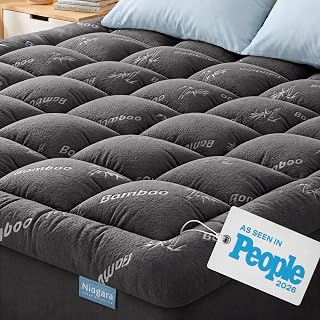
Niagara Sleep Solution Ultra Soft Cooling Topper
A breathable rayon-from-bamboo pillow top with a 20-inch deep pocket that fits tall or pillow-top mattresses other toppers slide off. Lighter cradling than foam, so treat it as comfort tuning and heat management rather than a structural correction.
Frequently Asked Questions
How thick should a topper be for shoulder pain?
Three inches is the practical minimum for real pressure redistribution. Four to five inches suits heavier sleepers or firmer mattresses, while two inches mostly adjusts surface feel.
Will a soft topper hurt my back?
Not if there is support underneath. Problems arise when a plush layer sits on an already-sagging mattress, letting the midsection drop — a topper diffuses pressure but cannot replace a worn core.
Memory foam or fiber pillow top?
Foam for persistent shoulder pain, since it contours and holds. Fiber or spring-based toppers for cooler, more mobile sleep with milder discomfort.
How long until my shoulder feels better?
Give it two to three weeks. Foam softens with use and your body recalibrates, so early impressions tend to be misleading in both directions.
Final Thoughts
For most side sleepers with a sore shoulder, the PERLECARE 3-inch gel memory foam topper is the sensible default — enough depth to matter, sensible cooling, washable cover. Choose the 5-Inch Mega Support dual-layer if your mattress is genuinely too hard and you want a dramatic change, or the Dormeo Octaspring if you sleep warm and need to move freely through the night.