Key takeaways
- Tank capacity and runtime: For overnight dry-eye relief, prioritize units that run a full 8 hours without refilling. Tanks between 2.5L and 4L bridge the gap between compact footprint and endurance, but anything below 2L will likely need topping off before morning.
- Noise output under 30 dB: Your circadian rhythm doesn’t tolerate a motor hum. Units operating below 28 dB blend into the room’s natural sound floor, while anything above 35 dB begins competing with the quiet of a suburban night.
- Mist distribution pattern: A 360-degree adjustable nozzle moves moisture evenly across the room rather than concentrating it in a single damp column. For dry eyes, dispersed output prevents oversaturation near the bed while keeping humidity consistent throughout.
- Top-fill convenience: Bottom-fill designs force you to invert heavy tanks and often spill water across nightstands. Top-fill openings let you add water without disassembling the unit — a small ergonomic detail that matters at midnight.
- Material safety and ease of cleaning: BPA-free construction eliminates off-gassing concerns in a bedroom environment. Wide-mouth tanks also allow routine cleaning without specialized brushes, preventing the mineral buildup and mold that worsen air quality over time.
What's inside
Dry, stinging eyes at the end of a long day are more than an inconvenience — they’re a signal that the air around you is working against you. Heating systems, air conditioning, and even the low humidity of certain seasons strip moisture from a room the way a draft steals warmth from a doorway. The result is irritated corneas, disrupted sleep, and that persistent gritty feeling no amount of eye drops can fully resolve.
A purpose-built humidifier rewrites the ambient equation entirely. As someone who selects atmospheric solutions for living spaces daily, I look beyond marketing claims and focus on the factors that actually shift how a room feels against your skin and eyes: sustained mist output, whisper-quiet operation during sleep hours, and a tank capacity that doesn’t demand a 3 a.m. refill. This guide walks through the top performers available in 2026, ranked for real-world bedroom use where dry-eye sufferers need relief the most.
As an Amazon Associate we earn from qualifying purchases.



How to Choose a Humidifier For Dry Eyes (2026)
- Tank capacity and runtime: For overnight dry-eye relief, prioritize units that run a full 8 hours without refilling. Tanks between 2.5L and 4L bridge the gap between compact footprint and endurance, but anything below 2L will likely need topping off before morning.
- Noise output under 30 dB: Your circadian rhythm doesn’t tolerate a motor hum. Units operating below 28 dB blend into the room’s natural sound floor, while anything above 35 dB begins competing with the quiet of a suburban night.
- Mist distribution pattern: A 360-degree adjustable nozzle moves moisture evenly across the room rather than concentrating it in a single damp column. For dry eyes, dispersed output prevents oversaturation near the bed while keeping humidity consistent throughout.
- Top-fill convenience: Bottom-fill designs force you to invert heavy tanks and often spill water across nightstands. Top-fill openings let you add water without disassembling the unit — a small ergonomic detail that matters at midnight.
- Material safety and ease of cleaning: BPA-free construction eliminates off-gassing concerns in a bedroom environment. Wide-mouth tanks also allow routine cleaning without specialized brushes, preventing the mineral buildup and mold that worsen air quality over time.
The Best Humidifier For Dry Eyes (2026) Reviewed
Levoit Top Fill 2.5L
This unit has become the reference point I recommend to clients dealing with nighttime dryness. Its 28 dB operating volume sits right at the threshold of perceptibility, and the 2.5L tank sustains output for roughly 25 hours — well beyond what a single sleep cycle demands. The top-fill design means you can add distilled water without dismantling anything, keeping the routine frictionless.
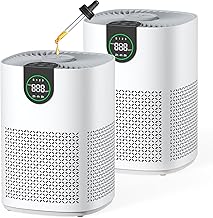
Homvana 3.6L 2-in-1
Where most humidifiers simply add moisture, the Homvana doubles as an essential oil diffuser, letting you layer a subtle aromatherapy dimension into the ambient experience. The 23 dB noise floor is the quietest on this list, and the larger 3.6L tank carries through four consecutive nights without attention — an exceptional maintenance-to-benefit ratio for anyone who forgets to refill.
DREO HM311 4L
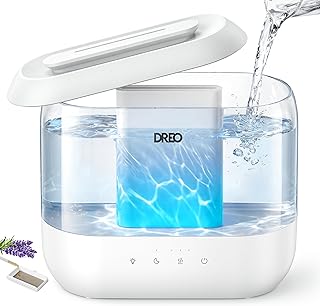
The HM311’s supersized 4L tank is its defining feature, extending runtime to a full 36 hours. In my studio projects, I pair this unit with larger bedrooms where the air volume demands sustained output. The 28 dB acoustic profile matches the Levoit, and BPA-free construction plus an integrated nightlight round out a thoughtful design that doesn’t cut corners on the details.
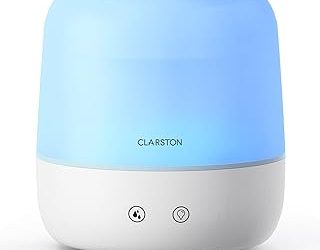
Clarston 2L
Budget-conscious buyers shouldn’t sacrifice sleep quality, and the Clarston proves the point. At 24 dB it runs quieter than units costing twice as much, while the 360-degree nozzle distributes cool mist evenly across a standard bedroom footprint. The included nightlight is a small ambient bonus — useful for navigating a dark room without disrupting melatonin production.
DREO 3L with Precise Humidity Control
For those who want granular control over their environment, this 3L DREO model integrates a built-in humidity sensor that lets you target a specific ambient percentage. The 26 dB runtime is virtually silent, and the 360-degree nozzle paired with precise output adjustment makes it the most technically capable option here for anyone whose dry-eye symptoms respond to tightly managed moisture levels.
Frequently Asked Questions
Does a humidifier really help with dry eyes?
Yes. Dry indoor air accelerates tear-film evaporation, which is a primary driver of chronic dry-eye symptoms. Raising ambient humidity to between 40% and 50% reduces that evaporation rate and gives your natural tear layer a more stable environment to function in.
What humidity level should I target for dry eyes?
The ideal range sits between 40% and 50% relative humidity. Below 30%, eyes and skin dry out noticeably; above 60%, you invite condensation, dust mite proliferation, and potential mold growth on furniture or walls.
Should I run a humidifier all night for dry eyes?
A full overnight cycle is precisely when a humidifier delivers the most value. Sleep closes your blink reflex for extended periods, allowing tear-film dehydration to compound. A unit with 25+ hours of runtime eliminates the need to wake and switch it off.
Can I add essential oils to a humidifier for extra relief?
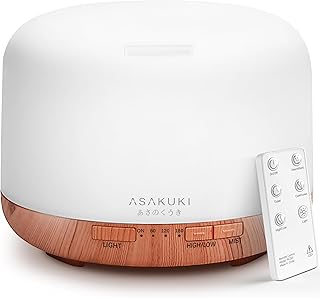
Only if the unit is explicitly designed as a 2-in-1 diffuser, like the Homvana or ASAKUKI models. Standard ultrasonic humidifiers can be damaged by oil residues, and the mist may carry concentrated compounds that irritate eyes further rather than soothe them.
Final Thoughts
For most dry-eye sufferers, the Levoit Top Fill 2.5L offers the best intersection of quiet operation, tank endurance, and simple maintenance. The Homvana 3.6L stands out if you value extended runtime and aromatherapy flexibility. And for larger rooms or those who want data-driven humidity targeting, the DREO 3L with precise humidity control brings a level of environmental precision that elevates it beyond a basic misting appliance.