Key takeaways
- Inner Diameter: 1/4-inch hoses suit light-duty nail guns and inflation tasks; step up to 3/8-inch if you run impact wrenches, paint guns, or any tool that demands higher airflow over longer distances.
- Material & Flexibility: Hybrid polymer blends offer the best balance of kink resistance and all-weather flexibility. Pure polyurethane coils tightly and resists abrasion but can feel stiffer in cold garages. Rubber hoses are durable yet heavy.
- Length: A 25-foot hose keeps a compact workspace tidy, while 50 to 100 feet provides range for larger shops or outdoor projects. Longer hoses cause more pressure drop, so oversize the diameter if you go beyond 50 feet.
- Fittings & Couplers: Solid brass fittings resist corrosion and thread more reliably than plated steel. Look for pre-installed bend restrictors — they prevent the most common failure point where the hose meets the fitting.
- Working Pressure: Match the hose’s PSI rating to your compressor’s maximum output. Every option on this list handles 300 PSI, which comfortably covers residential and light-commercial compressors.
What's inside
Most homeowners who invest in an air compressor overlook the single component that connects the machine to the work: the hose. A hose that kinks underfoot, stiffens in the cold, or clatters against a freshly finished workshop floor undermines both productivity and the aesthetic of a space you’ve carefully designed. If your garage doubles as a creative studio or your workshop shares wall space with a living area, the hose you choose matters as much as the compressor it’s plugged into.
From a workspace-design standpoint, an air hose should disappear into the environment — lightweight enough to drape cleanly, flexible enough to coil without fight, and visually unobtrusive when stored. We evaluated the most popular air hoses on the market in 2026 against those criteria alongside durability, fitting quality, and value. Below you’ll find our top picks and the reasoning behind each, plus a short buyer’s guide to help you match a hose to your specific setup.
As an Amazon Associate we earn from qualifying purchases.



How to Choose an Air Hose For Your Compressor (2026)
- Inner Diameter: 1/4-inch hoses suit light-duty nail guns and inflation tasks; step up to 3/8-inch if you run impact wrenches, paint guns, or any tool that demands higher airflow over longer distances.
- Material & Flexibility: Hybrid polymer blends offer the best balance of kink resistance and all-weather flexibility. Pure polyurethane coils tightly and resists abrasion but can feel stiffer in cold garages. Rubber hoses are durable yet heavy.
- Length: A 25-foot hose keeps a compact workspace tidy, while 50 to 100 feet provides range for larger shops or outdoor projects. Longer hoses cause more pressure drop, so oversize the diameter if you go beyond 50 feet.
- Fittings & Couplers: Solid brass fittings resist corrosion and thread more reliably than plated steel. Look for pre-installed bend restrictors — they prevent the most common failure point where the hose meets the fitting.
- Working Pressure: Match the hose’s PSI rating to your compressor’s maximum output. Every option on this list handles 300 PSI, which comfortably covers residential and light-commercial compressors.
The Best Air Hose For Air Compressor (2026)s Reviewed
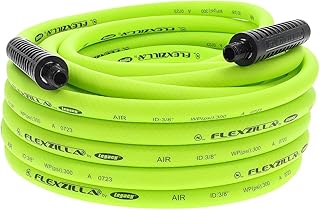
Flexzilla Air Compressor Hose, 3/8 in. x 50 ft.
Flexzilla’s ZillaGreen hybrid polymer hose has become the de facto standard in well-organized workshops, and for good reason. It lays flat on the floor with almost no memory, resists kinking even at full coil, and the distinctive color makes it easy to spot against concrete — a small but real safety benefit in cluttered spaces. At 50 feet with 3/8-inch diameter, it handles serious airflow without the weight penalty of rubber.
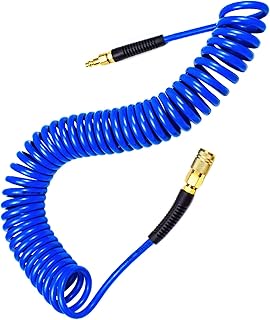
YOTOO Polyurethane Recoil Air Hose, 1/4 in. x 25 ft.
The YOTOO recoil hose is ideal when bench space is at a premium and you need the hose to retract out of sight between uses. The polyurethane body is lightweight enough to hang from a wall-mounted reel without sagging, and the included quick coupler and plug get you running immediately. It’s a clean, minimal solution for designers who want their workbench to look as intentional as the rest of the room.
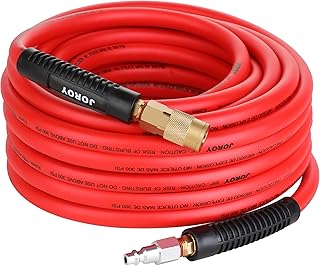
Hybrid Air Hose, 3/8 in. x 50 ft.
This no-frills hybrid hose delivers Flexzilla-tier flexibility at a noticeably lower price point. The 3/8-inch bore moves air freely to mid-range pneumatic tools, and the included brass coupler and plug mean no extra trip to the hardware store. It’s the hose we’d recommend for anyone building out a new workshop who wants reliable performance without paying a premium for brand cachet.
Reinforced Polyurethane Air Hose, 1/4 in. x 25 ft.
Braided reinforcement gives this polyurethane hose a level of crush resistance that plain PU hoses simply can’t match, making it a smart pick for garages where equipment gets rolled over frequently. The 25-foot length pairs naturally with compact compressors, and the pre-installed quick-connect fittings are machined to a tight tolerance that eliminates the micro-leaks cheaper options develop after a few months.
Heavy Duty Hybrid Air Hose, 1/4 in. x 25 ft. (Black)
Finished in matte black, this hybrid hose is one of the few options that actually looks deliberate in a designed space rather than like an afterthought. Bend restrictors at both ends, solid brass fittings, and a 300 PSI rating round out a hose that performs as well as it blends in. For studios and show garages where every visible element matters, this is the quiet professional’s choice.
Frequently Asked Questions
What inner diameter air hose do I need for a home compressor?
For typical home use — brad nailers, tire inflators, blow guns — a 1/4-inch hose is sufficient. If you run impact wrenches, HVLP spray guns, or plan to exceed 30 feet of hose length, choose a 3/8-inch diameter to avoid meaningful pressure loss at the tool end.
Does hose length affect air pressure at the tool?
Yes. Every additional foot introduces friction losses. A 25-foot 1/4-inch hose at 90 PSI at the compressor may deliver roughly 80–82 PSI at the tool; a 100-foot run can drop that further. Undersizing the diameter amplifies the effect, which is why longer runs benefit from 3/8-inch or larger bores.
Are hybrid polymer hoses better than rubber for indoor use?
Generally, yes. Hybrid polymer hoses are lighter, resist kinking, and lay flat — qualities that matter when the hose sits on a finished floor or runs across a work surface. Rubber hoses excel in extreme cold or heavy industrial abuse but are overkill and cumbersome for most home workshops.
Can I leave an air hose connected to the compressor year-round?
You can, but store it out of direct sunlight and away from sharp edges. UV exposure degrades polyurethane and hybrid polymers over time, and a hose left coiled tightly under tension will develop permanent memory. Hanging it on a wall bracket or reel between sessions preserves flexibility.
Final Thoughts
For most home workshops and design-conscious spaces, the Flexzilla 3/8 in. x 50 ft. strikes the best balance of reach, flow, and usability. If you value a tidy, retractable setup at the bench, the YOTOO Recoil Hose is an elegant space-saver. And for those who prioritize a clean visual profile alongside solid performance, the Heavy Duty Black Hybrid Hose proves that even the most utilitarian tool in the shop can earn its place on display.