Key takeaways
- Blade Width: Wider blades (1/2″ and up) track straighter during resawing and long ripping; narrower blades (1/4″ and under) negotiate tight radii in scrollwork. Match width to your dominant task, not the saw’s maximum capacity.
- Tooth Per Inch (TPI): Low TPI (3–6) clears chips aggressively in hardwoods and thick stock but leaves a rougher surface. Higher TPI (14+) gives glassy edges on thin material and plywood. Many pros keep at least two blade sizes loaded or ready to swap.
- Blade Length Compatibility: This sounds obvious, yet it’s the #1 return reason. Measure your saw’s wheel-to-wheel distance exactly; even a quarter-inch mismatch ruins the blade. Cross-reference the part number on your manual before ordering.
- Tooth Set and Hardness: Hardened, precision-set teeth hold an edge longer and resist glazing on resinous softwoods. Look for induction-hardened or bi-metal construction if you cut more than a few hours a week.
- Material and Kerf Thickness: Standard .020″ kerf suits most furniture work. Thinner kerf blades waste less wood—critical when you’re working with expensive species—but they deflect more in thick resaw cuts. Choose based on precision demands versus stock thickness.
What's inside
After resawing your third board into uneven, burned slabs with a dull blade, you start to realize that the blade—not the saw—is the variable you should’ve obsessed over first. Cheap blades wander mid-cut, leave ridged surfaces that catch light harshly, and force you to sand away hours of work. The right blade, though, turns a weekend bandsaw session into something genuinely satisfying: clean kerfs, consistent curves, and stock that needs almost no cleanup.
This guide distills what matters in 2026’s blade market into actionable picks. Every blade below was evaluated on cut quality, kerf width, tooth geometry, and how well it pairs with popular stationary and portable saws you probably own or are eyeing. Whether you’re resawing figured walnut for a live-edge shelf or trimming plywood for a backlit wall panel, the right TPI and width combination will change the feel of every project.
As an Amazon Associate we earn from qualifying purchases.

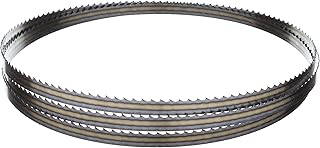


How to Choose a Band Saw Blade For Wood (2026)
- Blade Width: Wider blades (1/2″ and up) track straighter during resawing and long ripping; narrower blades (1/4″ and under) negotiate tight radii in scrollwork. Match width to your dominant task, not the saw’s maximum capacity.
- Tooth Per Inch (TPI): Low TPI (3–6) clears chips aggressively in hardwoods and thick stock but leaves a rougher surface. Higher TPI (14+) gives glassy edges on thin material and plywood. Many pros keep at least two blade sizes loaded or ready to swap.
- Blade Length Compatibility: This sounds obvious, yet it’s the #1 return reason. Measure your saw’s wheel-to-wheel distance exactly; even a quarter-inch mismatch ruins the blade. Cross-reference the part number on your manual before ordering.
- Tooth Set and Hardness: Hardened, precision-set teeth hold an edge longer and resist glazing on resinous softwoods. Look for induction-hardened or bi-metal construction if you cut more than a few hours a week.
- Material and Kerf Thickness: Standard .020″ kerf suits most furniture work. Thinner kerf blades waste less wood—critical when you’re working with expensive species—but they deflect more in thick resaw cuts. Choose based on precision demands versus stock thickness.
The Best Band Saw Blade For Wood (2026)s Reviewed
Timber Wolf Bandsaw Blade 1/2″ x 72″
Timber Wolf’s silicon-steel blade runs surprisingly cool, which means less blade set drift and cleaner resaw faces on dense hardwoods. At 4 TPI with a positive rake, it chews through 6″ maple without bogging down, and the narrow kerf leaves a surface that feels almost pre-sanded. If you run a 72″ saw for furniture-grade resawing, this is the benchmark to beat.
FOXBC 72″ x 1/2″ x 6 TPI (2-Pack)
Six teeth per inch splits the difference between aggressive stock removal and a respectable finish—exactly the balance you want when cutting cherry or walnut for visible tabletop components. The two-pack pricing makes blade rotation painless, so you’re never mid-project with a dull cutter. Pairs perfectly with WEN and Delta 10″ saws that ship with mediocre factory blades.
AYAO Bandsaw Blade 70-1/2″ x 1/2″ x 4 TPI
AYAO’s 4 TPI configuration is built for speed on resaw tasks, and it shows—the blade moves through 8″ timber with authority. Hardened teeth maintain sharpness well across multiple weekend sessions. It’s a strong choice for owners of the Craftsman 921400 or Rikon 10-series who want a noticeable upgrade over OEM blades without rethinking their setup.
LENOX Portable Band Saw Blades 44-7/8″ x 14 TPI
LENOX brings industrial reputation to the portable saw space. Fourteen teeth per inch in a five-pack means you can swap blades on the fly when you’re breaking down rough lumber on-site or trimming steel pipe between framing tasks. The finer tooth pitch leaves edges that don’t need deburring, saving real time when you’re working in a client’s space and can’t afford dust or rough edges catching the eye.
FOXBC 44-7/8″ x 1/2″ x 14 TPI (3-Pack)
Designed for Milwaukee and DeWalt portable band saws, this three-pack gives you consistent blade performance across jobs without the premium LENOX price tag. The .020″ kerf stays true in straight cuts on hardwood trim and metal conduit alike. For shop-adjacent tasks—cutting floating-shelf brackets, trimming dowels flush, or roughing out joinery blanks—these deliver reliable results batch after batch.
Frequently Asked Questions
What TPI should I use for resawing hardwood?
For resawing material over 3″ thick, stick with 3 to 6 TPI. The wide gullets evacuate chips quickly, preventing heat buildup that dulls teeth and scorches the wood. Pair a low-TPI blade with a sharp fence and feed pressure, and you’ll get book-matched panels that look professionally surfaced.
Can I use one blade for both ripping and crosscutting?
A single blade is always a compromise. If you must choose one, a 6 TPI blade at 1/2″ width handles both reasonably well on furniture-scale stock. For best results, though, mount a low-TPI blade for ripping thick lumber and swap to a 10–14 TPI blade for detailed crosscutting or thin veneer work.
How do I know which blade length my bandsaw takes?
Check your saw’s manual for the exact blade length specification, then verify by measuring the distance around both wheels with a flexible tape. Never guess—manufacturers sometimes use non-standard lengths, and even a half-inch error means the blade won’t tension properly or will slip off the wheels entirely.
Do expensive blades actually last longer?
Generally yes, particularly bi-metal and induction-hardened options. They maintain sharpness three to five times longer than bargain blades in hardwood, which offsets the higher upfront cost. However, for occasional use on softwoods or plywood, a mid-range blade gives you 90% of the performance at a fraction of the price.
Final Thoughts
For most home furniture builders, the Timber Wolf 1/2″ x 72″ 4 TPI is the blade to buy first—it handles resawing and heavy ripping with authority and keeps its edge through long sessions. The FOXBC 72″ 6 TPI two-pack is the smart value play for WEN and Delta owners who want clean cuts without constant blade anxiety. And if you work portably, the LENOX five-pack earns its keep through sheer durability and the convenience of having spares ready on the truck.