Key takeaways
- Dilution math, not bottle size: Compare cost per finished gallon, not per jug. A pint that yields five gallons of working solution beats a gallon of pre-diluted product every time, and concentrates store through winter without hogging shelf space.
- Surface pH match: Alkaline formulas lift organic soil from concrete, pavers, and fencing. Neutral or mildly alkaline formulas are what you want anywhere near powder-coated fixture housings, anodized lamp shrouds, polycarbonate lenses, and clear-coated paint.
- Delivery method: Downstream injectors need thin, low-viscosity soap. Foam cannons need a formula engineered to build wall-clinging lather, since dwell time is what actually breaks the bond between grime and substrate.
- Rinse behavior: Test on a small area, then look at it under low, angled light at dusk. Surfactants that dry to a film will telegraph as a dull veil exactly where your lighting is trying to create depth.
- Runoff tolerance: Patio and walkway washing sends solution straight into planting beds where low-voltage cable and transformer boxes usually live. Choose biodegradable, non-caustic chemistry and rinse the surrounding soil generously.
What's inside
Most people chase ambience with fixtures. They add a warm path light, a soft uplight on the siding, a string of bulbs over the patio, and then wonder why the whole scene still reads flat after dark. The answer is usually underfoot and overhead: light doesn’t glow on its own, it bounces. Every surface in an outdoor room is part of the optical system, and a season of pollen, algae film, and traffic soot turns a reflective plane into a light sponge. Grey concrete swallows lumens. Chalky vinyl scatters them into mush. Biofilm on a fence flattens the grain that raking light is supposed to reveal.
Which is why detergent belongs in a design conversation, not just a maintenance one. The trouble is that the soap aisle is a wall of near-identical jugs making near-identical claims, and the wrong pick either does nothing or leaves a haze that shows up the moment you switch the lights on. This guide sorts the formulas that genuinely restore reflectance from the ones that just make foam, covering concentrates for hardscape and siding, dedicated touchless car soaps, and the delivery gear that decides whether any of it clings long enough to work.
As an Amazon Associate we earn from qualifying purchases.


How to Choose a Pressure Washer Soap (2026)
- Dilution math, not bottle size: Compare cost per finished gallon, not per jug. A pint that yields five gallons of working solution beats a gallon of pre-diluted product every time, and concentrates store through winter without hogging shelf space.
- Surface pH match: Alkaline formulas lift organic soil from concrete, pavers, and fencing. Neutral or mildly alkaline formulas are what you want anywhere near powder-coated fixture housings, anodized lamp shrouds, polycarbonate lenses, and clear-coated paint.
- Delivery method: Downstream injectors need thin, low-viscosity soap. Foam cannons need a formula engineered to build wall-clinging lather, since dwell time is what actually breaks the bond between grime and substrate.
- Rinse behavior: Test on a small area, then look at it under low, angled light at dusk. Surfactants that dry to a film will telegraph as a dull veil exactly where your lighting is trying to create depth.
- Runoff tolerance: Patio and walkway washing sends solution straight into planting beds where low-voltage cable and transformer boxes usually live. Choose biodegradable, non-caustic chemistry and rinse the surrounding soil generously.
The Best Pressure Washer Soaps (2026) Reviewed
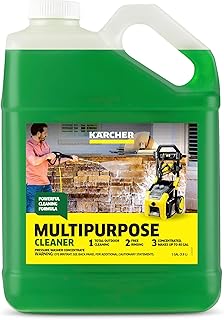
KÄRCHER Multi Purpose Pressure Washer Detergent
The most versatile bottle here, stretching to roughly 40 gallons of working solution across fences, siding, driveways, and patio slabs. It’s the one I reach for before an evening reveal, because it clears the dull organic layer that muddies texture under grazing light without stripping sealer or hazing composite decking.
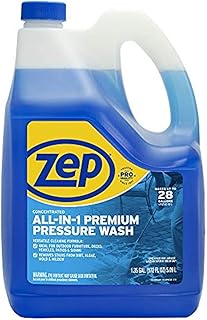
Zep All-in-1 Pressure Washing Concentrate
At 172 fluid ounces, this is the volume buy for anyone with real square footage of hardscape to reset each spring. It’s a genuinely aggressive degreaser on road film and mildew staining, and it rinses clean enough that freshly washed concrete regains its natural albedo instead of drying blotchy.
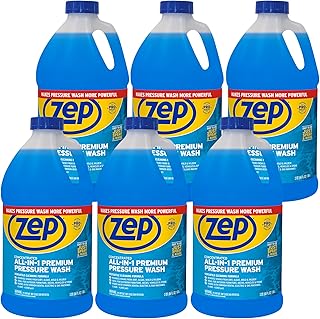
ZEP All-In-One Pressure Wash 64 oz (Case of 6)
Same proven formula in six manageable bottles rather than one heavy drum, which suits detached garages, sheds, or shared use across a property. The case format is the practical pick if you’d rather keep one bottle by the washer and the rest sealed and out of the weather.
Wash Chems Pro30 Foam Soap
A one-step touchless concentrate built for vehicles and heavy equipment, and at 2.5 gallons it’s priced like a working product rather than a boutique one. It clings well, lifts traffic film without contact, and leaves paint reading crisp under a garage’s overhead lighting instead of scattered and cloudy.
Wash Chems Pro50 Foam Cannon Detergent
The higher-performing sibling, specified for foam cannon use and dense enough to hold on vertical panels while it works. If your driveway doubles as a display space with any kind of lighting on it, this is the formula that gets clear coat back to a proper specular finish.
Frequently Asked Questions
Can I just use dish soap in my pressure washer?
No. It’s too viscous for most injectors, it foams unpredictably, and its residue dries to a film that dulls exactly the surfaces you want reflecting light. It also lacks the corrosion inhibitors that protect pump internals.
Will pressure washing damage my outdoor light fixtures?
Direct high-pressure spray can force water past gaskets and fog lenses permanently. Cover fixtures, wash around them, then hand-clean glass and housings with diluted neutral soap and a soft cloth.
Do I need a foam cannon?
For hardscape, no. For vehicles and any touchless washing, yes, because dwell time does the work. The Tool Daily Foam Cannon with quick connector and five nozzle tips is an inexpensive, well-matched entry point.
How often should I wash exterior surfaces?
Twice yearly suits most climates: once after pollen season, once before the holidays when outdoor lighting matters most. Shaded north-facing surfaces that grow algae may need a third pass.
Final Thoughts
For general exterior work where you want surfaces to give light back, the KÄRCHER Multi Purpose Detergent is the smartest first purchase, with the Zep All-in-1 Concentrate taking over once you’re washing large areas regularly. Add Wash Chems Pro50 if vehicles share the lit space, and pair it with a foam cannon to get the dwell time that touchless cleaning depends on.