Key takeaways
- Sheen level: Aim for matte to low-luster. Anything glossier catches a hot highlight from an overhead pendant and flattens the seat visually. Chenille and faux linen sit in the sweet spot; slick jacquard polyester needs a diffused shade above it.
- Texture depth: Raised weaves and 3D jacquards read as dimension because they self-shadow. If your dining light is a single downward source, texture is doing more for you than pattern is.
- Color under warm light: Test swatches at night, not at a window. Cool grays drift green-brown under 2700K, and true whites go cream. Warm neutrals and muted sage hold up best across a dimmer’s full range.
- Cleanability vs. hand: Machine-washable stretch covers win for households with kids and pets. Yardage upholstery wins on feel and light response. Decide which one your room actually needs.
- Yardage math: For reupholstery, budget roughly a half yard per standard seat pad plus 15 percent for pattern repeat and wrapping. Buy from a single dye lot — batch shifts show badly under directional light.
What's inside
Most dining chair fabric guides talk about durability and stop there. But a dining room is a lit room — usually a low pendant or a pair of sconces at 2700K, often on a dimmer, sometimes with candles doing half the work. Under that kind of light, fabric stops being a flat swatch and starts behaving like a surface: chenille throws soft shadow, faux linen scatters light into a haze, and a tightly woven polyester slipcover can pick up a hard specular streak that reads as cheap the moment the dimmer goes past 60 percent. Buyers who choose on color chip alone are the ones who end up with sage that looks yellow-green at dinner and gray-blue that goes flat and lifeless at night.
This guide sorts the best dining chair fabrics and covers for 2026 by how they actually perform under residential light — sheen, texture depth, color stability under warm bulbs — alongside the practical stuff: spill resistance, machine washability, and whether you’re reupholstering by the yard or slipcovering in an afternoon. Each pick below is one I’d be comfortable specifying for a room where the light matters.
As an Amazon Associate we earn from qualifying purchases.



How to Choose Fabrics For Dining Room Chairs (2026)
- Sheen level: Aim for matte to low-luster. Anything glossier catches a hot highlight from an overhead pendant and flattens the seat visually. Chenille and faux linen sit in the sweet spot; slick jacquard polyester needs a diffused shade above it.
- Texture depth: Raised weaves and 3D jacquards read as dimension because they self-shadow. If your dining light is a single downward source, texture is doing more for you than pattern is.
- Color under warm light: Test swatches at night, not at a window. Cool grays drift green-brown under 2700K, and true whites go cream. Warm neutrals and muted sage hold up best across a dimmer’s full range.
- Cleanability vs. hand: Machine-washable stretch covers win for households with kids and pets. Yardage upholstery wins on feel and light response. Decide which one your room actually needs.
- Yardage math: For reupholstery, budget roughly a half yard per standard seat pad plus 15 percent for pattern repeat and wrapping. Buy from a single dye lot — batch shifts show badly under directional light.
The Best Fabrics For Dining Room Chairs (2026)s Reviewed
Stretch Washable Seat Slipcovers, Set of 6
The most practical fix in the lineup: soft, breathable knit that grips the pad without bunching, and it takes a wash cycle without going shiny. Under warm light it stays convincingly matte, which is exactly why it doesn’t read like a temporary cover.
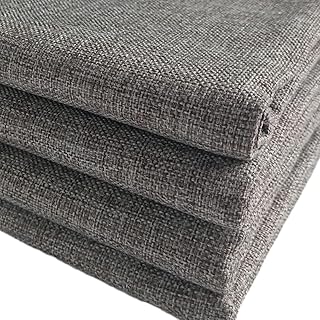
TinaKim Thick Chair Upholstery Fabric, Faux Linen
Genuinely substantial cloth with a flaxen slub that diffuses light instead of bouncing it — the seat looks soft even under a bare-ish bulb. Two yards covers four to six standard pads, making it the best value for a full set refresh.
Damask Tapestry Chenille, Sold By The Yard
Chenille’s cut pile absorbs and returns light at slightly different angles, so the damask pattern gains real depth after sundown rather than disappearing. The olive-sage and gold combination is unusually stable under warm bulbs, where many greens go muddy.
Waterproof Jacquard Seat Covers, Set of 4
The waterproof backing is the selling point, but the jacquard face is what keeps it from looking clinical — the woven relief breaks up highlights that a plain coated fabric would show. Ideal for a table that sees red wine and toddlers in equal measure.
Promindfly 3D Jacquard Dining Chair Covers, Set of 6
The raised 3D weave is the strongest texture play here, and it earns its keep under a low pendant where the self-shadowing does visual work no flat fabric can. Anti-scratch construction makes it a sensible pick if a cat has opinions about your chairs.
Frequently Asked Questions
How much fabric do I need to reupholster six dining chairs?
Plan on two to three yards of 57 to 60 inch goods for six standard drop-in seat pads. Add extra for large pattern repeats so motifs land centered on each seat.
Do slipcovers look cheap under a chandelier?
Only the shiny ones. A matte knit or textured jacquard reads fine; smooth high-sheen polyester is what catches a hard highlight and gives the game away.
Is chenille practical for a dining room?
Yes, with realistic expectations. It’s durable and hides crumbs well, but it isn’t waterproof — treat it with a fabric protector or keep washable covers for heavy-use nights.
What color hides stains best?
Mid-tone textured neutrals and muted greens. Avoid flat solids at either extreme: pale creams show everything, and deep blacks show lint and pet hair under directional light.
Final Thoughts
For a full reupholstery with the best light response, the TinaKim faux linen and the Damask Tapestry Chenille are the two I’d specify first — both stay matte and gain depth as the dimmer comes down. If you want the same look without the staple gun, the Promindfly 3D Jacquard set delivers the most convincing texture of any slipcover here.