Key takeaways
- Tank opening width: A wide-mouth or top-fill design means your hand actually fits inside. Narrow-neck bottles trap residue no brush can reach, so prioritize models where the water reservoir is fully accessible within seconds.
- Material clarity: Translucent or lightly tinted tanks let you spot biofilm before it becomes a problem. Opaque plastic hides growth until you notice an odor—by then you’re deep-cleaning instead of doing quick maintenance.
- Part count: Fewer detachable components means fewer gaskets collecting gunk. Look for designs where the atomizer, wick, and tank separate with a single twist or lift motion rather than a five-piece disassembly.
- Mist type and output zone: Warm-mist units boil water, which self-sanitizes but draws more power. Cool-mist ultrasonic models are whisper-quiet but need more frequent tank rinsing. Match the type to your maintenance willingness.
- Runtime vs. refilling rhythm: A larger tank reduces how often you open the unit, but an enormous humidifier in a small bedroom just means more standing water. Aim for a tank that covers your room for 24–30 hours without being unwieldy on the nightstand.
What's inside
Walk into any bedroom where the air feels parched—skin tight, throat scratchy, static snapping off the sheets—and you quickly realize a humidifier isn’t a luxury, it’s infrastructure. But here’s what most shoppers discover after the first month: mineral buildup crusting the tank, mold creeping into seams, and a cleaning ritual so tedious the unit ends up in a closet by March. If the humidifier you bought to improve your sleep becomes the one thing you dread maintaining, something went wrong in the selection process.
I design lighting and ambience systems for residential spaces, which means humidity is part of my toolkit—dry air dulls the warmth that layered lighting works so hard to create. In this guide I’ve evaluated the bedroom humidifiers that won’t punish you at cleaning time, weighing fill-access design, disassembly simplicity, and material choices that resist gunk. Each pick also has to hold its own as an overnight sleep companion: low noise, stable output, and light behavior that complements—rather than clashes with—your night-time environment.
As an Amazon Associate we earn from qualifying purchases.



How to Choose a Humidifier For Bedroom That Is Easy To Clean (2026)
- Tank opening width: A wide-mouth or top-fill design means your hand actually fits inside. Narrow-neck bottles trap residue no brush can reach, so prioritize models where the water reservoir is fully accessible within seconds.
- Material clarity: Translucent or lightly tinted tanks let you spot biofilm before it becomes a problem. Opaque plastic hides growth until you notice an odor—by then you’re deep-cleaning instead of doing quick maintenance.
- Part count: Fewer detachable components means fewer gaskets collecting gunk. Look for designs where the atomizer, wick, and tank separate with a single twist or lift motion rather than a five-piece disassembly.
- Mist type and output zone: Warm-mist units boil water, which self-sanitizes but draws more power. Cool-mist ultrasonic models are whisper-quiet but need more frequent tank rinsing. Match the type to your maintenance willingness.
- Runtime vs. refilling rhythm: A larger tank reduces how often you open the unit, but an enormous humidifier in a small bedroom just means more standing water. Aim for a tank that covers your room for 24–30 hours without being unwieldy on the nightstand.
The Best Humidifiers For Bedroom That Are Easy To Clean (2026) Reviewed
DREO 3L Cool Mist Humidifier (New Edition)
The wide top-fill opening on this DREO model is genuinely satisfying to use—pour water in directly, then pop the lid off to wipe the tank interior by hand in under a minute. At 26 dB it’s quiet enough for a nursery, and 30 hours of runtime means weekend travel won’t leave your bedroom desert-dry. The night light is warm and low, the kind of soft amber glow a lighting designer would actually endorse for winding down.
Homvana 3.6L Top-Fill Humidifier
At 23 dB this is one of the quietest units in its class, and the 2-in-1 design doubles as an essential-oil diffuser—handy if you’re layering scent into your ambience setup. The 3.6L tank pushes four full nights of mist before a refill, and the grey finish reads as a neutral accent rather than a medical-device eyesore on your dresser. Cleaning is straightforward: the entire water path opens up with no tools.
DREO 8L Smart Humidifier HM717S
This is the powerhouse of the group—an 8-liter reservoir delivering 80 hours of coverage for rooms up to 600 square feet. The warm-and-cool mist option lets you sanitize the tank simply by running a warm cycle, and the RGB light ring (over 1,500 color options) turns the unit into an ambient light fixture rather than hiding it. App and voice control through Alexa means you can adjust humidity from bed. It’s an investment, but for large bedrooms or plant-heavy spaces it’s unmatched.
Diffuserlove Cloud Humidifier
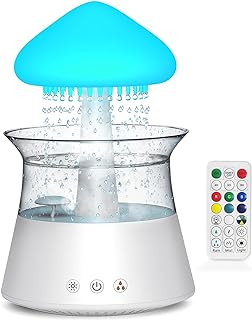
Form-driven and sculptural, this mushroom-shaped unit with its waterfall rain-drip effect creates a living light installation that doubles as a functional humidifier. The white noise from the water drip masks city sounds surprisingly well. Cleaning is easiest when you run a vinegar soak through the drip channels weekly—plan for that routine and the visual payoff is enormous.
Raindrop Cool Mist Humidifier
Compact at 350ml, this is a bedside accent piece rather than a whole-room workhorse—ideal for desks, nurseries, or a guest room where it runs for a few hours at a time. Seven LED color presets let you dial in the exact mood, and the four timer settings prevent overnight waste. The small tank is its cleaning advantage: fewer surfaces, faster rinse, done.
Frequently Asked Questions
Should I use distilled water in my humidifier?
Distilled or filtered water dramatically reduces mineral deposits inside your tank and prevents the white dust that tap water leaves on furniture. It’s the single easiest habit to extend a humidifier’s life.
How often should I clean my bedroom humidifier?
A quick rinse every two to three days keeps bacterial growth in check, with a full vinegar soak once a week for ultrasonic models. Warm-mist units benefit from descaling every two weeks, especially in hard-water areas.
Can a humidifier improve sleep quality?
Yes—maintaining bedroom humidity between 40% and 50% reduces throat dryness, nasal irritation, and static that disrupts sleep. Paired with appropriate low-level lighting, a humid environment creates a genuinely restorative sleep setting.
Which is better for a bedroom—warm mist or cool mist?
Cool-mist ultrasonic units are quieter and use less energy, making them the default for bedrooms. Warm-mist models boil water, which naturally reduces microbial content but produces a faint hum. Choose based on your noise tolerance and whether you’re comfortable with a slightly higher power draw.
Final Thoughts
For most bedrooms, the DREO 3L New Edition hits the sweet spot of easy maintenance, quiet operation, and thoughtful light design. If your space is larger or you want smart-home integration, the DREO HM717S is the premium choice that earns its price tag. And for anyone building a room around mood and visual character, the Diffuserlove Cloud proves a humidifier can be both a design object and a daily essential.