Key takeaways
- Deck height versus lamp scale: A 4-inch frame with a 10-inch mattress puts your shoulders around 16 inches off the floor, which means most standard bedside lamps will glare. Plan on shorter table lamps, floor-standing readers, or wall-mounted swing arms set roughly 24 to 30 inches above the mattress top.
- Clearance for concealed light: If you want that floating glow under the bed, you need a few inches of shadow gap and a solid rail to tuck a strip behind. Frames sitting nearly flush to the floor look beautiful but leave nowhere for the light to bounce, so the effect turns into a visible line of diodes instead of a soft halo.
- Load rating and slat spacing: Look for 2,500 pounds or more on a queen, with slats no more than three inches apart. Wider gaps let foam mattresses sag between supports, and a dipped surface catches side light in a way that makes even a new mattress look tired.
- Noise control: Rubber or felt pads at every joint and foot matter more on low frames because there’s less structure absorbing movement. Interlocking joints beat bolt-only construction for staying quiet through a year of use.
- Finish and reflectance: Matte black steel disappears into a dim room and keeps the mattress visually weightless. Raw or light wood picks up warm lamplight and reads softer, which suits rooms lit at 2700K or below.
What's inside
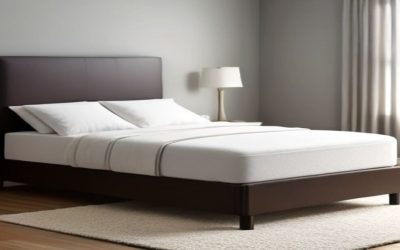
Most people shop for a low bed frame to solve a comfort or ceiling-height problem, then wonder why the room still feels flat once it’s assembled. I spend my working hours placing light in bedrooms, and the frame is one of the most underrated variables on the plan. Raise a mattress to standard height and you push the sleeping surface straight into the zone where a wall wash lands, flattening the soft gradient you were paying for. Drop it four inches off the floor and suddenly the wall above the pillow reads as an uninterrupted plane, bedside lamps sit at true eye level when you’re reading, and window light travels across the room instead of breaking against a mattress edge.
This guide looks at low-profile frames through that lens: how each one behaves under lamplight, whether the underside can hold a concealed strip without spilling hot dots across the floor, and how the silhouette reads in a dim room at 11pm. I’ve also covered the practical basics buyers actually care about — load rating, noise, box-spring requirements, mattress creep, and assembly time — because a frame that squeaks or slides ruins the mood faster than any lighting mistake.
As an Amazon Associate we earn from qualifying purchases.


How to Choose a Low Bed Frame (2026)
- Deck height versus lamp scale: A 4-inch frame with a 10-inch mattress puts your shoulders around 16 inches off the floor, which means most standard bedside lamps will glare. Plan on shorter table lamps, floor-standing readers, or wall-mounted swing arms set roughly 24 to 30 inches above the mattress top.
- Clearance for concealed light: If you want that floating glow under the bed, you need a few inches of shadow gap and a solid rail to tuck a strip behind. Frames sitting nearly flush to the floor look beautiful but leave nowhere for the light to bounce, so the effect turns into a visible line of diodes instead of a soft halo.
- Load rating and slat spacing: Look for 2,500 pounds or more on a queen, with slats no more than three inches apart. Wider gaps let foam mattresses sag between supports, and a dipped surface catches side light in a way that makes even a new mattress look tired.
- Noise control: Rubber or felt pads at every joint and foot matter more on low frames because there’s less structure absorbing movement. Interlocking joints beat bolt-only construction for staying quiet through a year of use.
- Finish and reflectance: Matte black steel disappears into a dim room and keeps the mattress visually weightless. Raw or light wood picks up warm lamplight and reads softer, which suits rooms lit at 2700K or below.
The Best Low Bed Frames (2026) Reviewed
YUSENHEEI 4 Inch Queen Low Profile Frame
A clean, no-nonsense steel platform that vanishes under the mattress, which is exactly what you want when the wall behind the bed is doing the visual work. Assembly is genuinely quick, and the matte black finish absorbs stray light instead of throwing reflections back at a bedside lamp.
Nailsong 4 Inch Queen Low Profile Frame
Nailsong’s version prioritizes rigidity, and the difference shows in how still the bed stays when someone shifts at night. It’s a safe pick if your room already has a strong lighting scheme and you simply want a quiet, invisible foundation that doesn’t need a box spring.
Superay 4 Inch Queen with Rounded Legs
The rounded legs and mattress stopper are the thoughtful details here — no sharp corner to catch a grazing floor light, and no slow mattress creep that leaves an uneven shadow line along one side. At 3,500 pounds capacity it handles a heavy hybrid mattress without any center-rail flex.
ROIL 4 Inch Queen with Rounded Corner Baffle
My pick when under-bed lighting is part of the plan: the rail geometry gives you somewhere to hide a strip, and the rubber pads keep the whole thing acoustically dead on hard floors. The rounded baffle also keeps bedding from bunching, so the drape stays even in raking light.
GarveeHome Wood Platform Bed Frame
The warm-toned choice, and the only one on this list that becomes part of the room’s palette rather than hiding from it. Wood slats and a headboard-free profile suit a low, Japanese-influenced scheme lit with paper shades or warm sconces, where a black steel frame would feel cold.
Frequently Asked Questions
Do low bed frames need a box spring?
No. Every frame here uses slat or steel-bar support designed to sit directly under the mattress. Adding a box spring would defeat the low profile entirely and, in most cases, voids the intended support geometry.
Can I run LED strips under a 4-inch frame?
Yes, with one caveat: mount the strip facing inward or upward against a rail so the floor catches reflected light rather than the diodes themselves. Aim for a warm 2400K to 2700K and dim it low, since a bright strip four inches off the floor becomes a glare source at eye level when you’re lying down.
Will a low frame make my room feel bigger?
It usually does, because it drops the visual horizon and lets more wall surface stay uninterrupted. The effect compounds if your lighting washes the walls rather than pooling in the center of the room.
What about getting in and out of bed?
Low frames ask more of your knees and hips. If mobility is a factor, the 7-inch Upcanso frame is a sensible compromise that keeps a lower-than-standard profile without dropping you to floor level.
Final Thoughts
For most bedrooms I’d start with the ROIL 4-inch queen, since its rail design and rubber pads make it the easiest frame here to build a lighting scheme around. The Superay is an equally strong structural choice if the mattress stopper matters more to you, and the GarveeHome wood platform is the one to pick when you want the frame itself to catch warm light rather than disappear into shadow.