Key takeaways
- Zero-gravity capability: The position that reliably decompresses the lumbar spine raises both the torso and the legs so the hips sit lower than the knees. Look for a preset labeled zero gravity rather than trying to hand-crank your way there each night.
- Independent head and foot articulation: Head-only lift often makes lower back pain worse by hinging the spine. You want the foot section to rise too, so the pelvis rotates gently backward instead of being pulled forward.
- Gap management at the lumbar curve: Any incline creates a void behind the low back. Plan to fill it — either with a wedge whose slope matches your torso length or a dedicated lumbar insert that holds shape through the night.
- Foam density over foam thickness: A tall wedge that compresses to nothing by midnight has changed nothing. High-density support foam with a softer top layer keeps its angle; plush-only foam collapses and lets you sag back into the original problem.
- Nighttime usability in the dark: If adjusting your position means finding a phone flashlight and waking fully, you won’t do it. Backlit remotes, integrated underbed lighting, and reachable side pockets matter more than the spec sheet suggests.
What's inside
I spend my working life thinking about how a room feels after sundown — where the light falls, how a body settles into a space once the overheads go off. And the pattern I keep running into isn’t a lighting problem at all. It’s people who have dialed in the warm 2200K bedside glow, the blackout drapes, the whole quiet evening choreography, and still wake at 3 a.m. with a hot band of ache across the low back. The room is doing its job. The sleeping surface isn’t. A flat mattress asks the lumbar curve to hold itself in tension for eight hours, and no amount of ambience compensates for a spine that never fully unloads.
What follows is a practical look at the gear that changes sleeping geometry rather than sleeping mood — powered bases that let you find a genuinely neutral lumbar angle, wedge systems that build that angle out of foam for a fraction of the cost, and the small lumbar inserts that fill the gap most setups leave behind. I’ve noted where a piece also earns its keep in the ambience department, because a base with a soft footwell nightlight quietly solves the harsh-overhead-at-2 a.m. problem too.
As an Amazon Associate we earn from qualifying purchases.

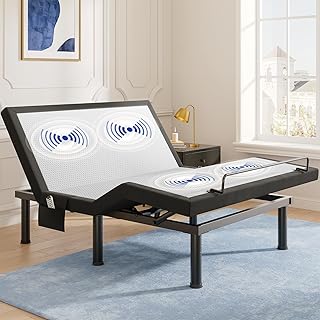


How to Choose a/an Adjustable Bed Position For Lower Back Pain (2026)
- Zero-gravity capability: The position that reliably decompresses the lumbar spine raises both the torso and the legs so the hips sit lower than the knees. Look for a preset labeled zero gravity rather than trying to hand-crank your way there each night.
- Independent head and foot articulation: Head-only lift often makes lower back pain worse by hinging the spine. You want the foot section to rise too, so the pelvis rotates gently backward instead of being pulled forward.
- Gap management at the lumbar curve: Any incline creates a void behind the low back. Plan to fill it — either with a wedge whose slope matches your torso length or a dedicated lumbar insert that holds shape through the night.
- Foam density over foam thickness: A tall wedge that compresses to nothing by midnight has changed nothing. High-density support foam with a softer top layer keeps its angle; plush-only foam collapses and lets you sag back into the original problem.
- Nighttime usability in the dark: If adjusting your position means finding a phone flashlight and waking fully, you won’t do it. Backlit remotes, integrated underbed lighting, and reachable side pockets matter more than the spec sheet suggests.
The Best Adjustable Bed Position For Lower Back Pain (2026)s Reviewed
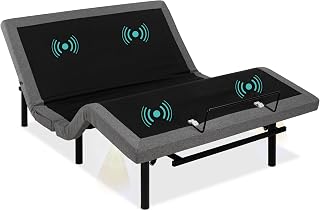
Tami Tami T600 Adjustable Bed Frame
This is the most direct route to a true zero-gravity angle, and the dual-motor setup means you can fine-tune the foot lift a few degrees at a time until the lumbar tension releases. The integrated nightlight is the detail I appreciate most as a designer — a low, downward wash that lets you reposition or get up without flooding the room with light and resetting your melatonin.
vamorry Lumbar Pillow for Sleeping
Once you incline any sleeping surface, a hollow opens behind the small of the back, and this memory foam insert is the cleanest fix I’ve found for it. It works equally well for side and back sleepers, and the washable cover means it survives real-world use rather than becoming a thing you’re precious about.
4PCS Wedge Pillow Set for After Surgery
Four modular pieces let you construct an incline plus leg elevation without a powered base, which is the closest thing to zero gravity on a budget. Recovery is where it shines, but the same stacked geometry serves chronic lumbar ache just as well.
4PCS Orthopedic Bed Wedge Pillow Set
A slightly more support-focused take on the same modular concept, with firmer foam that holds its angle deeper into the night. Worth choosing over softer sets if you’re heavier or tend to sink through plush foam by the small hours.
Wedge Pillow Set with Adjustable 9 & 12 Inch Heights
The two-stage height adjustment is genuinely useful because the correct lumbar incline is personal and rarely obvious on night one. Its headboard-friendly shape also keeps the stack from sliding down and collapsing your position mid-sleep.
Frequently Asked Questions
What is the best adjustable bed position for lower back pain?
Zero gravity — head raised roughly 15 to 30 degrees with the knees elevated slightly above the hips. This flattens excessive lumbar arch and takes load off the discs. Start conservative and adjust in small increments over a week.
Can a wedge pillow set replace an adjustable base?
For many people, yes. A well-built modular wedge set reproduces the same torso and leg angles for far less money. The tradeoff is that you can’t change position without physically rearranging foam.
Should I still use a regular pillow?
Use a thinner one than usual. An inclined torso already lifts the head, so a standard-loft pillow pushes the neck into flexion and shifts strain upward.
How long before I notice improvement?
Give any new position seven to ten nights. Your soft tissue needs time to adapt, and the first two or three mornings can feel worse before they feel better.
Final Thoughts
If you want the position solved properly and repeatably, the Tami Tami T600 is the investment — its dual-motor zero-gravity preset and low-glare nightlight make it something you’ll actually use at 3 a.m. rather than endure. Pair it with the vamorry lumbar pillow to close the gap behind your low back, or if a powered base isn’t in the budget, the 4PCS orthopedic wedge set builds nearly the same geometry out of foam for a fraction of the outlay.