Key takeaways
- Surface finish over surface color: Matte and lightly textured materials scatter sun instead of bouncing it into your eyes. A satin or brushed frame will always be kinder at noon than a high-gloss one, regardless of the color you pick.
- How the color behaves at 2700K: Warm evening light and warm-white deck fixtures push everything amber. Teals, aquas, and mid-tone neutrals stay believable; cool grays and stark whites tend to go dingy or oddly yellow after sunset.
- True flat recline: A lounger that drops fully horizontal turns your deck into a place to watch dusk arrive. If the lowest position still holds you at 20 degrees, you’re looking at your fence instead of the sky.
- Frame profile and shadow: Slim, open frames read as light and leave clean shadow lines under low sun. Bulky solid bases cast heavy blocks that visually chop a small deck into pieces.
- Where it sits relative to the water: Pool light spills upward. Chairs on a Baja shelf or tanning ledge catch that glow and become the most interesting object on the deck after dark, which is a real design opportunity rather than a novelty.
What's inside
Most poolside chaises are chosen under the worst possible lighting: a white studio backdrop on a screen, or a big-box aisle lit at 4000K from directly overhead. Then the chair goes home and spends its life in light that never holds still — hard overhead sun at 1pm, low raking gold at 7pm, then whatever your deck sconces and underwater pool lamps decide to do after dark. That’s when the problems show up. Glossy white shells throw painful glare at midday. Cool-gray textilene that looked crisp online reads flat and lifeless under warm evening light. Frames with a mirror finish become little suns you can’t sit next to. And a chair that won’t lie truly flat can’t do the one thing a pool deck is best at, which is letting you watch the sky change.
This guide looks at poolside loungers the way a lighting designer looks at a room: how the surface handles direct sun, how the finish holds color as the temperature of the light drops, how the frame casts shadow across your deck, and how the chair behaves once the only light left is coming up out of the water. Below are the loungers worth considering for 2026, plus the specs that actually predict how a chair will feel at golden hour rather than in a product photo.
As an Amazon Associate we earn from qualifying purchases.


How to Choose a Poolside Chaise Lounge (2026)
- Surface finish over surface color: Matte and lightly textured materials scatter sun instead of bouncing it into your eyes. A satin or brushed frame will always be kinder at noon than a high-gloss one, regardless of the color you pick.
- How the color behaves at 2700K: Warm evening light and warm-white deck fixtures push everything amber. Teals, aquas, and mid-tone neutrals stay believable; cool grays and stark whites tend to go dingy or oddly yellow after sunset.
- True flat recline: A lounger that drops fully horizontal turns your deck into a place to watch dusk arrive. If the lowest position still holds you at 20 degrees, you’re looking at your fence instead of the sky.
- Frame profile and shadow: Slim, open frames read as light and leave clean shadow lines under low sun. Bulky solid bases cast heavy blocks that visually chop a small deck into pieces.
- Where it sits relative to the water: Pool light spills upward. Chairs on a Baja shelf or tanning ledge catch that glow and become the most interesting object on the deck after dark, which is a real design opportunity rather than a novelty.
The Best Poolside Chaise Lounges (2026) Reviewed
Ostrich The Original Chaise Lounge
The teal fabric is the quiet hero here — it holds its saturation as light warms through the evening instead of washing out, and the woven surface diffuses hard sun rather than glaring back at you. At 72 by 22 inches it lies genuinely flat, and its low profile keeps shadow lines minimal on a tight deck.
HDPE Chaise Lounge Set of 2
HDPE has a soft, slightly chalky surface that handles midday sun far better than gloss resin, and the slatted seat throws a fine striped shadow that reads well across pavers at low angles. Bright white is demanding under overhead sun, so this pair works best with some shade structure or a canopy nearby.
Kozyard Fully Flat Chaise Lounge
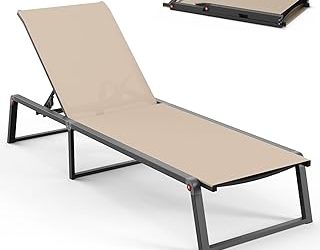
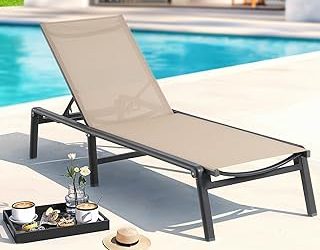
This is the one to pick if lying truly horizontal matters to you — the fully flat setting plus a slim aluminum frame makes it near-invisible in silhouette at dusk. The aqua textilene picks up reflected pool light beautifully and reads as intentional color rather than a compromise.
Aluminum Foldable 5-Position Chaise
No assembly and full-length grounded legs mean it sits stable on wet decking, and the folding frame is genuinely useful if your lighting scheme changes seasonally and you like to reposition. Bright white plus aluminum is a lot of reflectance, so keep it out of direct downlight if you’re sensitive to glare.
Coast Modern In-Pool Lounge Chair
Weighted and fully waterproof, this one lives on the Baja shelf and catches the upward wash from your pool lights in a way no deck chair can. It’s the most atmospheric choice on this list and the clearest argument for treating the shallow end as usable furniture space.
Frequently Asked Questions
Which lounger colors hold up best under evening deck lighting?
Mid-tone saturated colors — teal, aqua, deep sand, charcoal — stay readable as light warms. Pure white shifts noticeably amber under 2700K fixtures, and pale gray tends to lose its cool cast entirely.
Do aluminum frames get too hot to touch?
Bare aluminum in direct sun does heat up, but powder-coated frames stay manageable, and lighter finishes absorb less. The bigger comfort factor is usually the fabric or slat surface your skin actually rests on.
Is a fully flat recline worth prioritizing?
If you sunbathe or stargaze, yes. Flat also photographs and reads cleaner in a landscape design, since a horizontal line settles a space where a diagonal one activates it.
How many loungers should a small pool deck have?
Two is comfortable for most residential decks; four starts crowding sightlines and blocking the low light that makes a pool area feel good at dusk. A multipack like the EUNHOO set of four makes more sense on larger patios or for entertaining.
Final Thoughts
For most pool decks, the Kozyard fully flat lounger is the best all-around pick — slim shadow, honest color, and a genuine horizontal recline. The Ostrich Original is the smarter buy if you want a portable chair whose teal fabric stays alive at golden hour, and the Coast Modern in-pool chaise is worth adding if you have a Baja shelf and lights in the water, because that combination does more for evening ambience than any deck-side chair can.