Key takeaways
- CFM over PSI: Detailing is a volume game, not a pressure game. Blowing water out of a mirror stalk needs sustained flow — look for 4 CFM or better at working pressure. Inflators max out around 150 PSI but move very little air, which is fine for tires and useless for drying.
- Noise floor: In a two-car garage with concrete and drywall, every decibel comes back at you. Anything at or under 70 dB lets you keep working, talking, and listening for the change in tone when a nozzle clears a drain channel. Above 85 dB you will wear hearing protection and lose that feedback.
- Oil-free vs. lubricated: Oil-free heads cannot spit lubricant onto a freshly polished panel. If you ever plan to spray sealant or paint, oil-free plus an inline water separator is the safer path.
- Onboard light quality: Cordless units advertise LED work lights; most are cold, narrow, and glare straight into your eyes at wheel height. A wide, warmer beam that grazes the tire sidewall is worth more than raw lumens when you are reading a gauge in a dark driveway.
- Duty cycle and recovery: A 100% duty cycle inflator can top up four tires without a cooldown sulk. For tank units, check how long the motor runs to refill — long, infrequent cycles are far less disruptive than short, constant ones.
What's inside
Spend enough years aiming light at surfaces and you start to see cars the way you see a lacquered sideboard: as a finish that either holds a reflection cleanly or scatters it into haze. A detailing garage is a lighting room first. Raking a hard beam across a hood at a low angle is the fastest way to find swirl marks, and it is also the fastest way to find the dust you just blew back onto the panel because your air source was damp, weak, or so loud you rushed the pass. That last part is the one people underestimate — noise is part of the ambience, and a compressor that shrieks every ninety seconds turns a patient, well-lit session into something you want to end early.
This guide looks at compressors through that lens: how well they move air into door jambs, mirror housings, badge gaps and lug seats, how they behave in a small enclosed space with reflective walls, and how much acoustic room they leave you. We cover cordless inflators for tire pressure and quick blowouts, plus quiet tank compressors for blow-drying a whole vehicle after a wash. Picks below span both.
As an Amazon Associate we earn from qualifying purchases.


How to Choose a/an Air Compressor For Car Detailing (2026)
- CFM over PSI: Detailing is a volume game, not a pressure game. Blowing water out of a mirror stalk needs sustained flow — look for 4 CFM or better at working pressure. Inflators max out around 150 PSI but move very little air, which is fine for tires and useless for drying.
- Noise floor: In a two-car garage with concrete and drywall, every decibel comes back at you. Anything at or under 70 dB lets you keep working, talking, and listening for the change in tone when a nozzle clears a drain channel. Above 85 dB you will wear hearing protection and lose that feedback.
- Oil-free vs. lubricated: Oil-free heads cannot spit lubricant onto a freshly polished panel. If you ever plan to spray sealant or paint, oil-free plus an inline water separator is the safer path.
- Onboard light quality: Cordless units advertise LED work lights; most are cold, narrow, and glare straight into your eyes at wheel height. A wide, warmer beam that grazes the tire sidewall is worth more than raw lumens when you are reading a gauge in a dark driveway.
- Duty cycle and recovery: A 100% duty cycle inflator can top up four tires without a cooldown sulk. For tank units, check how long the motor runs to refill — long, infrequent cycles are far less disruptive than short, constant ones.
The Best Air Compressor For Car Detailing (2026)s Reviewed
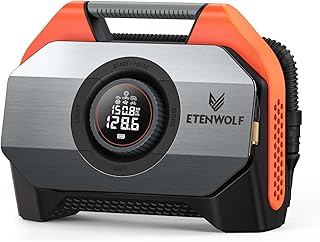
ETENWOLF VORTEX S6 Cordless Tire Inflator
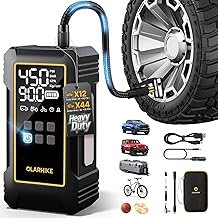
The dual-cylinder head and 100% duty cycle mean it will run four tires back to back without thermal throttling, and the 19200mAh pack has real headroom for inflatables and bike tires. The backlight is genuinely usable at ground level rather than a token afterthought.
AUXITO 26000mAh Heavy Duty Tire Inflator
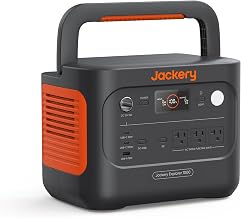
Built as much around its power station function as its pump, this is the one to keep in a truck or RV where 65W charging and a jump-capable battery matter as much as 150 PSI. Heavier than the ETENWOLF, but it earns the weight if you want a single emergency box.
AstroAI H2 Pro Cordless Tire Inflator
Dual power — battery or 12V DC — makes this the most forgiving option for people who forget to charge things. Auto shut-off at the target pressure is accurate enough that you can set it, walk to the next wheel, and trust it.
8 Gallon Ultra Quiet Oil-Free Air Compressor
At 4.52 CFM and 70 dB, this is the sweet spot for a home detailing bay: enough sustained flow to blow-dry a sedan and quiet enough to leave conversation and music intact. Oil-free operation keeps stray lubricant away from finished paint.
California Air Tools CAT-4610AC Twin Tank
The twin aluminum tanks and 1.0 hp motor keep it portable, and the acoustic behavior is the calmest in this group — long, low cycles rather than sharp bursts. Lower CFM than the 8-gallon unit, so it suits detailing touch-ups and nailing more than continuous drying.
Frequently Asked Questions
Can a cordless inflator dry a car?
No. Inflators deliver high pressure at very low volume — fine for a badge gap or a mirror seam, but they will not sheet water off a panel. Use one for tires and detail work, a tank compressor for drying.
How many gallons do I actually need?
For blow-drying and light air tools, 4 to 8 gallons is ample. Tank size buys you longer runtime between motor cycles; CFM determines whether the tool works at all.
Do I need a moisture trap?
Yes, if air touches paint. Compressed air carries condensate, and water spots on a polished panel show up instantly under raking light. An inline desiccant filter costs little and saves rework.
Is 70 dB really quiet?
It is roughly conversation level, but garages are reflective. Expect it to feel louder than the spec sheet, and consider a rubber mat under the feet to cut structure-borne buzz.
Final Thoughts
For a fixed home bay where lighting and calm matter, the 8 Gallon Ultra Quiet Oil-Free compressor is the best all-round choice, with the California Air Tools CAT-4610AC as the quieter, more portable alternative. Pair either with the ETENWOLF VORTEX S6 for tire pressure and tight-corner blowouts, and you have a setup that lets you work slowly enough to actually see what the light is showing you.