Key takeaways
- Contour depth, not just plushness: Your shoulder needs somewhere to go. Memory foam of at least 2 inches lets the joint descend while your ribs stay supported; a thin quilted pad only changes the feel of the surface, not the geometry beneath it.
- Loft matched to your pillow: Adding 3 to 5 inches of height under you changes your neck angle. Every inch of sink at the shoulder is an inch you may need to subtract from your pillow, or you will trade shoulder pain for neck strain.
- Thermal behavior: Deep-contouring foam wraps you, and wrapping traps heat. Look for gel infusion, open-cell structure, or a bamboo-derived rayon cover if you already sleep warm or use blackout curtains that keep the room stuffy.
- Pocket depth and anchoring: A topper that migrates overnight stops supporting the joint it was bought for. Check the skirt depth against your mattress — 18 to 20 inch stretch pockets handle most pillow-top beds without straining the elastic.
- Certification and break-in: CertiPUR-US certified foam limits VOC content, which matters in a closed sleeping room. Expect three to five nights of adjustment before you judge the result.
What's inside
I spend my working days specifying dimmer curves, 2200K bedside sources, and the exact angle at which a wall sconce stops being useful and starts being an interrogation. The question clients ask me most, though, has nothing to do with fixtures. It is why they still surface at 3 a.m. with a hot, throbbing shoulder. A bedroom is a sensory envelope — light, sound, air temperature, and surface. You can dial in three of those beautifully and still lose the night if the fourth is quietly compressing a rotator cuff for seven hours. Side sleepers funnel a disproportionate share of body weight through one narrow joint, and a mattress that refuses to yield at that point turns rest into a slow pinch.
A topper is the least disruptive fix available: no new bed frame, no reworking the room, no waiting out a 100-night trial. But shoulder relief is not the same as generic softness, and the two get conflated constantly in product copy. Below I break down what actually reduces shoulder load — contour depth, fill loft, surface temperature, and how securely the thing anchors — then review the toppers most worth your attention this year.
As an Amazon Associate we earn from qualifying purchases.


How to Choose a Mattress Topper For Shoulder Pain (2026)
- Contour depth, not just plushness: Your shoulder needs somewhere to go. Memory foam of at least 2 inches lets the joint descend while your ribs stay supported; a thin quilted pad only changes the feel of the surface, not the geometry beneath it.
- Loft matched to your pillow: Adding 3 to 5 inches of height under you changes your neck angle. Every inch of sink at the shoulder is an inch you may need to subtract from your pillow, or you will trade shoulder pain for neck strain.
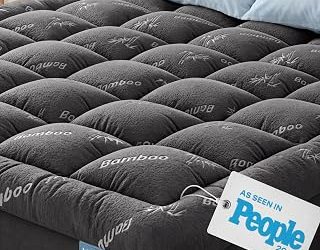
- Thermal behavior: Deep-contouring foam wraps you, and wrapping traps heat. Look for gel infusion, open-cell structure, or a bamboo-derived rayon cover if you already sleep warm or use blackout curtains that keep the room stuffy.
- Pocket depth and anchoring: A topper that migrates overnight stops supporting the joint it was bought for. Check the skirt depth against your mattress — 18 to 20 inch stretch pockets handle most pillow-top beds without straining the elastic.
- Certification and break-in: CertiPUR-US certified foam limits VOC content, which matters in a closed sleeping room. Expect three to five nights of adjustment before you judge the result.
The Best Mattress Topper For Shoulder Pain (2026)s Reviewed
5 Inch Mega Support Dual Layer Topper
The most complete answer here: 2.5 inches of pillow-top fill sitting on 2.5 inches of gel-infused memory foam, so the shoulder passes through a soft surface layer and lands on something that genuinely redistributes pressure. Best suited to firm mattresses that offer no give at all.
WhatsBedding 5 Inch Memory Foam Topper
Similar height with a softer, loftier hand — the breathable stuffing on top feels more like a featherbed while the foam base does the structural work. A strong pick for side sleepers who find pure memory foam too enveloping.
Linenspa 2 Inch Gel Memory Foam Topper
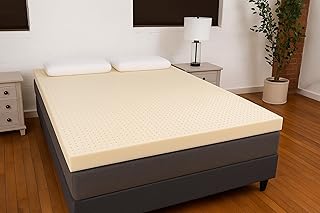
The precise, low-profile option. Two inches of CertiPUR-certified gel foam adds contour at the shoulder without raising the bed enough to disrupt your pillow relationship or your fitted sheets. The sensible starting point if you are not sure how much change you need.
ELEMUSE Extra Thick Pillowtop
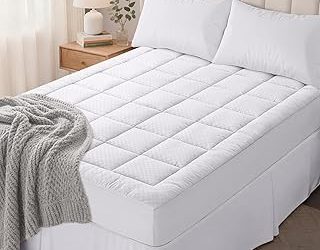
An overfilled down-alternative build with a deep elastic skirt, aimed at people whose mattress is fundamentally sound but too hard at the surface. Cushioning rather than contouring, so pair it with a well-chosen pillow.
Niagara Sleep Solution Bamboo Pillow Top
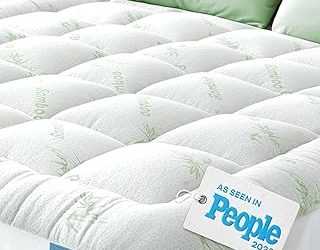
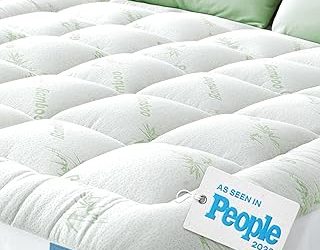
The coolest-sleeping option of the group, with a rayon-from-bamboo cover and a 20 inch pocket that stays put on tall mattresses. Choose it when heat is the thing waking you before the ache is.
Frequently Asked Questions
How thick should a topper be for shoulder pain?
Two inches of memory foam is enough on a medium mattress. If your bed is firm or your shoulder feels blocked rather than merely sore, move to a 4 or 5 inch dual-layer build so the joint has real travel.
Will a soft topper cause lower back pain?
It can, if the topper is uniformly plush with no supportive base — hips sink further than shoulders and the lumbar spine twists. Layered constructions with foam beneath the fill avoid this, which is why they dominate this list.
Do cooling gel toppers stay cool all night?
Gel slows heat buildup rather than eliminating it. Combine it with a breathable cover and a room held around 65 to 68°F; the topper handles conduction, your thermostat handles the rest.
Should I replace my pillow at the same time?
Usually yes. Once your shoulder drops into the topper, your existing pillow is often an inch too tall, which pushes the neck out of neutral and blunts the benefit.
Final Thoughts
For most side sleepers with genuine shoulder pain, the 5 Inch Mega Support dual-layer topper is the one to beat, with the WhatsBedding 5 Inch a close alternative if you prefer a softer surface. If you need contour without changing the height of your bed, the Linenspa 2 Inch gel foam topper is the precise, low-commitment choice — and the BEDLORE viscose bamboo pad is worth a look if breathability is your priority.